
Concrete Patio Overlay vs Replacement: Which Is Better for Your Texas Home?
A worn concrete patio can make an otherwise attractive outdoor space look neglected. Cracks, fading, flaking, and uneven areas can also make it less comfortable to use. For homeowners across Dallas–Fort Worth and North Texas, the decision often comes down to two options: apply a concrete patio overlay or remove the existing slab and install new concrete.
Both approaches can improve the appearance and usability of an outdoor area, but they solve different problems. An overlay can be an effective way to refresh a structurally sound patio, while replacement may be necessary when the slab has significant movement, widespread structural cracking, or underlying drainage and foundation problems.
Understanding the difference between concrete patio overlay vs replacement can help you avoid unnecessary demolition, choose the right finish, and make a more informed investment in your property.
What Is a Concrete Patio Overlay?
A concrete patio overlay is a specialized resurfacing material applied over an existing concrete slab. Depending on the product and installation method, the new surface can introduce a different color, texture, pattern, or decorative finish without requiring the entire patio to be demolished.
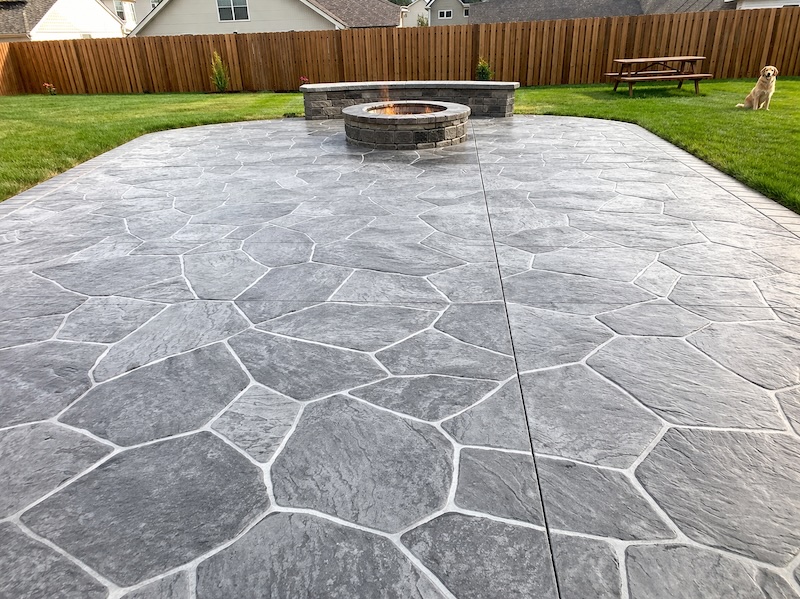
Overlays are available in several styles, including textured finishes, decorative coatings, stamped-look designs, and systems designed to resemble natural stone.
For example, a plain gray patio in a Dallas backyard might be transformed with a decorative stone-look finish that complements the home’s exterior. A faded entertainment area in Frisco could receive a fresh textured surface without rebuilding the entire patio, provided the existing concrete is suitable for resurfacing.
However, an overlay is not a solution for every damaged slab. It can improve the surface, but it cannot reliably correct major structural problems beneath it.
When Does a Concrete Overlay Work Best?
A patio overlay may be appropriate when:
- The existing concrete is generally stable and well supported.
- Surface discoloration, wear, or minor imperfections affect its appearance.
- Cracks are limited and can be properly evaluated and treated.
- The patio drains adequately and does not have significant settlement.
- You want a decorative upgrade without changing the entire patio layout.
The contractor should inspect the concrete before recommending an overlay. Some systems can accommodate certain repaired cracks or minor surface defects, but their suitability depends on the product specifications and the condition of the slab.
What Is Concrete Patio Replacement?
Concrete patio replacement involves removing the existing slab and constructing a new concrete surface. Rather than covering the old patio, the contractor addresses the underlying site conditions before installing the replacement.
A typical project may include:
- Breaking up and removing the old concrete.
- Inspecting and preparing the subgrade.
- Correcting relevant drainage or ground-support issues.
- Installing and compacting the appropriate base material.
- Pouring and finishing the new concrete.
- Allowing the concrete to cure before normal use.
The exact process depends on the site, patio design, soil conditions, and project requirements.
Replacement is often the better option when the existing slab has substantial movement, extensive structural cracking, severe settlement, or damage that cannot be addressed reliably through surface repairs. It can also be appropriate when you want to change the patio’s dimensions, alter its layout, or incorporate new steps and other features.
A new slab is not automatically guaranteed to perform well simply because the old concrete has been removed. Proper preparation, drainage, reinforcement where specified, joint placement, and curing remain important.
Concrete Patio Overlay vs Replacement: Key Differences
| Comparison factor | Concrete patio overlay | Concrete patio replacement |
|---|---|---|
| Best suited for | Sound slabs with suitable surfaces | Severely damaged or unsuitable slabs |
| Demolition | Usually limited | Existing concrete must be removed |
| Project disruption | Generally lower | Generally greater |
| Installation time | Often shorter | Usually longer |
| Design flexibility | Decorative colors, textures, and patterns | New layouts, shapes, and finishes |
| Underlying slab | Remains in place | Removed and rebuilt |
| Drainage corrections | Limited by the existing layout | More opportunity to correct site and grading issues |
| Construction waste | Usually less | Usually more |
| Main limitation | Cannot resolve major underlying slab problems | More labor, demolition, and site preparation |
Neither option is universally better. The right choice depends on the existing concrete, the intended finish, the drainage conditions, and your long-term plans for the outdoor space.
When Should You Choose a Concrete Patio Overlay?
If your patio is structurally stable, resurfacing may be the more practical option. It allows you to improve the appearance of the existing slab without automatically paying for complete demolition and reconstruction.
1. Your Patio Has Surface Wear or Discoloration
Outdoor concrete is exposed to sunlight, rain, dirt, foot traffic, furniture, and changing temperatures. Over time, the surface may become faded, stained, or visually inconsistent.
If the slab remains sound, a suitable overlay can provide a cleaner, more cohesive appearance. This can be particularly useful for patios that are structurally functional but no longer match the home’s exterior.
2. You Want a Decorative Finish
A concrete patio does not have to remain plain gray. Depending on the chosen system, resurfacing can create a stone-inspired appearance, add texture, or introduce colors that complement brickwork, siding, landscaping, and outdoor furniture.
Homeowners exploring decorative finishes may also want to learn about Carvestone overlay options in Dallas. The appropriate system depends on the patio’s existing condition, intended use, and installation requirements.
3. You Want to Avoid Unnecessary Demolition
When the original slab is suitable for resurfacing, keeping it in place can reduce demolition, hauling, and construction waste.
This may also mean less disruption to nearby landscaping and outdoor living areas. However, the existing concrete still needs appropriate preparation, and some projects require repairs or removal of unsuitable sections before resurfacing can begin.
4. You Want a Faster Project
An overlay project may take less time than complete replacement because it generally avoids extensive demolition and reconstruction.
The actual schedule depends on the patio’s size, preparation requirements, weather, product curing times, and the finish being installed. Do not assume the patio will be ready for furniture or foot traffic immediately after application; follow the contractor’s instructions for curing and use.
When Is Concrete Patio Replacement the Better Choice?
Resurfacing is not always the most economical decision in the long run. If the concrete has significant structural damage, covering it with a new finish may hide visible defects temporarily without addressing their cause.
1. The Patio Has Extensive Structural Cracks
Small surface cracks and major structural cracks are not the same. Wide, displaced, or recurring cracks may indicate movement in the slab or supporting ground.
A professional assessment can help determine whether the damage is limited to the surface or reflects a more serious problem. If the slab continues to move, a new overlay may crack or separate as the underlying concrete changes.
2. Sections Are Sinking or Uneven
Settlement can create trip hazards, cause furniture to sit unevenly, and interfere with drainage. If different sections of the patio have dropped or shifted, a surface coating will not correct the underlying elevation problem.
Replacement may be necessary, particularly when the cause involves inadequate ground support or substantial movement. The source of the settlement should be addressed as part of the repair plan.
3. Water Collects on the Patio
Standing water can make an outdoor area inconvenient and may contribute to staining, algae growth, or deterioration of certain finishes.
Before choosing an overlay, determine whether the existing patio drains properly. An overlay generally follows the existing slab’s shape and slope unless the selected system and preparation method allow specific corrections.
If the patio needs significant grading changes or a redesigned drainage arrangement, replacement may provide a better opportunity to address the problem.
4. You Want a Different Patio Layout
If you plan to extend the patio, change its shape, add new steps, or reconfigure the outdoor living area, replacement or a larger construction project may be more suitable.
An overlay changes the surface finish, not the fundamental footprint or structure of the existing slab.
Concrete Patio Overlay vs Replacement: What About Cost?
Cost is an important part of the decision, but comparing two projects requires more than looking at a price per square foot.
A concrete overlay may cost less when the existing slab is in good condition and requires relatively little repair. Replacement involves additional work such as demolition, debris removal, base preparation, and pouring new concrete.
However, the final price for either option varies with the patio’s size, accessibility, existing damage, selected finish, labor requirements, drainage work, and local project conditions.
Rather than relying on a fixed percentage of potential savings, request itemized estimates based on an inspection.
Your estimates should clarify:
- What surface preparation and repairs are included.
- Whether crack treatment or damaged-section removal is necessary.
- Which materials, colors, textures, and finishes are included.
- Whether demolition, hauling, and site preparation are included.
- How drainage or grading issues will be addressed.
- When the patio can be used after the work is complete.
- What maintenance is recommended for the selected finish.
A low-cost overlay is not necessarily the better value if the slab is unsuitable for resurfacing. Likewise, replacing a stable patio may add unnecessary expense if a properly installed overlay would meet your needs.
Durability and Lifespan: Which Option Lasts Longer?
Both overlays and replacement slabs can provide years of service, but their performance depends on different factors.
Concrete Overlay Durability
The durability of an overlay depends on the quality of the existing slab, surface preparation, product selection, installation, exposure, and maintenance. If the underlying concrete moves or deteriorates, the overlay can develop cracks, debond, or show other signs of failure.
For Texas patios, strong sunlight, seasonal rain, temperature fluctuations, and outdoor use make suitable material selection and installation particularly important.
Concrete Replacement Durability
A properly designed and installed new concrete patio can provide long-term service. Its performance still depends on the supporting ground, drainage, concrete quality, joint placement, curing, and ongoing care.
Replacement is not immune to cracking. Concrete naturally changes volume as it cures and responds to temperature and moisture, which is why appropriate jointing and construction practices matter.
The practical takeaway: a new slab offers the opportunity to address underlying construction problems, while an overlay can be durable when the existing slab is suitable and the resurfacing system is installed correctly.
Choosing a Patio Finish for North Texas Weather
For homeowners in Dallas, Fort Worth, Frisco, and surrounding communities, the patio needs to work with the local climate as well as the home’s design.
Consider Sun Exposure
Patios that receive direct afternoon sunlight can become uncomfortable underfoot. Surface temperature varies according to color, texture, material, sun exposure, and surrounding conditions.
If the patio is used by children, pets, or people who walk barefoot, discuss surface-temperature expectations and suitable finish options with the contractor. A lighter color alone does not guarantee a cool surface.
Think About Rain and Drainage
A decorative finish should not come at the expense of proper water management. Ask how the finished surface will drain and whether the proposed material is suitable for the area’s exposure to rain.
For patios near swimming pools, traction and water exposure deserve additional attention. Resistant Coating Solutions also provides information about pool deck concrete resurfacing in Fort Worth, which is relevant when considering the different demands of outdoor concrete surfaces.
Match the Finish to How You Use the Patio
A dining area, outdoor kitchen, poolside space, and quiet garden patio may have different requirements.
Consider furniture movement, foot traffic, cleaning needs, exposure to grease or food spills, and whether a textured finish will be comfortable for everyday use. Ask for samples or examples of the proposed finish so you can evaluate its appearance and texture before making a decision.
Maintenance: Overlay vs New Concrete
Both options need routine care. The best maintenance approach depends on the material and finish selected.
For either surface:
- Sweep away leaves, dirt, and debris regularly.
- Clean spills before they become difficult to remove.
- Use cleaning products approved for the installed system.
- Avoid dragging heavy furniture across decorative finishes.
- Keep nearby drainage paths clear.
- Address new cracks, flaking, or separation before damage spreads.
- Follow the manufacturer’s recommendations for sealing and resealing, where applicable.
Not every overlay requires the same sealer, and sealing schedules should not be assumed to be identical across products. A replacement slab may also benefit from appropriate sealing, but the need depends on its finish and intended use.
If you are comparing resurfacing options for other parts of your property, the guide to concrete driveway resurfacing in Frisco offers a related example of how the requirements for an outdoor concrete surface depend on its intended use. A driveway system must be suitable for vehicle loads, while a patio finish is generally selected for pedestrian use and outdoor living.
Common Mistakes to Avoid
Before committing to either option, avoid these common errors:
Choosing an overlay without checking the slab. Surface preparation cannot compensate for major structural movement or inadequate support.
Ignoring the cause of cracking. Filling or covering a crack without understanding why it formed can lead to recurring problems.
Overlooking drainage. A beautiful finish will not solve standing water if the underlying slope remains unsuitable.
Comparing quotes without checking the scope. One estimate may include repairs and preparation that another leaves out.
Assuming every decorative finish is suitable for every surface. Pool decks, patios, walkways, and driveways have different performance requirements.
Ignoring curing instructions. Walking on or placing furniture on a surface too early may affect the finished result.
How Resistant Coating Solutions Can Help
Choosing between a concrete patio overlay and replacement starts with understanding the existing slab and the outcome you want. Resistant Coating Solutions helps homeowners explore concrete resurfacing and decorative finish options for outdoor spaces.
A useful assessment should consider visible cracking, slab stability, drainage, surface condition, intended use, and the suitability of the proposed material. The recommendation should explain whether resurfacing is appropriate or whether more extensive repairs or replacement are needed.
You can visit Resistant Coating Solutions to learn more about its concrete surface solutions and explore options for improving your outdoor area.
The goal is not simply to make the patio look new. It is to select a solution that suits the condition of the concrete, your property’s needs, and your plans for using the space.
Which Option Is Right for Your Patio?
Choose a concrete patio overlay if the slab is stable, drainage is adequate, and your main goal is to refresh the surface with a decorative finish.
Consider concrete patio replacement if the slab has substantial structural cracking, sinking, serious drainage-related problems, or a layout that no longer suits your property.
If you are unsure, arrange an assessment before choosing a solution. An inspection can help distinguish cosmetic wear from structural problems and establish a realistic project scope.
Frequently Asked Questions
1. Is a concrete patio overlay better than replacement?
An overlay can be the better choice when the existing slab is stable and mainly needs a cosmetic upgrade. Replacement is generally more appropriate when structural damage, significant settlement, or major layout changes make resurfacing unsuitable.
2. Is a concrete patio overlay cheaper than replacement?
An overlay often costs less because it can avoid extensive demolition, removal, and reconstruction. However, the actual difference depends on the condition of the existing slab, preparation needs, materials, and project size. Obtain estimates for both options if the condition of the concrete is uncertain.
3. Can a concrete overlay cover existing cracks?
Some overlays can be installed after suitable crack repairs, but not every crack can be treated successfully. Cracks caused by ongoing movement may reappear through the new finish. A contractor should assess the cause and severity before recommending resurfacing.
4. How long does a concrete patio overlay last?
There is no single lifespan that applies to every overlay. Longevity depends on the condition of the original slab, product quality, installation, weather exposure, maintenance, and how the patio is used. Ask the contractor for product-specific performance and maintenance guidance.
5. How long does concrete patio replacement take?
The timeline varies according to the patio’s size, demolition requirements, site preparation, weather, finishing method, and curing needs. Although pouring may take relatively little time, the complete project and the period before normal use can take longer. Follow the contractor’s instructions.
6. Can a new concrete patio still crack?
Yes. Concrete can crack because of shrinkage, temperature changes, ground movement, or other stresses. Proper base preparation, drainage, joint placement, concrete installation, and curing can help manage cracking, but they cannot guarantee a completely crack-free slab.
7. Is an overlay suitable for a poolside patio?
It may be, provided the selected system is designed for poolside conditions and the existing concrete is suitable. Consider water exposure, traction, barefoot comfort, drainage, and maintenance before choosing the finish.
Final Thoughts
When comparing concrete patio overlay vs replacement, the best solution depends on what is happening beneath the surface—not just how the patio looks today.
An overlay can refresh stable concrete, introduce a decorative finish, and reduce the need for demolition. Replacement provides an opportunity to rebuild a damaged slab, correct underlying site problems, and create a different layout when needed.
For homeowners in Dallas–Fort Worth and across North Texas, the smartest first step is to assess the concrete, drainage, and intended use before selecting a finish or committing to a project.
With the right evaluation and installation approach, you can create an outdoor patio that looks attractive, functions well, and suits your home for years to come.