
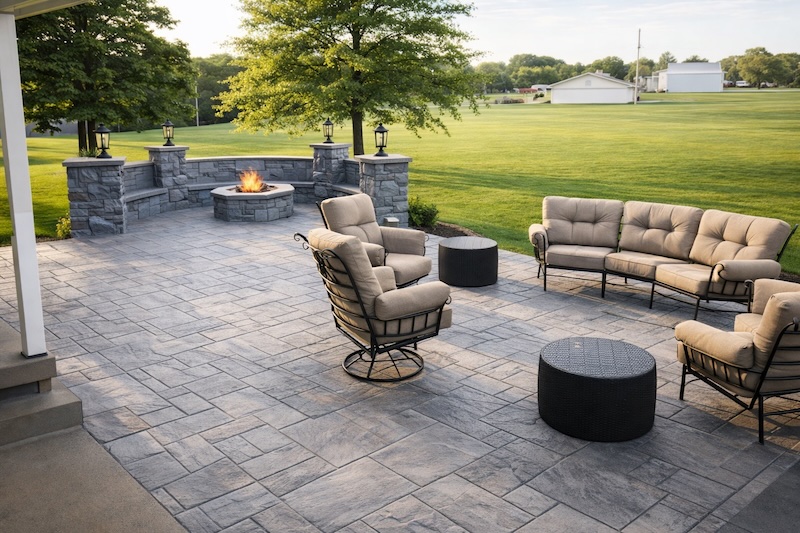
Best Decorative Concrete Finishes for Patios: A Guide for Texas Homeowners
A well-designed patio can turn an ordinary backyard into a comfortable outdoor living space for family gatherings, weekend barbecues, and relaxing evenings. However, plain or weathered concrete does not always complement the style of your home. Decorative concrete finishes offer a practical way to improve the appearance of your patio without necessarily removing and replacing the existing slab.
For homeowners across Dallas–Fort Worth and North Texas, choosing the right finish involves more than selecting a color or pattern. Strong summer sunshine, high surface temperatures, heavy rainfall, drainage conditions, and everyday foot traffic can all influence how a decorative concrete surface performs.
Options such as stamped concrete, stained finishes, textured coatings, and decorative concrete overlays provide different combinations of appearance, traction, maintenance requirements, and durability. The best choice depends on the condition of your existing concrete, your design preferences, and how you plan to use the space.
In this guide, we’ll explore the best decorative concrete finishes for patios, explain their advantages and limitations, and help you choose an option suited to your Texas property.
What Are Decorative Concrete Finishes?
Decorative concrete finishes are treatments that enhance the appearance or texture of concrete while retaining its underlying structural function. Depending on the system, they may introduce color, patterns, exposed stone, textured surfaces, or a new decorative layer over existing concrete.
Some finishes are created when concrete is initially installed. Others can be applied to an existing slab as part of a resurfacing project.
Decorative concrete is popular for patios because it can complement a wide range of architectural styles, from traditional brick homes to contemporary properties with minimalist landscaping.
Common applications include:
- Backyard patios and outdoor dining areas.
- Poolside entertainment spaces.
- Covered patios and outdoor kitchens.
- Garden walkways and connecting paths.
- Existing concrete surfaces that need a visual upgrade.
Before selecting a finish, determine whether your existing concrete is structurally suitable for the proposed treatment. Decorative coatings and overlays can improve the surface, but they cannot automatically correct serious cracking, settlement, or drainage problems.
1. Stamped Concrete: A Premium Stone or Brick Appearance
<text weight=”medium”>Best for: Homeowners who want a detailed, natural-looking patio design.</text>
Stamped concrete is created by impressing patterns into concrete while it is still workable. Depending on the installation method, color may be incorporated into the concrete or applied through compatible coloring systems.
Popular patterns resemble natural stone, slate, brick, cobblestone, or wood planks.
Benefits of stamped concrete
- Offers a wide selection of patterns and colors.
- Creates a coordinated appearance across large outdoor areas.
- Can reproduce the visual character of more expensive paving materials.
- Avoids the individual joints between separate paving units, although control joints and other necessary joints remain important.
Stamped concrete can suit traditional homes in Fort Worth as well as contemporary outdoor spaces in Dallas and surrounding communities.
However, the surface can become slippery when wet if the texture and finish are unsuitable. Color variation, joint design, and sealer selection also affect the final result.
Maintenance tip: Clean stamped concrete regularly and follow the recommended resealing schedule. If cracks develop, identify the cause before attempting repairs.
2. Stained Concrete: Rich Color With a Natural Appearance
<text weight=”medium”>Best for: Homeowners who prefer understated color and a contemporary finish.</text>
Concrete staining changes the appearance of the surface while allowing some of its natural texture and character to remain visible.
Acid-based stains can produce varied, earthy color effects through a chemical reaction with suitable concrete surfaces. Water-based stains and concrete colorants generally provide a broader range of color choices, depending on the product.
Common patio colors include warm brown, charcoal, terracotta, and muted gray.
Why choose stained concrete?
Stained concrete can complement outdoor kitchens, modern landscaping, covered seating areas, and patios that connect directly to indoor living spaces.
It can also be used to coordinate a patio’s appearance with exterior walls, stonework, or other architectural features.
There are important limitations. Stains do not hide every crack, patch, or surface imperfection. The final color depends on the concrete’s condition, previous treatments, and preparation. Some products also require a compatible protective sealer.
Maintenance tip: Use a suitable cleaner and inspect the protective finish periodically. Avoid assuming that a stain alone provides waterproofing or significant abrasion resistance.
3. Exposed Aggregate: Natural Texture and Visual Interest
<text weight=”medium”>Best for: Outdoor areas where a stone-like appearance and surface traction are priorities.</text>
Exposed aggregate concrete reveals decorative stones within the concrete mix by removing some of the surrounding cement paste from the surface.
The result can range from a subtle, fine-textured finish to a more prominent arrangement of exposed pebbles and stones.
Advantages of exposed aggregate
- Provides a distinctive natural appearance.
- Introduces texture and visual variation.
- Can be suitable for outdoor environments when properly designed.
- Offers flexibility in the selection of aggregate types and colors.
Exposed aggregate is worth considering for garden patios, outdoor paths, and spaces that connect different parts of a backyard.
Its texture can improve traction, but actual slip resistance depends on the aggregate, surface condition, contamination, and whether the area remains wet. Deep or rough textures may also be less comfortable for bare feet or more difficult to clean.
For a poolside patio in Fort Worth, consider how the finish will feel underfoot and how easily it can be cleaned of sunscreen, leaves, and other debris.
4. Broom-Finished Concrete: Simple, Practical, and Budget-Conscious
<text weight=”medium”>Best for: Homeowners who prioritize functionality over elaborate patterns.</text>
A broom finish is produced by drawing a broom across freshly placed concrete to create a series of fine lines or grooves.
Although it is generally associated with straightforward concrete installations, it can work well in outdoor spaces where a clean, understated appearance is preferred.
Key benefits
- Creates a simple textured surface.
- Can provide useful traction when appropriately installed.
- Works with many residential exterior styles.
- Usually involves less decorative detailing than elaborate stamped designs.
Borders, contrasting concrete sections, and carefully planned landscaping can help make a broom-finished patio look more intentional.
However, a broom finish is not automatically slip-proof, and the final result depends on the concrete mix, installation, and texture.
If you already have a worn concrete patio, a new broom finish generally requires a suitable new concrete installation rather than simply brushing texture into hardened concrete. A resurfacing professional can determine whether an overlay or another treatment is more appropriate.
5. Decorative Concrete Overlays: A Popular Choice for Existing Patios
<text weight=”medium”>Best for: Homeowners who want to improve suitable existing concrete without automatically replacing the entire slab.</text>
A concrete overlay is a specially formulated material applied over an existing concrete surface. Depending on the product, the overlay can introduce new color, texture, patterns, or decorative effects.
This option is particularly relevant when the underlying patio remains suitable for resurfacing but looks worn, stained, or outdated.
What can decorative overlays achieve?
Overlay systems can be used to create finishes that resemble stone, tile, or other decorative materials. Some systems can also be stamped, textured, or colored.
The main advantages include:
- A way to refresh the appearance of suitable existing concrete.
- Flexibility in color, texture, and decorative design.
- Opportunities to coordinate the patio with other outdoor surfaces.
- Potentially less demolition than full slab replacement.
The condition of the original concrete is crucial. Loose material, active movement, persistent moisture, and serious structural damage can prevent a successful installation unless the underlying issues are addressed.
For homeowners considering a textured decorative finish, Carvestone overlay and resurfacing in Dallas is a relevant place to explore the available approach.
Resistant Coating Solutions provides information about concrete resurfacing options for homeowners looking to improve existing surfaces. Before choosing an overlay, discuss the preparation process, suitable applications, expected maintenance, and limitations of the specific system.
6. Spray-Texture Finishes: Texture for Outdoor Comfort
<text weight=”medium”>Best for: Patios and poolside areas where texture and underfoot comfort are important.</text>
Spray-texture systems apply a decorative coating or texture material over a properly prepared surface. Depending on the system, a knockdown technique or another finishing method can create a patterned, slightly textured appearance.
These finishes are often considered for outdoor areas where a smoother, more uniform coating may not meet the homeowner’s preferences.
Benefits of spray-texture finishes
- Can introduce a consistent decorative texture.
- Offer options for coordinating colors with the home.
- May provide useful traction when the system is designed and installed appropriately.
- Can be suitable for certain resurfacing projects.
Some products are designed to reduce heat absorption or improve underfoot comfort, but not every spray-texture finish stays cool in direct sunlight.
In North Texas, surface temperature depends on color, sun exposure, material composition, and surrounding shade. Ask the installer for information about the specific product’s thermal characteristics rather than relying on the finish type alone.
For poolside projects, explore the options for pool deck concrete resurfacing in Fort Worth, Texas. Pool decks have different safety and maintenance considerations from ordinary patios, so the chosen finish should be suitable for wet conditions and regular foot traffic.
7. Engraved or Scored Concrete: Custom Patterns Without Separate Pavers
<text weight=”medium”>Best for: Homeowners who want geometric details or a tile-like appearance.</text>
Engraving and scoring introduce decorative lines into an existing concrete surface. Depending on the project, the lines may form geometric patterns, borders, large squares, or designs that resemble individual paving units.
Color treatments can sometimes be combined with scoring to create additional contrast.
Why consider scored concrete?
- Adds decorative detail to otherwise plain concrete.
- Can complement contemporary and traditional home designs.
- Offers a way to define separate seating or dining zones.
- Can be incorporated into certain renovation projects.
Scoring is not suitable for every concrete surface. Cutting too deeply or inappropriately can affect the slab, and decorative lines should not be confused with properly designed control joints.
A contractor should determine whether the existing concrete can accommodate the intended design and whether the treatment will compromise any protective coating.
8. Decorative Epoxy and Resin-Based Coatings
Epoxy and other resin-based coatings can create seamless-looking surfaces with a wide range of colors and decorative effects. Metallic pigments, for example, can produce a reflective, marble-like appearance.
However, a glossy metallic epoxy system is not automatically the best choice for an exposed patio.
Many conventional epoxy systems are intended primarily for interior applications and may discolor under prolonged UV exposure. Some glossy finishes can also become slippery when wet.
Before selecting a resin-based coating, confirm that the complete system is suitable for outdoor sunlight, temperature changes, moisture exposure, and the intended foot traffic.
For most exposed residential patios, a purpose-designed exterior coating or decorative overlay may be more appropriate than a coating selected purely for appearance.
9. Cool-Surface Coatings for Hot Texas Summers
Patio surface temperature can significantly affect outdoor comfort, particularly during Texas summers.
Some exterior coating systems are formulated with reflective pigments or other characteristics intended to reduce heat buildup. Textured finishes may also influence how the surface feels underfoot.
When comparing cool-surface products, look for information about their intended application, reflectivity, color options, durability, and performance under direct sunlight.
Keep these considerations in mind:
- Lighter colors may absorb less solar heat than darker colors under comparable conditions.
- Shade structures can reduce direct sun exposure.
- Surface temperature varies with weather, orientation, and material composition.
- A product marketed as a cool coating does not guarantee a particular temperature.
If your patio connects to a pool, choose a finish designed for the specific conditions rather than treating a general-purpose coating as a pool-deck solution.
How to Choose the Best Decorative Concrete Finish for Your Patio
With several options available, the right finish depends on how you use your patio and what the existing concrete can support.
| Your main priority | Finishes to consider | Important consideration |
|---|---|---|
| Natural stone appearance | Stamped concrete or decorative overlay | Pattern quality, joint design, and sealer maintenance |
| Modern, understated color | Stained concrete | Existing surface condition and color consistency |
| Textured outdoor surface | Exposed aggregate or suitable spray texture | Traction, cleaning, and barefoot comfort |
| Refreshing an existing slab | Compatible decorative overlay | Concrete condition and surface preparation |
| Simple, practical design | Broom-finished concrete | Whether new concrete installation is necessary |
| Custom geometric patterns | Engraved or scored concrete | Suitability of the slab for cutting |
| Reduced heat buildup | An appropriately rated cool-surface coating | Actual product performance and color |
| Decorative resin appearance | Outdoor-rated resin system, where suitable | UV resistance and slip performance |
Consider the condition of your existing concrete
Before choosing a decorative finish, inspect the slab for cracks, settlement, loose material, and drainage problems.
Minor surface imperfections may be manageable, but substantial movement or deterioration may require repairs or replacement rather than a decorative coating.
Match the finish to the way you use the patio
A patio designed primarily for outdoor dining has different requirements from a poolside entertainment area. Consider furniture movement, cooking equipment, wet feet, children, pets, and cleaning requirements.
Think about long-term maintenance
Some decorative finishes require periodic resealing, while others have different cleaning and recoating requirements. Ask for a written maintenance guide for the actual system being installed.
Consider the surrounding architecture
Choose colors and textures that complement the home’s exterior, landscaping, driveway, and walkways. A coordinated design often looks more intentional than selecting each surface independently.
If your renovation also includes the driveway, review concrete driveway resurfacing in Frisco, Texas to explore a related application. The best treatment for a driveway may differ from the finish selected for a patio because vehicle loads and turning forces create additional demands.
Why Professional Installation Matters
Even a high-quality decorative concrete product can perform poorly if the surface is inadequately prepared or the materials are applied incorrectly.
Professional installation typically involves assessing the existing concrete, removing contaminants, repairing suitable defects, preparing the surface for bonding, and applying the chosen system according to its specifications.
A qualified contractor should also explain:
- Whether the existing slab is suitable for resurfacing.
- Which decorative finish fits the intended use.
- How joints, cracks, and drainage will be addressed.
- Which sealer or protective coating is compatible with the system.
- How long the surface needs to cure before foot traffic or furniture placement.
- What cleaning and maintenance the finished patio requires.
For homeowners in the Dallas–Fort Worth area, Resistant Coating Solutions is a starting point for learning about concrete resurfacing and decorative surface options.
Discuss your project’s location, current concrete condition, desired appearance, and maintenance expectations before committing to a particular finish. The suitability of each product depends on the actual installation conditions and the manufacturer’s specifications.
How to Maintain Decorative Concrete Patios
The maintenance routine should match the installed finish, but several practices are useful for many outdoor concrete surfaces.
Clean regularly. Sweep away leaves, soil, and dust before they accumulate.
Remove spills promptly. Food grease, drinks, and fertilizer residue can discolor some finishes.
Use compatible cleaning products. Avoid strong acids, aggressive solvents, or abrasive tools unless the manufacturer specifically approves them.
Monitor drainage. Persistent standing water may indicate a problem that cleaning alone cannot solve.
Inspect for deterioration. Look for peeling, recurring cracks, and changes in the protective finish.
Reseal when appropriate. Follow the system’s maintenance requirements instead of applying sealer on an arbitrary schedule.
Regular care can help preserve the appearance of decorative concrete, but it cannot compensate for an unsuitable installation or underlying structural movement.
Frequently Asked Questions
What is the best decorative concrete finish for patios?
Stamped concrete is a popular option for homeowners who want stone or brick-like patterns. Decorative overlays are worth considering for suitable existing slabs, while stained concrete and textured coatings offer other design possibilities. The best choice depends on the surface condition, intended use, climate exposure, and maintenance preferences.
Which decorative concrete finish is best for Texas weather?
The best option is a system specifically designed for outdoor exposure and installed according to its requirements. Consider UV resistance, moisture exposure, drainage, surface texture, and heat absorption when comparing products.
Can decorative concrete be applied to an existing patio?
Yes, some finishes and overlay systems can be installed over existing concrete if the slab is suitable. The surface must be assessed and properly prepared, and significant structural or drainage problems should be addressed first.
Are decorative concrete patios slippery when wet?
They can be, depending on the texture, sealer, contamination, and surface conditions. Ask about wet-traction performance and choose a finish appropriate for the patio’s intended use, particularly around swimming pools.
How long do decorative concrete finishes last?
There is no single lifespan for every finish. Performance depends on the materials, installation quality, original slab, weather exposure, foot traffic, and maintenance. Ask the contractor about the expected maintenance requirements for the specific system.
Is decorative concrete cheaper than natural stone?
It can be less expensive than some natural stone installations, but costs vary according to surface preparation, design complexity, materials, labor, and whether the existing concrete can be reused. Compare itemized project estimates rather than assuming one finish is always the least expensive.
Conclusion: Choose a Patio Finish That Balances Beauty and Performance
The best decorative concrete finish for your patio is one that complements your home’s style while meeting the practical demands of outdoor living.
Stamped concrete can create an elegant stone-like appearance, stained concrete offers rich color, exposed aggregate introduces natural texture, and decorative overlays provide options for refreshing suitable existing slabs. Spray-texture systems and appropriately designed cool-surface coatings may also be worth considering for selected outdoor environments.
For homeowners in Dallas, Fort Worth, Frisco, and surrounding North Texas communities, pay particular attention to UV exposure, surface temperature, drainage, and wet traction when comparing materials.
Start by evaluating the condition of your existing concrete and deciding how you want to use the space. Then compare suitable finishes, understand their maintenance requirements, and seek professional advice about installation.
With careful planning and the right materials, a decorative concrete patio can provide an attractive and functional outdoor space for years. Resistant Coating Solutions can be a useful starting point for exploring concrete resurfacing options and determining which approach may suit your property.