
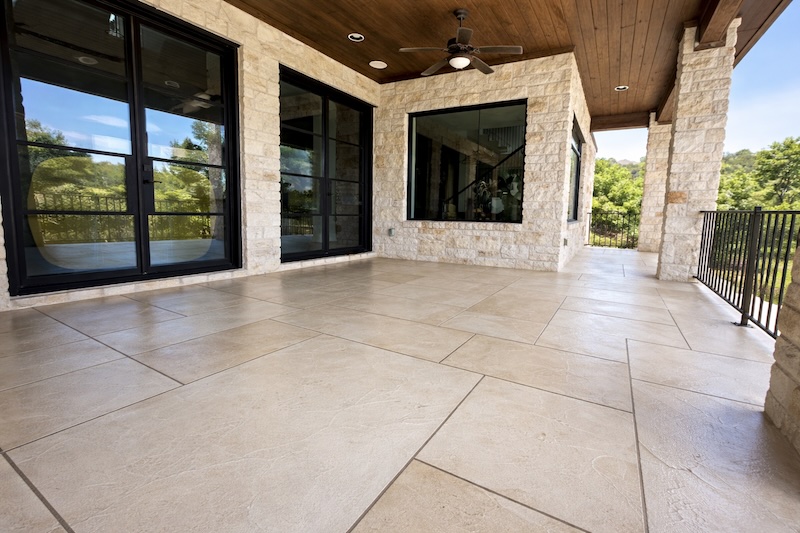
Patio Resurfacing Cost in Texas
If your concrete patio is cracked, faded, stained, or simply looks outdated, replacing the entire slab is not always necessary. Concrete patio resurfacing can give an existing patio a new finish without removing the whole structure underneath.
In Texas, the cost of resurfacing varies considerably depending on the patio’s size, the condition of the existing concrete, the type of overlay, surface preparation, and the finish you choose. A basic resurfacing project may cost around $3 to $7 per square foot, while decorative or stamped systems can commonly reach $8 to $15 or more per square foot. These are useful planning ranges rather than fixed quotes because every patio has different preparation and installation requirements.
For homeowners considering patio resurfacing in Dallas, Fort Worth, Plano, Frisco, Denton, or other Texas communities, understanding what actually drives the price is more useful than relying on a single average figure.
Average Patio Resurfacing Cost in Texas
The easiest way to estimate a project is to start with the patio’s square footage and then consider the finish.
| Resurfacing option | Approximate cost per sq. ft. | 300 sq. ft. patio | 500 sq. ft. patio |
|---|---|---|---|
| Basic concrete overlay | $3–$7 | $900–$2,100 | $1,500–$3,500 |
| Coloured or decorative overlay | $5–$8+ | $1,500–$2,400+ | $2,500–$4,000+ |
| Stamped overlay | $8–$15+ | $2,400–$4,500+ | $4,000–$7,500+ |
| Custom premium finish | $10–$15+ | $3,000–$4,500+ | $5,000–$7,500+ |
These figures should be used as budgeting guidance, not as a guaranteed market price. A small patio can also have a higher effective cost per square foot because preparation, equipment, transportation, and setup costs are spread over a smaller area.
For example, resurfacing a 200-square-foot patio may not cost exactly 40% of resurfacing a 500-square-foot patio.
What Determines the Cost of Patio Resurfacing?
The overlay material is only one part of the final price. In many projects, the condition of the existing concrete has a greater effect on the estimate.
Condition of the Existing Patio
Resurfacing generally makes the most sense when the existing concrete is structurally sound but has surface-level problems.
Minor discoloration, worn areas, shallow surface imperfections, and certain manageable cracks may be addressed during preparation. However, significant movement, major structural cracking, severe settlement, or a badly compromised slab may require a different repair approach.
A professional should inspect the concrete before recommending an overlay. Covering a serious underlying problem does not make that problem disappear.
Surface Preparation
Good preparation is one of the most important parts of the project.
The existing patio may need to be cleaned, mechanically profiled, repaired, and prepared so that the overlay can properly bond to the concrete. Oil, grease, dirt, old coatings, curing compounds, and other contaminants can interfere with adhesion.
If preparation requires substantial grinding, patching, crack treatment, or removal of an existing coating, the project will naturally cost more.
This is an area where homeowners should be cautious about choosing the lowest quote. A beautiful finish applied over poorly prepared concrete can develop adhesion or cracking problems later.
Size and Layout
A large, open patio is generally easier to work on than a small space with numerous edges, steps, columns, landscaping features, or difficult access.
A straightforward 600-square-foot patio may therefore have a lower cost per square foot than a much smaller patio requiring extensive hand preparation around obstacles.
The layout can also affect how decorative patterns are installed. More complicated designs require additional labour and planning.
Does the Type of Finish Affect Patio Resurfacing Cost?
Yes. The finish you choose can significantly change the total project price.
A simple overlay designed to refresh a worn surface generally costs less than a decorative system involving multiple colours, patterns, textures, or custom detailing.
Basic Overlay
A basic overlay is appropriate when the primary goal is to restore the patio’s appearance without adding an elaborate decorative design.
It can be a sensible choice for homeowners who want a clean, updated surface while keeping the project relatively straightforward.
Coloured or Decorative Overlay
Adding colour can make an ordinary patio look more intentional and coordinated with the home’s exterior.
For example, a warm earth tone may complement brick or stone landscaping, while a lighter finish can create a brighter appearance around an outdoor entertaining area.
Stamped Overlay
Stamped overlays can replicate the visual character of materials such as stone, slate, or brick while being installed over an existing concrete surface.
Because stamping involves additional design, forming, colouring, and finishing work, it generally costs more than a simple resurfacing treatment.
Natural-Stone-Style Finishes
Homeowners looking for a higher-end appearance may consider a textured natural-stone-style overlay. Resistant Coating Solutions uses decorative resurfacing and Carvestone overlay systems as options for transforming existing concrete surfaces.
The important point is to choose the finish based on how the patio will actually be used, not just how a sample looks.
How Much Does a 400-Square-Foot Patio Cost to Resurface?
A 400-square-foot patio provides a useful example for budgeting.
At $3 to $7 per square foot, a basic resurfacing project could fall around $1,200 to $2,800 before additional project-specific costs.
A decorative stamped or premium finish at approximately $8 to $15 per square foot could put the surface portion around $3,200 to $6,000.
The final price could be higher if the patio requires extensive repairs, difficult preparation, drainage work, or complicated decorative detailing.
This is why a contractor’s site assessment is more useful than calculating a final budget from an online average.
Resurfacing vs. Replacing a Concrete Patio
The main financial question is often whether resurfacing makes more sense than complete replacement.
Resurfacing can be considerably less disruptive because the existing slab remains in place. There is usually less demolition and less concrete to remove. It can also provide a faster way to update the appearance of a patio that is fundamentally sound.
Replacement, however, becomes more appropriate when the underlying slab has serious structural problems.
| Consideration | Resurfacing | Full replacement |
|---|---|---|
| Existing slab | Must generally be suitable | Can replace severely damaged concrete |
| Demolition | Limited | Extensive |
| Waste | Generally lower | Generally higher |
| Design options | Many decorative options | Many options |
| Project disruption | Usually less | Usually more |
| Best for | Surface-level deterioration | Major structural problems |
The right decision depends on the condition of the existing concrete rather than simply choosing whichever option has the lower starting price.
Texas Weather Can Affect Patio Resurfacing Decisions
Texas patios have to deal with conditions that should be considered when selecting an overlay.
Strong sunlight can heat outdoor surfaces significantly. Seasonal temperature changes can contribute to expansion and contraction, while heavy rain can expose drainage problems around patios.
In areas with expansive soils, movement of the ground can also contribute to cracking or settlement. This is especially important when evaluating an older patio.
For this reason, homeowners should look beyond colour and pattern when choosing a resurfacing system. Ask whether the proposed material is appropriate for exterior use, how it should be maintained, and what preparation is necessary for the existing slab.
Drainage deserves particular attention. If water regularly pools against the patio or near the home’s foundation, resurfacing should not be treated as a cosmetic solution to a drainage problem.
Ways to Keep Patio Resurfacing Costs Under Control
You do not necessarily need to choose the cheapest material to manage your budget. Instead, focus on where the money provides the most value.
Start by determining the patio’s condition before selecting decorative options. Repairing underlying problems early can prevent unnecessary complications later.
If budget is important, a simple textured or coloured finish may provide a substantial visual improvement without the cost of a highly detailed stamped design.
It can also help to resurface connected areas at the same time if they already require work. Combining projects may reduce duplicated preparation and setup costs.
When comparing contractors, ask for the estimate to separate:
- Surface preparation
- Crack and concrete repairs
- Overlay material
- Decorative finish
- Sealing
- Additional drainage or structural work
- Labour and cleanup
This makes it easier to understand why two quotes may differ significantly.
Is Patio Resurfacing Worth the Investment?
For the right patio, resurfacing can offer a strong balance between appearance, functionality, and cost.
It can transform an outdated concrete surface without the disruption of removing the entire slab. It also gives homeowners considerable flexibility in colour, texture, and decorative appearance.
But resurfacing is not a universal solution. If the concrete is unstable, severely settled, or suffering from major structural damage, replacement or structural repair may provide a better long-term answer.
A good contractor should be willing to tell you when resurfacing is appropriate and when it is not.
For Texas homeowners exploring their options, Resistant Coating Solutions provides concrete resurfacing and decorative overlay solutions designed around existing concrete surfaces. Reviewing the condition of the patio and discussing the intended use can help determine which approach makes sense for the property.
Final Thoughts
The cost of patio resurfacing in Texas typically falls somewhere around $3 to $15+ per square foot, with basic overlays toward the lower end and decorative or stamped finishes toward the higher end. A 400-square-foot patio might therefore range from roughly $1,200 to $6,000 or more depending on the system and preparation required.
The number that matters most, however, is not the statewide average. It is the cost of properly preparing your particular patio and installing a finish suited to its condition and use.
Before making a decision, have the existing concrete evaluated, identify any drainage or structural problems, compare the available finishes, and request a detailed written estimate. When the slab is a good candidate, resurfacing can provide a practical way to give a tired Texas patio a completely refreshed appearance without replacing everything underneath.