
Top 7 Benefits of Concrete Resurfacing
Concrete surfaces can lose their appeal over time. Driveways develop stains, patios become discoloured, pool decks show signs of wear, and walkways accumulate small chips and surface cracks. Although these problems can make a property look neglected, they do not always mean the concrete needs to be demolished and replaced.
Concrete resurfacing offers a practical way to restore an existing slab by applying a specially formulated overlay to its prepared surface. When the underlying concrete remains structurally sound, this approach can improve appearance, create a more functional finish, and reduce the disruption associated with complete replacement.
For homeowners across Dallas–Fort Worth, resurfacing is particularly worth considering because outdoor concrete faces intense summer sunshine, temperature changes, rain, and everyday wear.
1. Lower Cost Than Full Concrete Replacement
One of the biggest benefits of concrete resurfacing is the potential to save money compared with removing and replacing an entire slab.
Full replacement typically involves breaking up the existing concrete, hauling away debris, preparing the base, installing new concrete, and allowing it to cure. Resurfacing can avoid much of that demolition when the existing slab is suitable for an overlay.
For example, a homeowner in Plano with a faded backyard patio may not need an entirely new concrete base simply because the surface has become discoloured or worn. A decorative overlay could provide the desired improvement without the expense of rebuilding the whole area.
However, resurfacing is not automatically the cheapest option in every situation. Deep cracks, extensive repairs, drainage corrections, or elaborate decorative finishes can increase the total project cost.
Practical tip: Request an itemised estimate that includes surface preparation, crack repairs, the overlay system, finishing, sealing, and any additional work. Compare the complete costs rather than the headline price per square foot.
2. Improves Curb Appeal and Property Appearance
Worn concrete can make an otherwise well-maintained home look older than it is. Fading, stains, patchy repairs, and surface deterioration are especially noticeable in front entrances, driveways, and outdoor entertaining areas.
Concrete resurfacing provides an opportunity to create a cleaner, more coordinated appearance without starting from scratch.
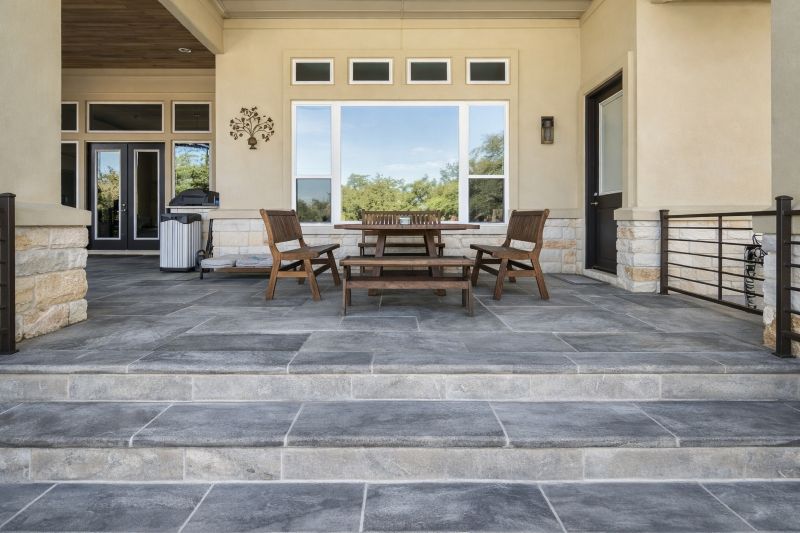
Homeowners can choose finishes that complement the property’s exterior, landscaping, and architectural style. Depending on the selected system, options may include natural-stone-inspired textures, decorative patterns, subtle colour variations, or a contemporary finish.
For instance, a dated driveway in Frisco could be resurfaced in a tone that complements the home’s brickwork and garage doors. Similarly, a plain patio in Dallas could be transformed into a more inviting outdoor living area.
The improvement is not limited to appearance. A consistent surface can also make an outdoor space feel better maintained and more thoughtfully designed.
Although attractive concrete may support a property’s overall presentation, it does not guarantee a specific increase in resale value. The result depends on the property’s condition, local market, and quality of installation.
3. Extends the Useful Life of Existing Concrete
Replacing concrete is not always necessary when the damage is confined to the surface. A properly installed overlay can give suitable existing concrete a renewed finish and help protect it from everyday wear.
This benefit depends heavily on the condition of the original slab. Resurfacing works best when the concrete remains stable, has adequate support, and does not show significant structural deterioration.
Before installation, the contractor should identify loose material, surface scaling, cracks, contamination, and other conditions that could interfere with bonding. Repairs and preparation must be completed before the new material is applied.
In North Texas, outdoor concrete must also withstand strong sunlight, seasonal temperature changes, rain, and frequent use. Choosing an overlay system designed for its intended exposure can help the finished surface perform more reliably.
Keep in mind that resurfacing does not stop every cause of concrete damage. If the slab continues to move or water undermines its base, cracks may return through the new finish.
What to check: Ask how the proposed system handles existing cracks, control joints, moisture, and expected traffic. A reliable assessment should explain both the likely benefits and the limitations of resurfacing your particular slab.
4. Offers More Decorative Design Options
Traditional concrete is practical, but its plain grey appearance does not suit every home’s design. Resurfacing makes it possible to update the finish while retaining a suitable existing base.
Depending on the overlay material and installation method, homeowners may choose:
- Natural-stone-inspired finishes: Create the appearance of limestone, slate, or other stone surfaces.
- Decorative patterns: Introduce visual detail to patios, walkways, and entry areas.
- Coordinated colours: Match the surface to exterior walls, paving, landscaping, or pool surroundings.
- Textured finishes: Add visual character and, when appropriately specified, improve traction.
These options are particularly useful when renovating multiple outdoor areas. A coordinated finish across a patio, connecting walkway, and pool deck can make the overall space feel more unified.
Resistant Coating Solutions offers decorative concrete resurfacing and Carvestone overlay systems across Dallas–Fort Worth. Its natural-stone-inspired finishes are one option for homeowners looking to update existing outdoor concrete.
The important consideration is choosing a finish that suits the location. A driveway needs to withstand vehicle traffic, while a pool deck requires careful attention to wet traction, bare-foot comfort, and drainage. A finish that looks attractive in a sample may not be the best practical choice for every application.
5. Reduces Demolition, Waste, and Renovation Disruption
Concrete replacement can be a noisy and messy process. Breaking up a driveway or patio creates heavy debris that must be removed before the new surface can be installed.
When the existing slab is suitable, resurfacing avoids much of this demolition. That means less concrete waste, fewer hauling requirements, and potentially less disturbance to surrounding landscaping.
Consider a backyard patio bordered by established planting beds, fencing, and outdoor seating. Removing the entire slab could disturb several of these features. Resurfacing may allow the homeowner to improve the concrete while preserving more of the existing outdoor layout.
The environmental benefit comes primarily from retaining usable material and reducing the need for demolition and disposal. The overall impact still depends on the overlay ingredients, preparation methods, transport, and eventual service life.
Resurfacing is also not a completely disruption-free process. Grinding, cleaning, repairs, and installation require access to the work area, and some dust or noise may occur during preparation.
Before work begins, move furniture, plan alternative access routes, and protect nearby plants and fixtures. If the project involves a driveway, arrange parking elsewhere until the contractor confirms that the surface is ready for vehicle traffic.
6. Makes Outdoor Areas More Practical and Comfortable
A resurfacing project can improve how an outdoor area functions, not just how it looks. The right combination of colour, texture, and surface design can address practical concerns that affect everyday use.
For example, a pool deck in the Dallas–Fort Worth area may become uncomfortable under intense summer sunshine. Depending on the product and finish, a lighter-coloured overlay may absorb less solar heat than a darker alternative. However, actual surface temperature varies with material composition, texture, direct sunlight, and weather conditions.
Texture also matters around swimming pools, outdoor kitchens, and garden paths. A finish designed for suitable wet traction can help reduce slipping risks, although no surface can eliminate them entirely.
Other improvements may include creating a more consistent finish across worn outdoor areas, improving the appearance of entertaining spaces, and selecting a surface appropriate for regular pedestrian or vehicle traffic.
Resurfacing alone cannot correct every functional problem. If a patio directs rainwater toward the house, for instance, the underlying drainage and slope need to be assessed rather than simply covered with a new finish.
When planning a project, explain how the space is used. A family pool deck, a frequently parked driveway, and a quiet garden patio have different requirements and should not automatically receive the same overlay system.
7. Can Simplify Ongoing Cleaning and Maintenance
Old concrete can develop stubborn stains, rough patches, and areas where dirt collects in damaged sections. A properly installed and appropriately sealed overlay can create a more uniform surface that is easier to maintain.
For busy households, this can be a welcome improvement. A resurfaced patio may be easier to sweep, while a driveway with a suitable protective finish may be easier to clean after ordinary use.
Maintenance requirements depend on the chosen product and the conditions the surface experiences. Some systems require periodic resealing, and areas exposed to vehicle fluids, heavy foot traffic, or standing water may need more attention.
A simple care routine helps preserve the finish:
- Sweep away leaves, soil, and loose debris regularly.
- Clean ordinary dirt using a compatible cleaner and the manufacturer’s recommended method.
- Address oil, food, and other stains promptly.
- Keep drains clear and prevent water from collecting around the slab.
- Inspect for new cracks, peeling, or areas where the finish appears to be separating.
- Follow the installer’s guidance on resealing and repairs.
Avoid assuming that every overlay can tolerate aggressive pressure washing, acidic cleaners, or the same sealing products. Incorrect cleaning methods may damage the finish or shorten its useful life.
When Is Concrete Resurfacing the Right Choice?
The seven benefits are most relevant when the existing concrete is still a suitable foundation for a new surface. Before committing to a project, consider the condition of the slab and the type of damage present.
| Existing concrete condition | Is resurfacing suitable? | Recommended next step |
|---|---|---|
| Faded or discoloured surface | Often | Select a compatible decorative overlay |
| Minor chips and surface wear | Often | Assess and repair damaged areas first |
| Small cracks in a stable slab | Sometimes | Identify the cause and plan appropriate crack treatment |
| Uneven or sunken sections | Not without further assessment | Investigate settlement and correct the underlying problem |
| Major structural cracks or moving slabs | Often unsuitable | Obtain a professional assessment |
| Persistent standing water | Not as a standalone fix | Correct drainage and slope issues before resurfacing |
The key distinction is between surface deterioration and structural failure. An overlay can refresh a worn finish, but it cannot reliably repair an unstable foundation simply by covering it.
How to Choose a Concrete Resurfacing Contractor in Dallas–Fort Worth
Once you know your slab may be suitable, choosing the right installation approach becomes the next priority.
Look for a contractor who examines the existing concrete before recommending a system. Ask how the surface will be cleaned and mechanically prepared, what repairs are included, and how the chosen material is suited to your driveway, patio, pool deck, or walkway.
It is also worth asking for written information about:
- The proposed overlay material and decorative finish.
- Preparation and repair procedures.
- Expected access restrictions and curing times.
- Slip resistance where wet conditions are likely.
- Sealing, cleaning, and ongoing maintenance.
- Workmanship and material warranty terms.
Resistant Coating Solutions provides concrete resurfacing and decorative overlay services for homeowners in Dallas, Fort Worth, and surrounding communities, including Plano, Frisco, Denton, and McKinney. Homeowners can explore its options at https://resistantcoatingsolutions.com/ and request an assessment of their existing concrete.
A useful estimate should explain why resurfacing is appropriate for the slab rather than simply promising a new appearance.
Conclusion
Concrete resurfacing can offer substantial benefits when an existing slab remains structurally sound. It may reduce renovation costs, improve curb appeal, extend the useful life of the surface, introduce attractive design options, limit demolition waste, improve outdoor usability, and simplify routine maintenance.
For Dallas–Fort Worth homeowners, selecting a finish that suits Texas weather and the intended use of the space is particularly important. A decorative patio, a vehicle-bearing driveway, and a wet pool deck each have different performance requirements.
The best starting point is a professional assessment of the concrete’s condition, drainage, and suitability for an overlay. When those fundamentals are right, resurfacing can be a practical way to renew an outdoor space without automatically replacing the entire slab.