
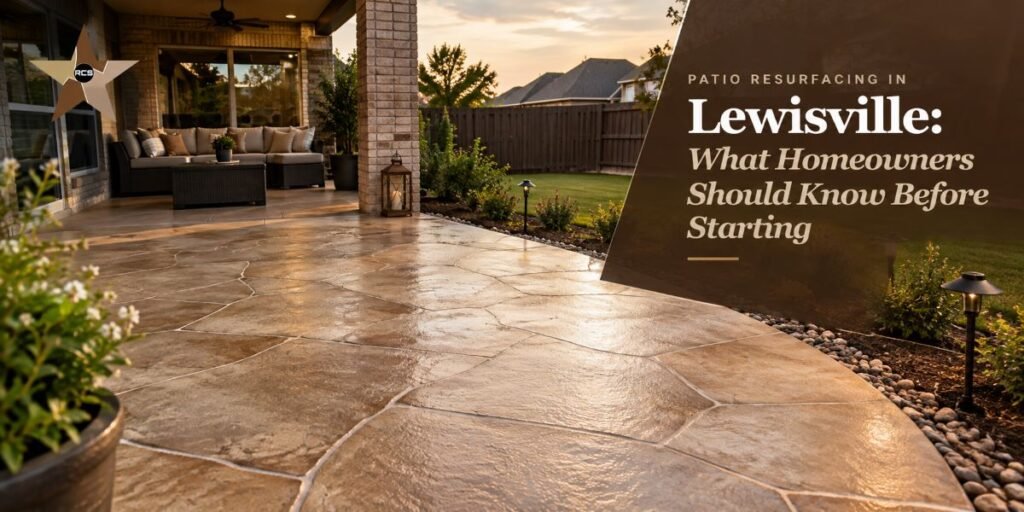
Patio Resurfacing in Lewisville: What Homeowners Should Know Before Starting
A concrete patio does not necessarily need to be demolished just because it looks old. In many Lewisville homes, the existing slab is still usable but has developed fading, surface wear, minor cracks, stains, or an outdated appearance. In that situation, patio resurfacing can provide a practical way to give the space a completely different look without automatically replacing the entire concrete surface.
Patio resurfacing in Lewisville is particularly worth considering because outdoor concrete has to handle intense North Texas sunlight, seasonal weather changes, moisture, furniture, foot traffic, and regular outdoor use. A successful project therefore involves more than choosing an attractive color. The condition of the existing slab, surface preparation, overlay system, drainage, and final texture all matter.
For homeowners planning to upgrade an outdoor living area, understanding how resurfacing works—and when it is actually appropriate—can make the decision much easier.
What Is Patio Resurfacing?
Patio resurfacing is the process of renewing an existing concrete surface by preparing it and installing a new decorative or protective overlay system.
Instead of removing the entire slab, the existing concrete becomes the foundation for the new finish. Depending on the selected system, the finished patio can have a different color, texture, pattern, or stone-inspired appearance.
This is different from simply painting concrete. A professional overlay system is designed to bond to properly prepared concrete and become part of the finished surface.
Resurfacing can be useful when the patio is structurally sound but no longer looks the way the homeowner wants. It can also help create a more cohesive appearance between a patio, walkway, pool area, or other outdoor spaces.
Is Your Lewisville Patio a Good Candidate?
This is the most important question to answer before discussing colors and designs.
A patio may be suitable for resurfacing when the main problems are cosmetic or relatively minor, including:
- Faded or discolored concrete
- Surface wear
- Minor cracking
- Staining
- An outdated finish
- Small imperfections
- A plain concrete appearance
- A desire for a decorative stone-like surface
However, resurfacing is not a magic solution for every damaged slab.
If the concrete has substantial movement, major settlement, severe structural cracking, crumbling sections, or significant drainage problems, simply covering the surface may not address the underlying issue.
A professional assessment should determine whether the slab can support an overlay before installation begins.
Why Lewisville’s Climate Matters
Outdoor concrete in Lewisville has to withstand demanding conditions.
North Texas summers can expose patios to intense heat and prolonged sunlight. At other times of year, rain and changing temperatures can affect exterior surfaces. Patio furniture, grills, outdoor kitchens, pets, and regular foot traffic add another layer of everyday wear.
This means homeowners should think beyond appearance when selecting a resurfacing system.
The surface should be appropriate for exterior use and the expected level of traffic. The finish should also make sense for how the patio is actually used.
For example, a patio surrounding a swimming pool has different requirements from a covered sitting area. A surface that works well for a quiet seating area may not be the ideal choice where water and bare feet are common.
Resistant Coating Solutions specifically serves Lewisville as part of its Dallas–Fort Worth service area and describes its resurfacing solutions as being selected with North Texas outdoor conditions in mind.
What Does the Resurfacing Process Look Like?
Good patio resurfacing starts before the new finish is applied.
1. Inspect the Existing Concrete
The first step is evaluating the patio’s condition.
Cracks, damaged areas, stains, loose material, drainage issues, and other problems should be identified. This helps determine whether resurfacing is appropriate and what preparation will be necessary.
A contractor should be willing to explain why the existing concrete is suitable for an overlay rather than simply recommending one based on appearance.
2. Prepare the Surface
Preparation is one of the most important parts of the project.
The existing concrete needs to be cleaned and properly prepared so the overlay can establish a strong bond. Minor defects may require repair before the new system is installed.
Poor preparation can cause problems even when high-quality overlay materials are used. This is why homeowners should ask exactly what preparation is included in the estimate.
3. Select the Design
Once the surface is ready, the decorative possibilities become much broader.
Depending on the system, a homeowner may choose different colors, textures, patterns, and stone-inspired appearances.
Resistant Coating Solutions specializes in decorative concrete resurfacing and Carvestone overlay systems, which can create finishes inspired by natural stone, slate, tile, and other materials.
4. Install the Overlay
The selected system is installed over the prepared concrete according to its application requirements.
For Carvestone applications, the company’s published information describes a hand-carved approach rather than relying on conventional stamping tools. This can create a more individualized, natural-stone appearance.
5. Complete and Cure the Finish
The final steps depend on the chosen system and project conditions.
The surface needs appropriate time to cure before normal use resumes. Homeowners should follow the installer’s instructions regarding furniture, foot traffic, water exposure, and other activities during this period.
Patio Overlay vs. Replacing the Concrete
One of the biggest reasons homeowners investigate resurfacing is that replacement can involve considerable demolition and disruption.
If the existing patio is structurally suitable, resurfacing allows the homeowner to work with the slab rather than immediately removing it.
| Factor | Resurfacing | Replacement |
|---|---|---|
| Existing slab | Used as the base when suitable | Removed |
| Demolition | Usually limited | Required |
| Design options | Decorative textures, colors and patterns | New finish from the beginning |
| Best application | Sound concrete with surface problems | Severely damaged or unstable concrete |
| Project disruption | Generally lower | Generally greater |
| Structural problems | Must be addressed first | Can be rebuilt from the base |
The goal is not to choose resurfacing simply because it sounds easier. The right approach depends on the condition of the patio.
If the base itself has failed, replacement may be the more sensible long-term investment.
Design Ideas for a Lewisville Patio
Resurfacing gives homeowners an opportunity to rethink the appearance of their outdoor space.
A plain gray patio can be transformed with a natural-stone-inspired texture, complementary color, or pattern that works with the home’s exterior.
Some possibilities include:
- Natural stone-inspired finishes
- Slate-style textures
- Tile-inspired patterns
- Subtle earth-tone colors
- Contrasting borders
- Textured finishes
- Custom decorative patterns
- Finishes that complement existing brick or masonry
The best design is usually the one that works with the architecture and landscaping rather than trying to make the patio the only visual focal point.
For example, a warm neutral finish may complement a brick exterior, while a cooler gray tone could work well with contemporary siding and modern landscaping.
What About Cracks in an Existing Patio?
This is one of the most important questions homeowners should ask.
Minor cracks and surface imperfections can sometimes be repaired or incorporated into the resurfacing process. In some decorative applications, existing imperfections may become less noticeable within the finished pattern.
However, a decorative overlay should not be viewed as a cure for structural movement.
If a crack is caused by settlement or ongoing movement beneath the concrete, covering it without addressing the cause can lead to future problems.
Before accepting an estimate, ask:
What caused the existing cracking, and what will be done before the overlay is installed?
That question can help distinguish a properly planned resurfacing project from a purely cosmetic approach.
Can Resurfacing Make a Patio Safer?
The answer depends on the selected system and finish.
Texture can provide additional traction, which may be useful in outdoor areas that become wet. This is particularly relevant around pools, outdoor showers, or patios exposed to frequent rain.
Resistant Coating Solutions states that its Carvestone overlay systems are designed with slip resistance in mind, making the type of finish an important consideration for outdoor spaces.
Still, texture is only one part of outdoor safety. Proper drainage, surface condition, lighting, furniture placement, and maintenance also matter.
A homeowner should select the finish according to how the patio will be used rather than choosing purely on appearance.
How Long Does Patio Resurfacing Take?
There is no single timeline for every Lewisville patio.
Project duration depends on the size of the area, existing concrete condition, preparation requirements, design complexity, selected overlay, and weather conditions.
Resistant Coating Solutions notes that many of its resurfacing projects can be completed within a few days, although individual projects can vary.
Weather is particularly important for exterior work. If conditions are unsuitable for application or curing, the installation schedule may need to change.
For that reason, homeowners should ask for a realistic project timeline rather than assuming that every patio will follow the same schedule.
How to Choose the Right Patio Resurfacing Contractor
The lowest estimate is not necessarily the best value.
Before hiring a contractor, ask for clear answers about:
- Whether the existing patio is suitable for resurfacing
- What preparation is included
- How cracks and damaged areas will be handled
- Which overlay system will be installed
- Available textures and colors
- Expected project duration
- Weather considerations
- Maintenance requirements
- Warranty or workmanship coverage
- What happens if structural problems are discovered
It is also useful to look at completed projects involving patios rather than judging a contractor solely from driveway or indoor work.
If you’re comparing options for your Lewisville home, you can review concrete resurfacing services from Resistant Coating Solutions to understand the types of outdoor surfaces and decorative finishes the company works with.
Maintenance After Patio Resurfacing
A resurfaced patio still needs ordinary care.
Keep the surface free from leaves, dirt, and debris, particularly in areas where moisture can remain trapped. Clean spills reasonably quickly, especially from food, drinks, grease, or outdoor cooking.
Heavy furniture should also be moved carefully rather than dragged across the finished surface.
Your contractor should provide maintenance recommendations specific to the overlay system used. Following those instructions can help preserve both the appearance and performance of the finish.
When Should You Consider Resurfacing?
A patio may be worth resurfacing when the concrete is fundamentally usable but the surface has become unattractive, worn, or outdated.
It is especially worth investigating when you want to:
- Refresh an aging patio
- Improve the appearance of an outdoor entertaining area
- Add a stone-inspired design
- Coordinate the patio with landscaping
- Improve surface texture
- Avoid unnecessary demolition
- Give existing concrete a more finished appearance
On the other hand, significant structural damage should trigger a more careful evaluation before any overlay is considered.
Final Thoughts
Patio resurfacing can give a Lewisville outdoor space a completely different appearance without automatically removing a usable concrete slab. The biggest advantage is flexibility: homeowners can refresh worn concrete while considering new colors, textures, patterns, and natural-stone-inspired finishes.
But the quality of the result starts underneath the decorative finish. The existing concrete needs to be evaluated, cracks and damaged areas need appropriate attention, and the surface must be properly prepared before the overlay is installed.
For homeowners in Lewisville, Resistant Coating Solutions offers decorative concrete resurfacing and overlay services as part of its wider DFW service area. Its work includes patios, driveways, pool decks, porches, and walkways, with Carvestone systems available for customized stone-inspired finishes.
The best resurfacing project is not simply the one that looks impressive on installation day. It is the one where the existing slab, preparation, material, design, climate, and intended use have all been considered before the first layer is applied.