
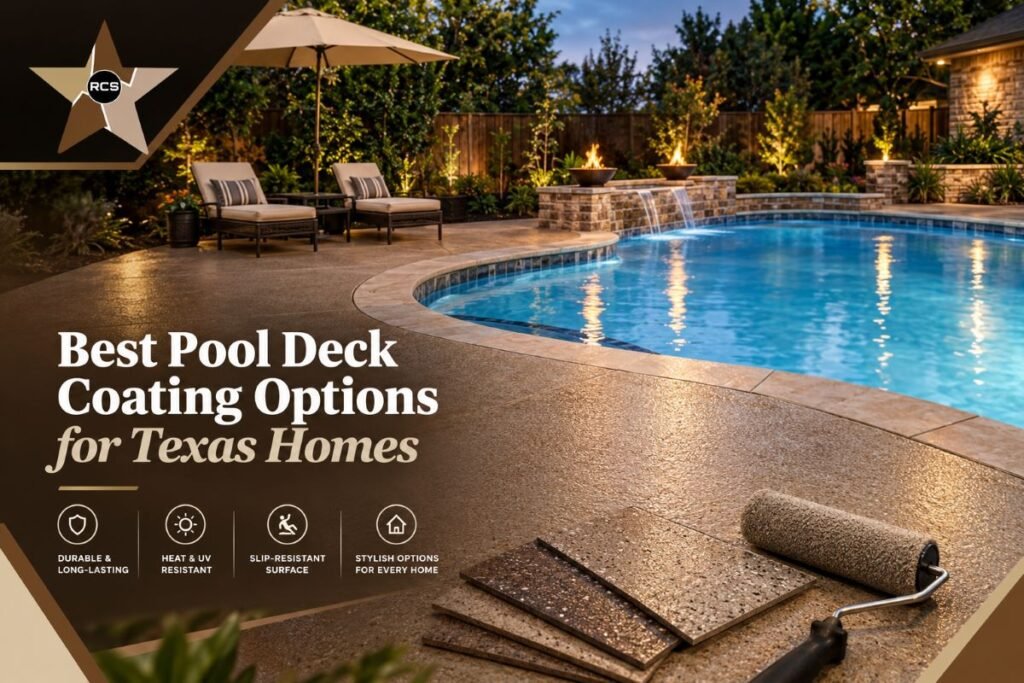
Best Pool Deck Coating Options for Texas Homes
A pool deck in Texas has a demanding job. It sits outside through intense summer heat, strong UV exposure, sudden rain, pool chemicals, wet feet, and constant traffic from family and guests. Over time, even a well-built concrete deck can become faded, stained, cracked, rough, or uncomfortably hot.
That is why choosing the best pool deck coating for a Texas home is about more than selecting a color. The right system needs to suit the existing concrete, provide appropriate traction when wet, handle outdoor exposure, and remain comfortable enough for barefoot use.
For many homeowners, resurfacing an existing deck can also make more sense than removing and replacing an otherwise stable slab. The key is understanding which options are available and which characteristics matter most in the Texas climate.
What Makes a Pool Deck Coating Suitable for Texas?
Texas creates a different set of requirements than a mild climate.
A pool deck can become extremely hot under direct summer sunlight. At the same time, the surface is repeatedly exposed to water and pool chemicals. Outdoor concrete also expands and contracts as temperatures change.
Before choosing a coating, consider these five factors:
- Heat: A dark or unsuitable surface can become uncomfortable under bare feet.
- UV exposure: Constant sunlight can cause some finishes to fade, chalk, or deteriorate.
- Slip resistance: Pool water makes traction especially important.
- Durability: The surface needs to handle foot traffic, furniture, and outdoor use.
- Maintenance: A beautiful finish should not require excessive upkeep.
The existing slab matters just as much. A decorative coating cannot correct serious structural movement or a severely failing concrete base.
1. Carvestone Concrete Overlays
For homeowners looking for a decorative transformation rather than a basic coating, a Carvestone overlay can be an attractive option.
Carvestone systems use a cement-based material combined with natural Carvestone aggregate and polymer components. The finished surface can be shaped and carved to create a natural-stone appearance rather than leaving the pool area looking like plain resurfaced concrete.
This approach is particularly useful when the existing deck is structurally suitable but visually outdated.
Resistant Coating Solutions specializes in Carvestone overlay systems as part of its concrete resurfacing services across Dallas–Fort Worth. Its published process describes hand-carved patterns that can produce different stone-inspired textures and appearances.
For a Texas backyard, the design benefit is only part of the appeal. A properly selected and installed overlay can also give an old pool deck a more finished, cohesive appearance.
When is a Carvestone overlay a good choice?
Consider it when you want:
- A natural-stone-inspired appearance
- Custom patterns and textures
- A major visual update without removing the entire slab
- A decorative surface suitable for outdoor living
- A finish that works with existing patios and landscaping
The condition of the concrete should still be evaluated before installation.
2. Textured Concrete Resurfacing
Concrete resurfacing is another practical choice when the existing deck is stable but has developed surface-level wear.
Instead of demolishing the entire deck, a new resurfacing system is applied over properly prepared concrete. This can address an outdated appearance while introducing a new texture and color.
Texture is especially important around a swimming pool. A perfectly smooth surface may look attractive when dry but is not necessarily the best choice for an area where people regularly walk with wet feet.
A textured finish can provide a better balance between appearance and practical traction.
If the deck has minor cracks, stains, discoloration, or surface deterioration, professional concrete resurfacing may be worth considering before deciding that complete replacement is necessary.
3. Cool-Deck-Style Textured Finishes
Heat is one of the biggest complaints homeowners have about outdoor pool decks in Texas.
A surface exposed to direct summer sunlight can become uncomfortable very quickly. Light-colored, textured finishes are commonly considered for pool areas because they can help reduce the harsh feel associated with dark, heat-absorbing surfaces.
The exact temperature of a finished deck depends on its material, color, texture, sunlight exposure, and surrounding environment, so homeowners should be cautious about guaranteed temperature claims.
Instead, ask the contractor what the proposed finish is designed to do under direct Texas sun.
A lighter color can also have a practical advantage: it may complement the bright, open appearance of a pool area while making the space feel less visually heavy.
4. Acrylic-Based Pool Deck Coatings
Acrylic coatings have traditionally been used for decorative concrete and pool deck applications because they can provide color and texture without requiring a complete reconstruction.
They can be useful when budget, appearance, and relatively straightforward maintenance are priorities.
However, not every acrylic product is designed for the same conditions. Product quality, surface preparation, application method, and exposure all affect performance.
For a Texas pool deck, ask specifically about:
- UV resistance
- Expected maintenance
- Recoating requirements
- Wet traction
- Heat performance
- Chemical exposure
- Compatibility with the existing concrete
A low-cost coating that needs frequent attention may not be the best long-term value.
5. Epoxy and Other High-Build Coatings
Epoxy is well known for its hardness and resistance to wear and chemicals, but pool decks require more careful consideration than many interior concrete applications.
Direct sunlight is a major concern. Some epoxy systems can discolor or degrade when exposed to prolonged UV radiation, making them less suitable for a completely exposed outdoor pool deck unless the specific system is designed and finished appropriately.
Epoxy may therefore be more appropriate in certain protected or specialized applications than as a default choice for every Texas swimming pool.
The lesson is simple: don’t choose a coating based solely on its reputation for toughness. Outdoor UV performance matters just as much as hardness.
Which Pool Deck Coating Is Best?
There is no single coating that is ideal for every Texas property.
The best option depends on the condition of the existing concrete, how much direct sunlight the deck receives, the desired appearance, expected foot traffic, and the level of maintenance you are comfortable with.
| Pool Deck Option | Best For | Main Consideration |
|---|---|---|
| Carvestone overlay | Decorative stone-style appearance | Requires suitable existing surface |
| Textured concrete resurfacing | Worn or outdated concrete | Preparation is critical |
| Cool-deck-style finish | Hot, sunny pool areas | Color and texture affect performance |
| Acrylic coating | Decorative upgrades and budget-conscious projects | May require periodic maintenance |
| Epoxy/high-build coating | Certain specialized applications | UV suitability must be confirmed |
The important point is that the coating itself is only one part of the system.
Surface Preparation Can Make or Break the Project
A premium coating installed over poorly prepared concrete can still produce disappointing results.
Before application, the existing surface should be assessed and properly prepared. Dirt, contaminants, loose material, and damaged areas need to be addressed. Cracks and other imperfections should be evaluated rather than simply covered.
This is also the stage where drainage problems should be noticed.
If water repeatedly collects in one section of the deck, applying a beautiful new finish will not solve the underlying drainage issue. The same applies to significant movement or settlement.
When requesting an estimate, ask the installer what preparation is included rather than comparing only the final coating price.
Don’t Forget Slip Resistance
Pool decks are different from ordinary patios because water is part of everyday use.
People may walk across the deck immediately after swimming, children may run around the pool, and splashing can keep sections of the surface wet for long periods.
For that reason, slip resistance should be discussed before selecting a finish.
Texture needs to provide useful traction without creating an excessively abrasive surface that becomes uncomfortable for bare feet. A sample area can be helpful if the contractor provides one.
Also consider how the texture will feel when wet, not just how it looks when completely dry.
How Long Does Pool Deck Resurfacing Take?
The timeline depends on the deck’s size, existing condition, preparation requirements, selected system, and weather.
Resistant Coating Solutions states that many of its resurfacing projects can be completed within a few days, although each project is different.
Texas weather can influence scheduling, particularly when outdoor surfaces require specific conditions for installation or curing.
Homeowners should ask when the deck can safely be walked on and when furniture, pool equipment, or regular activity can return to the area. Don’t assume that a surface is ready simply because it looks dry.
How to Choose a Pool Deck Color
Color is more important than many homeowners realize.
Very dark surfaces can absorb substantial solar heat, while lighter colors often create a brighter and more open pool environment. However, extremely light finishes may show dirt and staining more readily.
Think about the entire backyard rather than choosing a color from a small sample alone.
Consider:
- House exterior color
- Pool coping
- Patio materials
- Landscaping
- Outdoor furniture
- Amount of direct sunlight
- Desired maintenance level
A neutral stone-inspired finish can often age better visually than an overly bold color.
When Should You Resurface Instead of Replace?
Resurfacing is generally worth investigating when the existing concrete is fundamentally stable but the surface has become unattractive or worn.
Replacement may be more appropriate when there is extensive structural damage, major settlement, significant movement, or a failing base.
This distinction is critical.
An overlay should not be used simply to hide a structural problem. A professional evaluation can help determine whether resurfacing is technically appropriate before money is spent on decorative work.
For homeowners considering the wider project, pool deck resurfacing can provide a way to update an aging outdoor area while retaining a suitable existing concrete base.
Questions to Ask Before Hiring a Pool Deck Coating Contractor
Before signing a contract, ask:
- Is my existing concrete suitable for resurfacing?
- What preparation will be performed?
- How will existing cracks be handled?
- What happens if you discover structural damage?
- What type of texture will be used for wet-foot traction?
- How does the system perform under Texas UV exposure?
- Will the surface become uncomfortable in direct summer sun?
- What maintenance or resealing is recommended?
- How long before the deck can be used?
- What warranty or workmanship coverage is provided?
A trustworthy contractor should be able to explain these points clearly without making the conversation solely about selling a particular finish.
Final Thoughts
The best pool deck coating for a Texas home is not necessarily the most expensive product or the most attractive sample. It is the system that matches the existing concrete, local climate, safety requirements, design preferences, and expected maintenance.
For many homeowners, decorative concrete resurfacing and overlay systems provide a practical way to transform an aging pool deck without automatically removing the entire slab. Carvestone can be particularly appealing when a natural, customized stone appearance is desired, while textured resurfacing can provide a more straightforward decorative update.
Resistant Coating Solutions serves homeowners throughout the Dallas–Fort Worth region, including communities such as Dallas, Fort Worth, Frisco, Plano, Lewisville, Flower Mound, and Denton.
Before choosing a finish, focus first on the condition of the concrete and the demands of the site. Once those fundamentals are right, color, texture, pattern, and design can turn an ordinary pool deck into a comfortable and attractive part of the Texas outdoor living space.