
How Long Does Pool Deck Resurfacing Last?
A pool deck is more than just a surface surrounding your swimming pool. It is an important part of your outdoor living area, affecting safety, comfort, appearance, and the overall value of your property. Over time, constant exposure to sunlight, moisture, pool chemicals, temperature changes, and regular foot traffic can cause concrete pool decks to fade, crack, stain, or become uncomfortable to use. Pool deck resurfacing is a popular solution for restoring worn surfaces without completely removing and rebuilding the existing deck. However, one of the most common questions homeowners ask before investing in this improvement is: how long does pool deck resurfacing last? In general, a professionally installed pool deck resurfacing system can last 10 to 15 years or more when properly designed, installed, and maintained. The actual lifespan depends on several factors, including the quality of materials, preparation work, weather conditions, maintenance habits, and how heavily the pool area is used. Understanding these factors can help homeowners make better decisions and protect their outdoor investment for many years.
Average Lifespan of Pool Deck Resurfacing
Most high-quality pool deck resurfacing applications are designed to provide long-term performance while improving the appearance and usability of an existing concrete surface. Under normal residential conditions, many resurfaced pool decks can remain attractive and functional for a decade or longer. However, resurfacing longevity is not determined by the coating alone. A durable finish requires proper surface preparation, professional application, and ongoing care. For example, a pool deck located in a region with intense summer heat and strong UV exposure may experience faster surface wear compared with a shaded pool area. Similarly, decks around frequently used community pools may require more maintenance than a private backyard pool with lighter traffic.
A realistic lifespan range includes:
| Pool Deck Resurfacing Type | Typical Lifespan |
| Basic decorative resurfacing | 5–10 years |
| Professionally applied coating systems | 10–15+ years |
| Premium protective systems with maintenance | 15+ years |
The right resurfacing system depends on the condition of the existing concrete, desired appearance, and environmental conditions.
What Factors Affect How Long Pool Deck Resurfacing Lasts?
Several important factors influence whether a resurfaced pool deck lasts several years or exceeds expectations.
Quality of Surface Preparation
Preparation is one of the most important steps in any resurfacing project. Even the most advanced coating system may fail prematurely if the existing concrete surface is not properly cleaned, repaired, and prepared.
Before applying a new surface layer, professionals typically evaluate:
- Existing cracks and damage
- Surface contamination from dirt, oil, or chemicals
- Moisture problems
- Uneven areas
- Previous coatings or sealers
Proper preparation allows the new material to bond securely with the concrete, reducing problems such as peeling, bubbling, or premature wear.
Material Quality and Coating System
Not all resurfacing materials provide the same level of durability. Pool decks require surfaces that can handle moisture, chemical exposure, temperature fluctuations, and regular outdoor use.
A quality resurfacing system should provide:
- Resistance to water exposure
- Protection from UV damage
- Improved slip resistance
- Comfortable walking temperatures
- Long-lasting color and texture
Resistant Coating Solutions focuses on durable coating applications designed to improve both the appearance and performance of concrete surfaces. Choosing a system suited to the specific environment plays an important role in achieving long-term results.
Weather and Climate Conditions: Outdoor surfaces experience continuous environmental stress. In areas with strong sunlight, frequent temperature changes, or heavy rainfall, resurfaced pool decks may require more attention over time. Heat can cause expansion and contraction, while moisture can affect concrete surfaces if drainage problems exist. Proper installation techniques and suitable materials help reduce these challenges. Homeowners should also consider how their local climate affects maintenance schedules. A pool deck exposed to year-round outdoor conditions requires different care compared with a covered or partially protected area.
Pool Usage and Foot Traffic
The amount of activity around a pool directly affects surface durability. A private backyard pool used occasionally will generally experience less wear than:
- Vacation rental properties
- Large entertainment spaces
- Frequently used family pools
- Commercial recreational areas
Heavy foot traffic, outdoor furniture movement, and repeated exposure to pool chemicals can gradually affect the surface. Regular inspections help identify small issues before they become larger repairs.
Signs Your Pool Deck Resurfacing May Need Attention
Even a well-installed resurfaced pool deck will eventually show signs of aging. Recognizing these early indicators can help extend the life of the surface. Common signs include:
Fading or Discoloration: Continuous sun exposure can gradually reduce the brightness of decorative finishes. Some color changes are normal over time, but significant fading may indicate that resealing or maintenance is needed.
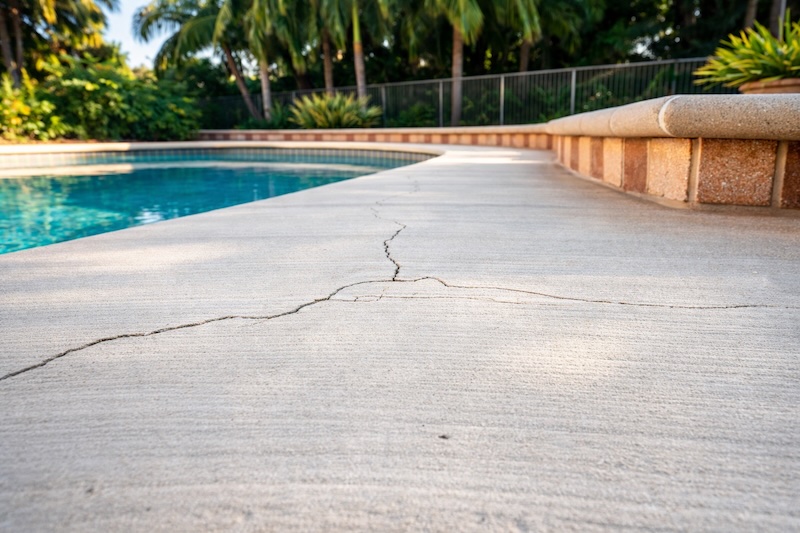
Small Cracks or Surface Damage: Minor cracks should not be ignored. While resurfacing helps improve the appearance of concrete, movement beneath the surface can still affect performance. Addressing small issues early may prevent more extensive repairs later.
Reduced Slip Resistance: Pool areas require safe walking surfaces, especially because water is constantly present. If the texture becomes smoother over time, maintenance treatments may help restore safety.
Peeling or Surface Separation: Peeling, bubbling, or areas where the coating separates from the concrete usually indicate installation issues, moisture problems, or significant wear. These problems should be evaluated before they spread.
How to Extend the Life of a Resurfaced Pool Deck
Proper maintenance can significantly increase the lifespan of a resurfaced pool deck. Homeowners do not need complicated routines, but consistent care makes a noticeable difference.
Clean the Surface Regularly: Dirt, leaves, sunscreen residue, and pool chemicals can build up over time. Regular cleaning helps maintain the appearance and prevents unnecessary surface stress. Use gentle cleaning methods and avoid harsh chemicals that may damage protective finishes.
Maintain Proper Pool Chemistry: Pool chemicals are necessary for water quality, but excessive chemical exposure can affect surrounding surfaces. Keeping pool water balanced reduces the risk of damage caused by chemical spills or splashes.
Address Drainage Issues: Standing water around a pool deck can create long-term problems. Proper drainage helps protect both the concrete base and the resurfacing system. Check areas where water collects and resolve drainage concerns as soon as possible.
Apply Protective Maintenance Coatings When Needed: Some resurfaced surfaces benefit from periodic sealing or protective treatments. These applications help maintain appearance, improve resistance, and extend service life. The recommended maintenance schedule depends on the coating type, climate, and level of use.
Is Pool Deck Resurfacing Worth the Investment?
For many homeowners, resurfacing provides a practical alternative to complete pool deck replacement. Removing and rebuilding a concrete deck can involve higher costs, longer construction periods, and significant disruption.
Resurfacing offers several advantages:
- Refreshes an outdated pool area
- Improves surface appearance
- Provides additional protection
- Allows customization of colors and textures
- Extends the usable life of existing concrete
It is especially valuable when the underlying concrete is structurally sound but the surface has become worn or unattractive. However, resurfacing is not always the right solution. If the concrete has severe structural damage, major movement, or extensive foundation issues, replacement may be a better option. A professional evaluation can help determine whether resurfacing is suitable.
Choosing the Right Pool Deck Resurfacing Professional
The lifespan of your resurfaced pool deck depends heavily on installation quality. Choosing an experienced contractor is one of the most important decisions in the process.
Before starting a project, homeowners should consider:
- Experience with outdoor concrete surfaces
- Knowledge of pool deck requirements
- Quality of materials used
- Previous project examples
- Maintenance recommendations after installation
A reliable professional should explain the expected lifespan, maintenance needs, and limitations of the chosen system. Companies such as Resistant Coating Solutions provide specialized coating solutions designed to improve the durability and appearance of concrete surfaces while helping homeowners create more functional outdoor spaces.
Conclusion
Pool deck resurfacing can provide a durable, attractive, and cost-effective way to restore an aging outdoor space. While the average lifespan is typically around 10 to 15 years, the final result depends on preparation quality, coating materials, climate conditions, usage, and maintenance. A properly installed resurfaced pool deck is not just a cosmetic upgrade—it is a long-term improvement that enhances safety, comfort, and the enjoyment of your outdoor area. By choosing the right resurfacing system and maintaining it correctly, homeowners can continue enjoying a beautiful pool environment for many years. For homeowners looking for durable concrete coating solutions, Resistant Coating Solutions offers professional expertise to help create long-lasting surfaces designed for real outdoor conditions.