
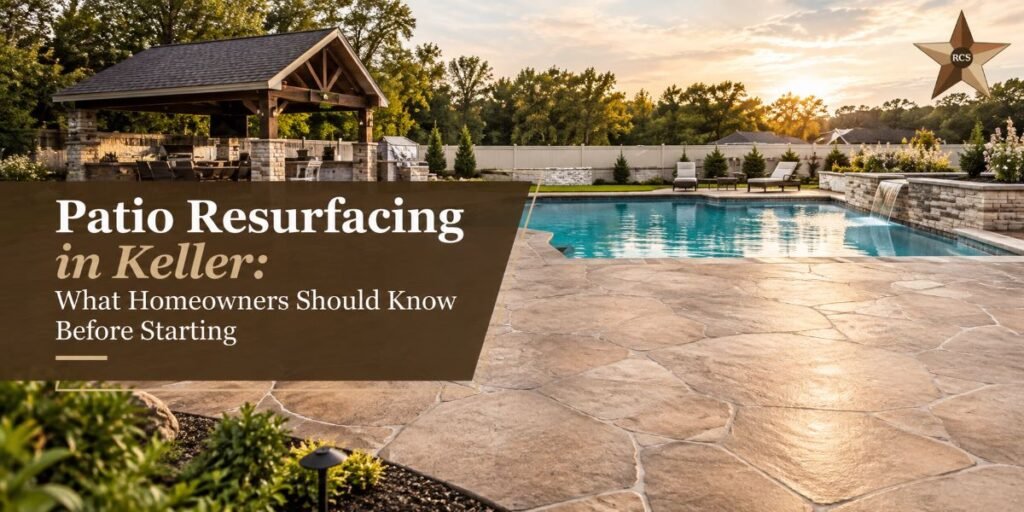
Patio Resurfacing in Keller: What Homeowners Should Know Before Starting
A concrete patio can remain structurally useful for years while gradually becoming one of the least attractive parts of an outdoor space. In Keller, Texas, prolonged sun exposure, changing temperatures, rain, foot traffic, outdoor furniture, and everyday use can leave concrete looking faded, stained, rough, or outdated.
That does not necessarily mean the entire patio needs to be demolished.
Patio resurfacing in Keller can be a practical option when the existing concrete is still stable but the surface needs a visual and functional upgrade. A properly selected overlay can change the color, texture, and appearance of an old patio while avoiding the disruption of completely replacing the slab.
The important part is knowing whether your patio is actually a good candidate for resurfacing, what preparation is required, and which type of finish makes sense for a North Texas outdoor living area.
What Is Patio Resurfacing?
Patio resurfacing involves preparing an existing concrete surface and applying a specialized overlay or resurfacing system over it. Instead of starting with a completely new slab, the existing concrete becomes the foundation for the new finished surface.
This can be useful when the patio has problems such as:
- Faded or discolored concrete
- Surface wear
- Minor cracks or imperfections
- Staining
- An outdated finish
- A plain appearance that no longer fits the home
- Areas that need a more decorative texture
Resurfacing is different from simply painting concrete. A professional overlay system is selected and installed to create a finished surface that is appropriate for exterior use.
The existing slab still matters, though. An overlay cannot turn a severely unstable foundation into a structurally sound patio.
Is Your Keller Patio a Good Candidate?
This is the first question to answer before choosing colors, patterns, or textures.
A patio may be suitable for resurfacing when the underlying concrete is generally stable and the problems are primarily related to the surface.
For example, imagine a Keller homeowner has a 15-year-old backyard patio. The concrete is still level and solid, but years of sunlight have faded its appearance and several areas have become stained. There may be a few minor surface cracks, but there is no major settlement or movement.
That type of patio may be a much better resurfacing candidate than one with major structural damage.
Signs That Resurfacing May Make Sense
Look for:
- Surface discoloration
- Minor cracking
- Small imperfections
- Cosmetic wear
- Dull or outdated concrete
- A finish that no longer suits the home’s exterior
When Resurfacing May Not Be Enough
Be more cautious if the patio has:
- Significant movement
- Large structural cracks
- Major settlement
- Severely broken concrete
- Extensive areas that have deteriorated
- Serious drainage or water-management problems
If the slab is moving because of an underlying problem, covering it with a decorative finish does not necessarily eliminate the cause.
A professional assessment should therefore come before the design decision.
Why Keller’s Climate Should Influence the Project
Outdoor concrete in Keller has to tolerate a demanding environment.
Strong Texas sunlight can gradually affect exterior surfaces, while summer heat places considerable stress on outdoor living areas. Seasonal temperature changes, rainfall, moisture, furniture, grills, foot traffic, and regular cleaning all contribute to long-term wear.
That is why choosing a patio finish based solely on how it looks in a sample is not enough.
Ask how the proposed system is intended to perform outdoors, how it handles direct sun, what maintenance is recommended, and whether the texture is appropriate for the way your family uses the patio.
Resistant Coating Solutions specifically focuses on decorative concrete resurfacing and overlay systems designed for Dallas–Fort Worth outdoor conditions. The company serves Keller as part of its wider DFW service area and works on patios, pool decks, driveways, porches, and walkways.
What Happens During Patio Resurfacing?
A successful resurfacing project depends heavily on what happens before the decorative finish is installed.
1. Inspect the Existing Concrete
The first step is evaluating the slab.
A contractor should look at cracking, surface deterioration, drainage, previous coatings, uneven areas, and other conditions that could affect the new system.
This is also the point where you should discuss your expectations. A patio used mainly for outdoor dining has different practical requirements from one surrounding a swimming pool or outdoor kitchen.
2. Prepare the Surface
Preparation is one of the most important parts of the job.
The existing concrete needs to be properly cleaned and prepared so the overlay can bond effectively. Areas requiring repair should be addressed before the finish is installed.
This stage is easy to overlook because homeowners see very little of the finished preparation once the project is complete. However, the quality of the preparation can have a major effect on the performance of the finished surface.
3. Select the Design
Once the base is ready, homeowners can focus on the appearance.
Depending on the system, options can include different colors, textures, patterns, and natural-stone-inspired finishes.
The design should work with the home rather than compete with it. For example, a patio next to brick walls and warm landscaping may benefit from an earthy stone-inspired finish, while a contemporary property may look better with a simpler pattern and restrained color palette.
4. Install the Overlay
The selected resurfacing system is then applied to the prepared concrete according to the installation requirements of that system.
Resistant Coating Solutions offers Carvestone overlay systems, which are designed to create a decorative natural-stone appearance. Its published information explains that the material combines natural Carvestone with cement and polymer, while patterns can be carved by hand rather than relying solely on traditional stamping.
That can create a more individualized appearance from one patio to another.
5. Allow the Surface to Finish and Cure
The final stage includes completing the desired texture and finish and allowing the surface to reach the appropriate condition before normal use.
Your installer should provide clear instructions about when furniture, foot traffic, grills, pets, and other activities can return to the patio.
Patio Resurfacing vs. Replacing the Concrete
Homeowners often compare resurfacing with complete replacement because the two approaches solve different problems.
| Patio Resurfacing | Concrete Replacement |
|---|---|
| Uses suitable existing concrete as the base | Existing concrete is removed |
| Less demolition | Significant demolition may be required |
| Can dramatically change appearance | Provides a completely new slab |
| Useful for surface-level problems | Better suited to severe structural problems |
| Offers decorative finish options | Finish is selected during new installation |
| Generally creates less site disruption | More excavation, removal, and preparation |
Resurfacing should not be viewed simply as a cheaper version of replacement. It is a different solution intended for a different condition.
If the underlying patio is stable, resurfacing may allow you to spend more of the project budget on the finish and overall outdoor design. If the slab itself has failed, replacement may be the more sensible long-term approach.
Choosing a Patio Finish for a Keller Home
Appearance matters, but outdoor performance should come first.
Natural Stone Appearance
Stone-inspired textures can make a basic concrete patio feel more integrated with landscaping, brick, masonry, and outdoor living areas.
Subtle Color Changes
A completely different color is not always necessary. A warmer or more natural tone can be enough to make an aging patio feel substantially newer.
Textured Surfaces
Texture can add visual depth and may provide a more appropriate surface for certain outdoor applications.
Custom Patterns
Patterns can help define dining areas, seating zones, pathways, or transitions between different parts of the backyard.
The best design often looks intentional without making the patio feel disconnected from the rest of the property.
Think About How You Actually Use the Patio
Before selecting a finish, consider what happens on the patio during a normal week.
If your family eats outside regularly, think about chairs scraping across the surface, food spills, cleaning, and furniture placement.
If you have an outdoor kitchen, consider the areas around the grill and food-preparation space.
If children and pets frequently use the patio, a practical texture and easy maintenance may be more valuable than an intricate decorative pattern.
And if the patio connects directly to a swimming pool, the priorities change again. In that situation, surface texture, comfort, drainage, and wet-area safety deserve particular attention. You may also want to explore pool deck resurfacing when the patio and pool deck are part of the same outdoor renovation.
How to Maintain a Resurfaced Patio
A new surface still needs routine care.
Fortunately, maintenance does not have to be complicated. Regularly remove dirt, leaves, and other debris rather than allowing them to accumulate. Clean spills before they become difficult stains, particularly around outdoor kitchens and dining areas.
Follow the installation company’s cleaning recommendations rather than immediately using aggressive chemicals or high-pressure equipment.
It is also worth asking about resealing or other periodic maintenance when you receive your estimate. The appropriate maintenance schedule depends on the particular resurfacing system, exposure, use, and local conditions.
Questions to Ask Before Hiring a Resurfacing Contractor
A good estimate should explain more than the final price.
Ask:
- Is my existing patio structurally suitable for resurfacing?
- What preparation does the concrete require?
- How will existing cracks and damaged areas be treated?
- What overlay system will be installed?
- What textures and colors are available?
- How is the finish expected to perform in Keller’s outdoor conditions?
- How long should the installation take?
- When can furniture and normal foot traffic return?
- What maintenance does the finished surface require?
- What happens if additional problems are discovered after preparation begins?
These questions can help you compare proposals based on the actual scope of work instead of simply choosing the lowest number.
Other Concrete Surfaces You May Want to Upgrade
Patio renovations sometimes reveal that other outdoor concrete surfaces have aged at the same time.
If your patio connects to a driveway, you may want to consider driveway resurfacing so the two areas have a more consistent appearance.
For homes with extensive pedestrian areas, walkways and sidewalks can also be resurfaced as part of a broader exterior improvement.
Likewise, homeowners renovating an entire outdoor entertaining area may want to look into concrete resurfacing services rather than treating every concrete surface as a separate project.
This can help create a more cohesive exterior instead of having a newly renovated patio surrounded by noticeably worn concrete.
Why Local Experience Matters
Keller is part of the Dallas–Fort Worth region, so local outdoor surfaces face conditions that should be considered when selecting a resurfacing system.
A contractor familiar with North Texas should understand that the project is not simply about creating an attractive surface. Preparation, material selection, exposure to heat and sunlight, drainage, expected traffic, and the intended use of the patio all influence the result.
Resistant Coating Solutions serves Keller along with communities across the DFW area. Its broader resurfacing work includes patios, driveways, pool decks, porches, and walkways, with Carvestone overlay systems among its specialty offerings.
For homeowners researching options, reviewing the company’s concrete resurfacing services can be useful when deciding whether resurfacing fits the condition and purpose of an existing outdoor surface.
Is Patio Resurfacing Worth It in Keller?
For the right property, patio resurfacing can make an older outdoor area look substantially different without removing a perfectly usable concrete slab.
The strongest candidates are patios where the foundation remains stable but the surface has become worn, stained, faded, or visually outdated. Resurfacing also gives homeowners an opportunity to reconsider texture, color, and design instead of simply reproducing the original concrete.
The key is not to treat resurfacing as a universal solution. Start by assessing the existing slab, identify any underlying problems, consider how the patio is actually used, and choose a finish suited to outdoor conditions.
For Keller homeowners, that approach creates a better foundation for a patio that is not only more attractive but also practical for everyday North Texas outdoor living.