
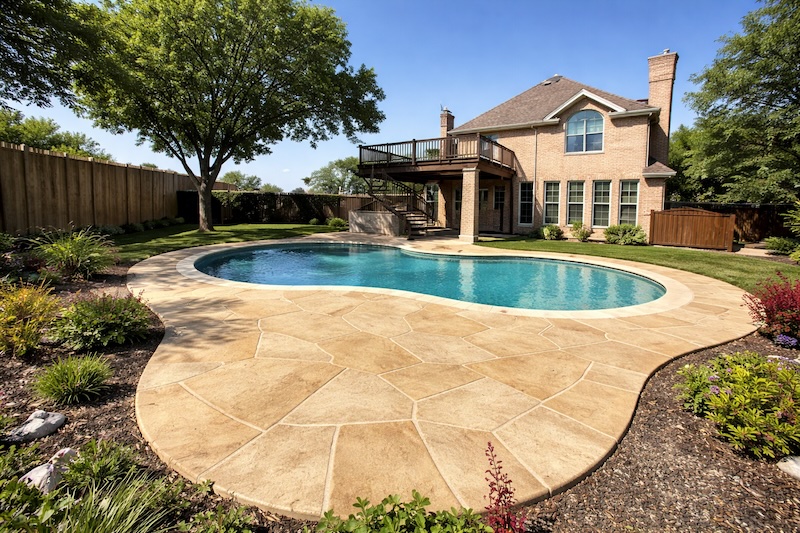
Pool Deck Resurfacing in Prosper, TX: What Homeowners Should Know
A pool deck has to do more than look good. In Prosper, TX, it needs to handle intense summer sun, frequent water exposure, outdoor entertaining, foot traffic, and the everyday wear that comes with owning a backyard pool. Over time, even a well-built concrete deck can become faded, stained, rough, cracked, or simply outdated.
That does not necessarily mean the entire deck needs to be removed and rebuilt.
Pool deck resurfacing in Prosper, TX can be a practical way to refresh an existing concrete surface when the underlying structure is still suitable. A properly selected overlay can change the color, texture, and appearance of the deck while creating a more comfortable and slip-conscious surface around the pool.
For homeowners considering the project, the important question is not simply how the finished deck will look. It is whether resurfacing is appropriate for the existing concrete, which finish makes sense for a Texas backyard, and how the surface will be prepared before the new material is installed.
Why Prosper Homeowners Consider Pool Deck Resurfacing
Pool decks naturally experience more demanding conditions than many other concrete surfaces.
Water is constantly splashed onto the deck. Bare feet travel across it. Furniture may be moved around. Pool chemicals and outdoor debris can contribute to staining or surface wear. During summer, the deck is also exposed to prolonged periods of direct sunlight.
After several years, these factors can leave concrete looking tired even when the overall slab remains usable.
Resurfacing can address problems such as:
- Faded or discolored concrete
- Surface wear and minor imperfections
- An outdated decorative finish
- Minor cracking that can be properly addressed during preparation
- A surface that has become visually inconsistent
- The desire for a more attractive poolside design
It can also provide an opportunity to change the character of the backyard without undertaking a complete concrete replacement project.
Is Your Pool Deck a Good Candidate for Resurfacing?
This is one of the most important questions to answer before choosing a color or pattern.
An overlay works best when the existing concrete provides a stable base. Surface-level problems are very different from major structural problems.
A professional assessment should look for:
- Significant settlement
- Large or spreading structural cracks
- Major sections of loose or broken concrete
- Drainage problems
- Areas where the slab has shifted
- Separation around the pool coping
- Evidence that the underlying base is unstable
If a deck has simply lost its appearance but remains structurally sound, resurfacing may be worth considering. If sections have substantially moved or failed, repairing the underlying problem may need to come first.
This distinction is particularly important around swimming pools because drainage and changes in elevation can affect both comfort and safety.
If you’re unsure about the condition of an older surface, an evaluation of the existing concrete should happen before discussing decorative finishes.
What Does Pool Deck Resurfacing Actually Involve?
Resurfacing is more involved than simply applying a coating over dirty concrete.
1. Surface Assessment
The project begins by examining the existing pool deck. The installer needs to understand what type of surface is present and whether it can accept the proposed overlay.
This is also the stage where cracks, damaged areas, drainage concerns, and other problems should be identified.
2. Cleaning and Preparation
Preparation is one of the biggest factors affecting the performance of a resurfacing project.
The existing surface needs to be cleaned and prepared so the new system can bond properly. Damaged areas and suitable minor imperfections may need attention before the overlay is applied.
A beautiful decorative finish cannot compensate for inadequate preparation underneath it.
3. Choosing the Design
Once the surface is considered suitable, homeowners can focus on the appearance.
Depending on the system, options can include different colors, textures, patterns, and natural-stone-inspired finishes.
The design should work with the rest of the backyard. For example, a subtle stone appearance may complement masonry, landscaping, and outdoor living areas without making the pool deck look disconnected from the home.
4. Installing the Overlay
The selected overlay system is then installed according to the manufacturer’s and contractor’s requirements.
Resistant Coating Solutions uses Carvestone overlay systems for pool decks and other outdoor concrete surfaces. Its published process emphasizes consultation, surface preparation, and professional installation.
The company also describes Carvestone as a hand-carved overlay rather than a conventional stamped surface, allowing patterns to create a natural-stone-style appearance.
Why Slip Resistance Matters Around a Pool
A pool deck is different from a driveway or patio because water is expected to be present.
A surface that looks attractive when dry may not provide the same experience when wet. Children running from the pool, adults walking barefoot, and guests moving between seating areas all make traction an important consideration.
That does not mean a pool deck needs to look rough or industrial.
The right texture can provide a balance between appearance and practical use. Resistant Coating Solutions specifically describes its Carvestone pool deck systems as slip-resistant and intended for wet poolside environments.
When comparing finishes, ask how the texture behaves when wet, how comfortable it is for bare feet, and how easily it can be cleaned.
Choosing a Pool Deck Finish for Prosper’s Climate
Prosper homeowners have another issue to consider: heat.
A pool deck exposed to the Texas sun can become uncomfortable under bare feet during the hottest part of the summer. Surface color, texture, material characteristics, and exposure all influence how the deck feels.
Lighter finishes can be worth considering where reducing heat absorption is a priority. The surrounding landscaping and amount of shade also matter.
Resistant Coating Solutions describes its outdoor resurfacing systems as being selected with North Texas weather in mind and promotes Carvestone finishes for their ability to provide a decorative, outdoor-ready surface.
Rather than choosing a finish purely from a small sample, consider how it will look and feel across the entire pool area under direct sunlight.
Carvestone Overlay as an Option
Carvestone is one of the distinctive overlay systems offered by Resistant Coating Solutions.
According to the company’s published information, the system combines natural Carvestone material with cement and polymer and can be hand-carved into patterns inspired by natural stone.
That makes it different from a basic single-color coating.
The finish can be designed to create the visual impression of materials such as stone, slate, tile, or other decorative patterns. It can therefore be useful for homeowners who want to change the appearance of an existing concrete deck without completely removing the underlying surface.
For homeowners researching their options, concrete Carvestone overlay is a useful related topic to explore before selecting a finish.
Resurfacing vs. Replacing the Pool Deck
Not every pool deck needs replacement.
If the existing concrete is stable and the main concerns involve appearance, surface wear, or minor imperfections, resurfacing can potentially provide a substantial visual transformation without the same level of demolition involved in a complete rebuild.
Replacement becomes more relevant when the existing structure has serious problems that an overlay cannot reasonably correct.
| Consideration | Resurfacing | Replacement |
|---|---|---|
| Existing slab | Needs to be suitable | Removed or rebuilt |
| Demolition | Usually limited | Significant |
| Design changes | Yes | Yes |
| Suitable for surface wear | Often | Yes |
| Suitable for major structural failure | Generally no | More appropriate |
| Project disruption | Usually lower | Usually greater |
The goal is not to choose resurfacing simply because it sounds easier. The goal is to select the solution that matches the actual condition of the deck.
How Long Does Pool Deck Resurfacing Take?
The exact timeline depends on the size of the pool deck, existing surface condition, preparation requirements, design, and weather.
Resistant Coating Solutions states that many resurfacing projects can be completed within a few days, although individual projects can vary.
Weather is especially relevant for an outdoor project in North Texas. Installation and curing conditions can affect scheduling, so homeowners should ask about the expected project window before making plans around pool use or backyard events.
If you are preparing for a summer gathering, it is better to schedule the project with enough time for the finished surface to be ready rather than working backward from the event date.
How Much Does Pool Deck Resurfacing in Prosper Cost?
There is no reliable single price for every Prosper pool deck.
The final cost can be influenced by:
- Total square footage
- Condition of the existing concrete
- Amount of preparation required
- Crack and surface repairs
- Selected overlay system
- Pattern complexity
- Color and finish
- Access to the work area
- Additional areas included in the project
A small, straightforward deck with a sound surface will naturally require different work from a large pool area that needs extensive preparation.
When requesting estimates, compare what is actually included rather than looking only at the final number. Ask whether cleaning, repairs, preparation, materials, finishing, and cleanup are included.
Maintenance After Resurfacing
A resurfaced pool deck should still be treated as an outdoor surface that requires routine care.
Regular sweeping and appropriate cleaning can prevent dirt and debris from building up. Pool water and chemicals should also be managed properly rather than allowing residues to remain on the surface indefinitely.
Ask the installer about recommended cleaning products and whether the finish requires periodic sealing or other maintenance.
Good maintenance is particularly important if the goal is to preserve both the decorative appearance and the performance of the surface for many years.
For homeowners comparing related concrete improvements, concrete resurfacing services in Dallas–Fort Worth can provide useful context about how the same broader resurfacing approach can be used for pool decks, patios, driveways, porches, and walkways.
Questions to Ask Before Hiring a Resurfacing Contractor
Before committing to a project, ask practical questions such as:
- Is my existing pool deck structurally suitable for an overlay?
- How will existing cracks be handled?
- What preparation will be performed before installation?
- Which overlay system is being recommended and why?
- How will the surface perform under direct Texas sun?
- Is the proposed finish suitable for wet, barefoot traffic?
- What maintenance will the finished surface require?
- How long should installation take?
- When can the pool deck be safely used after installation?
- What problems would make replacement a better option?
Clear answers to these questions can help you distinguish a properly planned resurfacing project from a purely cosmetic application.
Why Local Conditions Should Influence Your Decision
Prosper’s outdoor spaces are designed to be used. Pool areas often function as extensions of the home, with space for entertaining, dining, lounging, and family activities.
That means a pool deck needs to balance appearance with everyday practicality.
Sun exposure, wet conditions, drainage, barefoot comfort, surface texture, and maintenance should all be considered together. A finish that looks impressive in a photograph may not necessarily be the best choice for a heavily used backyard.
A local contractor familiar with North Texas outdoor conditions can also help identify issues that may not be obvious to a homeowner, particularly around existing concrete movement, drainage, and surface preparation.
Resistant Coating Solutions lists Prosper, TX among its Dallas–Fort Worth service areas and provides pool deck resurfacing, concrete overlays, Carvestone systems, and related decorative concrete services.
For homeowners researching the broader subject, pool deck resurfacing services can be a useful next step when evaluating whether an existing Prosper pool deck is a suitable candidate.
Final Thoughts
Pool deck resurfacing can give a tired Prosper backyard a completely different appearance without automatically requiring the removal and replacement of the existing concrete.
The strongest results begin with the fundamentals: evaluate the slab, address appropriate repairs, prepare the surface carefully, select a finish suited to wet conditions, and consider how Prosper’s heat and sunlight will affect the finished deck.
A decorative Carvestone overlay can also provide homeowners with more design flexibility than a basic coating, particularly when a natural-stone-inspired appearance is desired.
Most importantly, choose the solution based on the actual condition and use of your pool deck—not just its current appearance. When the existing structure is suitable and the installation is properly planned, resurfacing can turn an aging concrete pool area into a more attractive, comfortable, and functional part of the backyard.