
Concrete Overlay Services in Grapevine: A Practical Guide for Homeowners
Concrete can last for decades, but that does not mean it always looks good for decades. Driveways become faded, patios develop surface wear, pool decks lose their original appearance, and walkways can start looking dated long before the underlying concrete has completely failed.
For homeowners considering concrete overlay services in Grapevine, the important question is not simply how to make old concrete look new. It is whether the existing surface is suitable for resurfacing, which overlay system makes sense, and how the finished surface will perform in North Texas conditions.
A properly selected and installed overlay can transform an existing concrete surface without the disruption of completely removing it. It can also introduce new textures, colors, patterns, and a more natural stone-inspired appearance.
What Is a Concrete Overlay?
A concrete overlay is a specialized resurfacing material installed over an existing concrete surface that is suitable for the application.
Rather than demolishing the entire slab, the existing concrete is prepared and then covered with an overlay system designed to create a new finished surface. The result can look substantially different from the original concrete while retaining the existing base underneath.
Overlays can be used for several residential applications, including:
- Driveways
- Patios
- Pool decks
- Walkways
- Porches
- Selected vertical concrete surfaces
- Certain other stable prepared surfaces
The key word is stable. An overlay is not a substitute for fixing major structural problems underneath the concrete.
Is Your Grapevine Concrete a Good Candidate for Resurfacing?
This is one of the most important questions to answer before discussing colors or patterns.
Concrete overlay works best when the existing slab is sufficiently stable but has cosmetic or surface-level problems. Examples can include fading, staining, minor surface deterioration, outdated finishes, and relatively small imperfections.
A driveway with severe settlement or widespread structural failure is a different situation.
Signs an Overlay May Make Sense
An existing surface may be a reasonable candidate when:
- The slab remains generally stable.
- Damage is mainly at the surface.
- The concrete has become discolored or unattractive.
- You want to change the texture or appearance.
- Minor imperfections can be addressed during preparation.
- The existing surface provides a suitable base for the chosen overlay system.
When Replacement May Be More Appropriate
If large sections have failed, the slab has significant movement, or there are serious underlying drainage or foundation issues, covering the surface may not solve the real problem.
This is why a professional assessment matters. A beautiful finish cannot compensate for a fundamentally unstable base.
Why Grapevine’s Climate Should Influence Your Choice
Outdoor concrete in Grapevine has to deal with demanding conditions.
Strong Texas sunlight, high summer temperatures, rain, moisture, vehicle traffic, and seasonal temperature changes all contribute to surface wear. A material that looks attractive in a sample can perform very differently depending on the preparation, installation quality, exposure, and maintenance.
For this reason, homeowners should ask how the proposed overlay system is intended to perform in North Texas.
Resistant Coating Solutions specifically focuses on concrete resurfacing and decorative overlay applications throughout the Dallas–Fort Worth area, including Grapevine. Its published information emphasizes systems selected for Texas outdoor conditions rather than treating decorative resurfacing as purely an aesthetic project.
That distinction is important. For a driveway or pool deck, durability and usability matter just as much as appearance.
What Types of Surfaces Can Be Improved?
One advantage of modern overlay systems is their versatility.
A homeowner may be able to coordinate several different outdoor areas instead of treating every concrete surface as a separate design project.
Driveways
A worn driveway is often one of the first things visitors notice. Driveway resurfacing can improve the appearance of faded or tired concrete while introducing a more decorative finish.
Because driveways receive vehicle traffic, the underlying concrete and selected overlay system need to be evaluated carefully.
Patios
A patio is more than a slab for outdoor furniture. It is part of the home’s living space.
Patio resurfacing can help connect the patio visually with landscaping, exterior walls, walkways, and other outdoor features.
Pool Decks
Pool areas require additional consideration because the surface regularly gets wet.
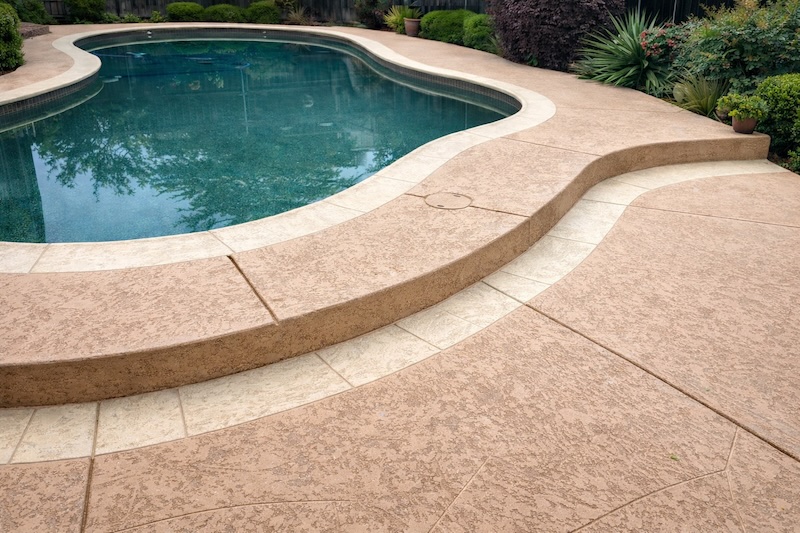
A properly selected textured finish can provide a more practical surface around the pool while changing the appearance of an aging deck. Homeowners researching pool deck resurfacing should ask specifically about texture, water exposure, maintenance, and underfoot comfort.
Walkways and Porches
Smaller surfaces can also benefit from resurfacing. A consistent finish across a walkway, porch, or entrance area can make the entire exterior feel more cohesive.
Carvestone Overlay: A More Natural Stone-Like Appearance
Resistant Coating Solutions offers Carvestone overlay systems as part of its decorative resurfacing services.
Carvestone is particularly interesting for homeowners who want something more distinctive than plain gray concrete. According to the company’s published information, the material combines natural Carvestone with cement and polymer and can be hand-carved to create individual patterns.
Instead of relying entirely on conventional stamped patterns, hand-carved applications can create appearances inspired by materials such as:
- Natural stone
- Travertine
- Slate
- Tile
- Flagstone-style designs
- Other masonry-inspired patterns
The goal is not necessarily to make every driveway or patio look identical. The pattern, texture, and color can be selected to complement the architecture and landscaping of the property.
What Does the Installation Process Look Like?
A quality overlay project starts well before the new material is installed.
1. Surface Evaluation
The existing concrete is examined for cracks, deterioration, movement, drainage concerns, and other conditions that could affect the finished result.
2. Cleaning and Preparation
The surface must be properly prepared to give the overlay an appropriate base.
Preparation may include cleaning, addressing damaged areas, and repairing suitable minor imperfections. This stage is easy to overlook because it is eventually hidden beneath the finished surface, but it has a major influence on long-term performance.
3. Design Selection
Once the surface is considered suitable, the homeowner can work through design choices.
Depending on the system, this may include color, texture, pattern, and stone-inspired appearance.
A useful approach is to look at the home’s existing exterior before choosing a finish. Consider brick color, roof tones, landscaping, exterior paint, and existing stonework. The best design usually feels like part of the property rather than an isolated decorative feature.
4. Overlay Application
The selected overlay system is installed over the prepared surface according to the requirements of the material.
For hand-carved systems, the pattern can be shaped to create a more individualized appearance.
5. Finishing and Curing
The final stage establishes the finished texture and appearance. The surface then needs appropriate time and conditions to cure before normal use.
The exact project timeline depends on the size and condition of the surface, the selected system, weather, and other site-specific factors.
Does a Concrete Overlay Hide Existing Cracks?
This requires a realistic answer.
Minor cracks and surface imperfections may be repaired or incorporated into the design during preparation. Some decorative patterns can also make certain imperfections less noticeable.
However, an overlay should not be viewed as a magic solution for structural movement.
If a crack exists because the underlying slab is moving, that movement can eventually affect the new surface. Before resurfacing, homeowners should ask what caused the crack and whether that cause can be addressed.
This is especially important when evaluating an older driveway or patio.
How Much Do Concrete Overlay Services in Grapevine Cost?
There is no single reliable price for every overlay project.
The final cost can depend on:
- Total square footage
- Existing concrete condition
- Amount of preparation required
- Crack or surface repairs
- Overlay material
- Design complexity
- Number of colors
- Texture and pattern
- Accessibility of the work area
- Project location
- Additional preparation or construction requirements
A simple surface with minimal preparation may have very different requirements from an older driveway that needs extensive repair before resurfacing.
When comparing estimates, homeowners should therefore look beyond the final number. Ask what preparation is included, what material will be installed, what finish is specified, and whether repairs are included in the quoted work.
Questions to Ask Before Hiring an Overlay Contractor
A good estimate should give you enough information to understand what you are actually purchasing.
Before starting a project, ask:
- Is my existing concrete structurally suitable for an overlay?
- What preparation will the surface require?
- How will existing cracks be handled?
- Which overlay system is being recommended and why?
- What texture options are available?
- How will the finish perform in direct Texas sunlight?
- What maintenance will the surface need?
- How long should the installation take?
- How long before vehicles or furniture can return to the surface?
- What happens if deeper structural damage is discovered?
These questions help separate a carefully planned resurfacing project from a simple cosmetic coating job.
How Can You Make the Finished Surface Last Longer?
Installation is only part of the equation.
Once the overlay is complete, homeowners should follow the manufacturer’s maintenance recommendations. Keep the surface reasonably clean, address spills when practical, and avoid using inappropriate chemicals or cleaning equipment that could damage the finish.
It is also worth monitoring drainage.
Water that repeatedly collects in one area can create problems for almost any exterior surface. If you notice standing water around a driveway, patio, or walkway, discuss the drainage issue rather than assuming a new decorative finish will solve it.
Regular inspection is another simple habit. Small issues are easier to address when they are noticed early.
Why Local Experience Matters in Grapevine
Concrete resurfacing is not simply about applying material to a flat surface. Outdoor conditions, existing concrete, drainage, design requirements, and the property’s surrounding architecture all affect the finished project.
A contractor familiar with Grapevine and the wider DFW environment can account for the local climate when discussing material selection and outdoor performance.
Resistant Coating Solutions serves Grapevine as part of its Dallas–Fort Worth service area and works with decorative resurfacing and overlay applications for driveways, patios, pool decks, porches, and walkways.
Homeowners can also explore the company’s broader concrete resurfacing services to understand how different surfaces can be restored and upgraded.
Final Thoughts
Concrete overlay services in Grapevine can be a practical option when existing concrete is still stable but no longer meets your expectations for appearance, texture, or usability.
The biggest mistake is choosing an overlay based only on a color sample. Start by evaluating the existing slab, understand the preparation required, consider how Grapevine’s weather will affect the surface, and choose a finish that works with the architecture of your home.
For homeowners interested in a more distinctive exterior, a decorative system such as a Carvestone overlay can create a natural stone-inspired appearance without completely removing an otherwise usable concrete surface.
The right project is ultimately about more than making old concrete look new. It is about choosing a suitable system, preparing the existing surface correctly, and creating a finish that can work practically and visually for years to come.