Anyone who has walked barefoot to the pool on a July afternoon in Dallas–Fort Worth knows the problem: the deck can feel like a skillet. When homeowners plan a pool deck remodel, comfort underfoot is often the first question. Which pool deck surface stays coolest in a Texas summer? The answer comes down to color, material, texture and a few smart design choices. Here is what actually makes a difference.
Key takeaways
- The coolest pool deck surface in a Texas summer is usually a light-colored, lightly textured finish, not necessarily the most expensive material.
- Color has a bigger effect on comfort than whether the deck is stone, pavers or a concrete overlay.
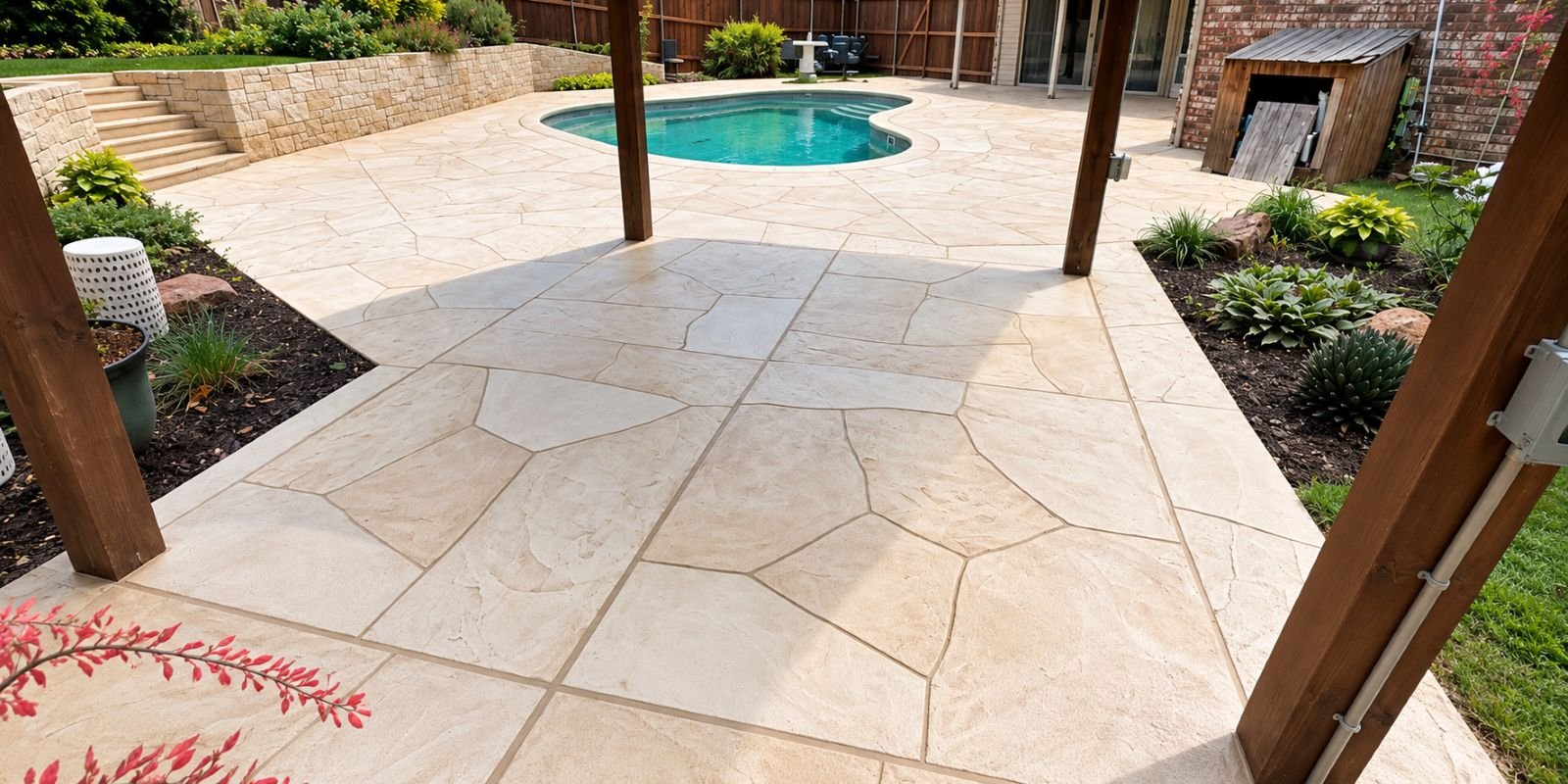
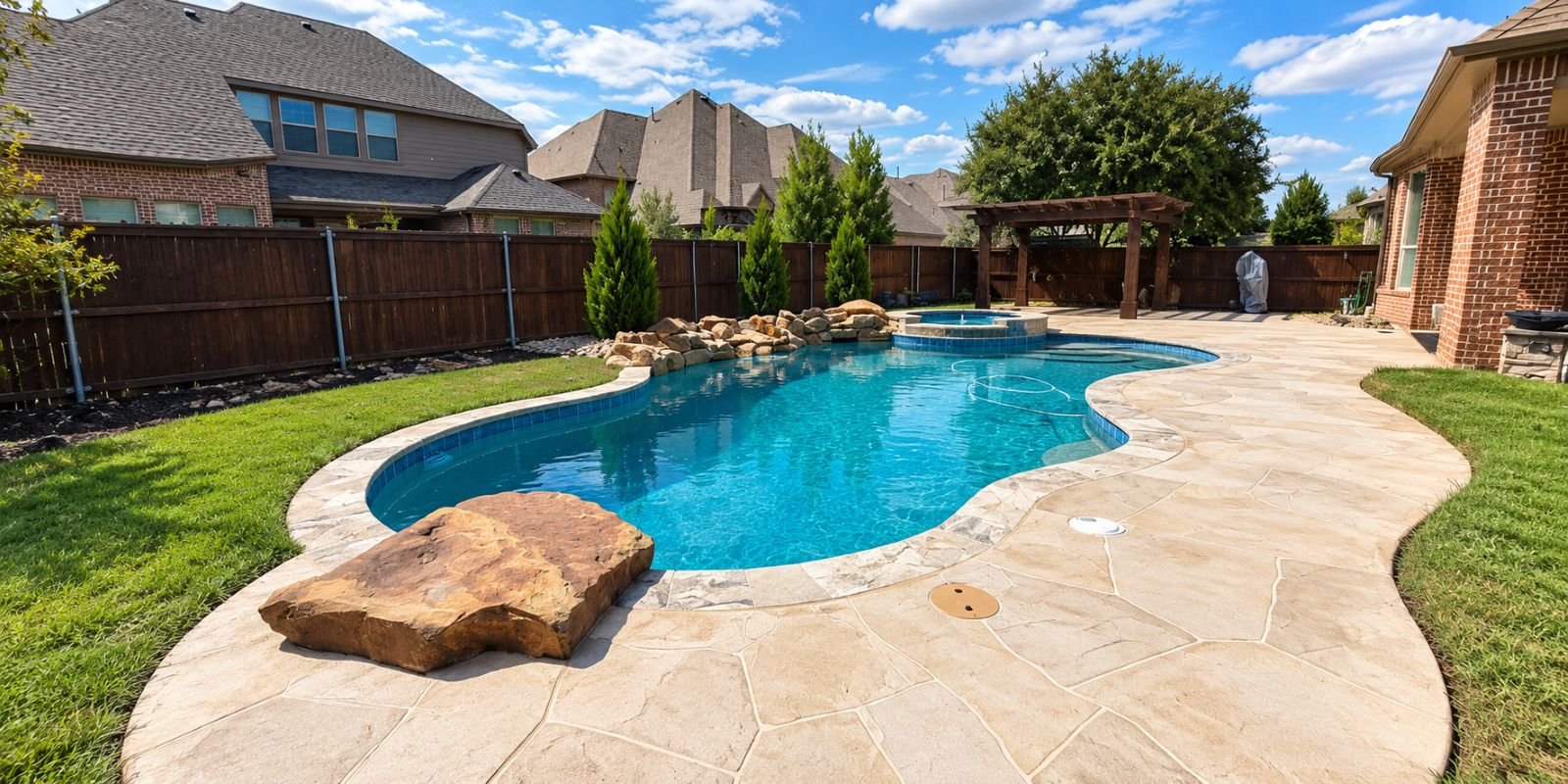
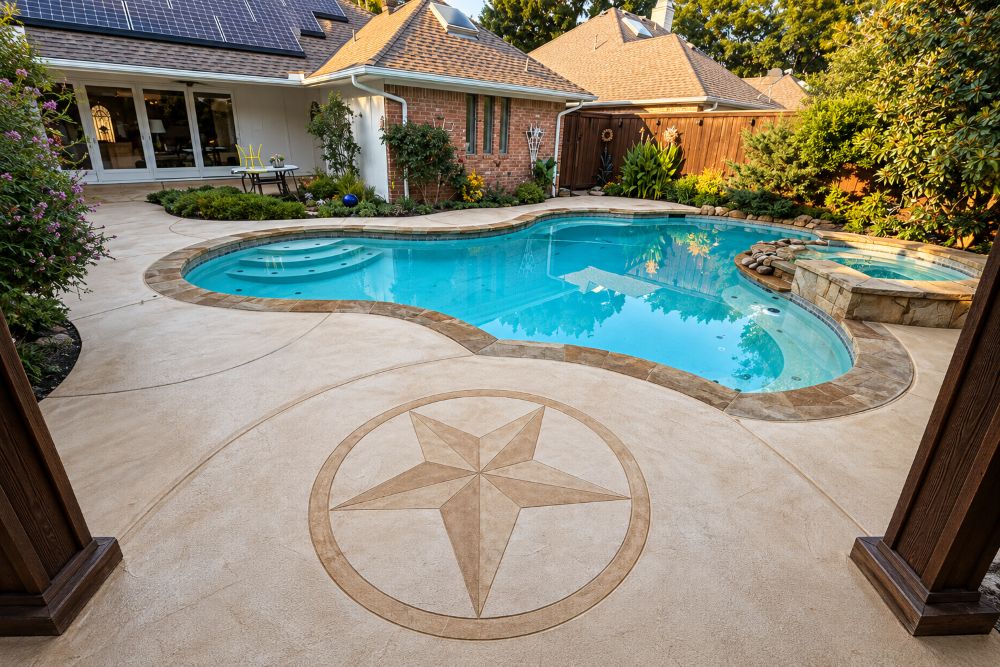
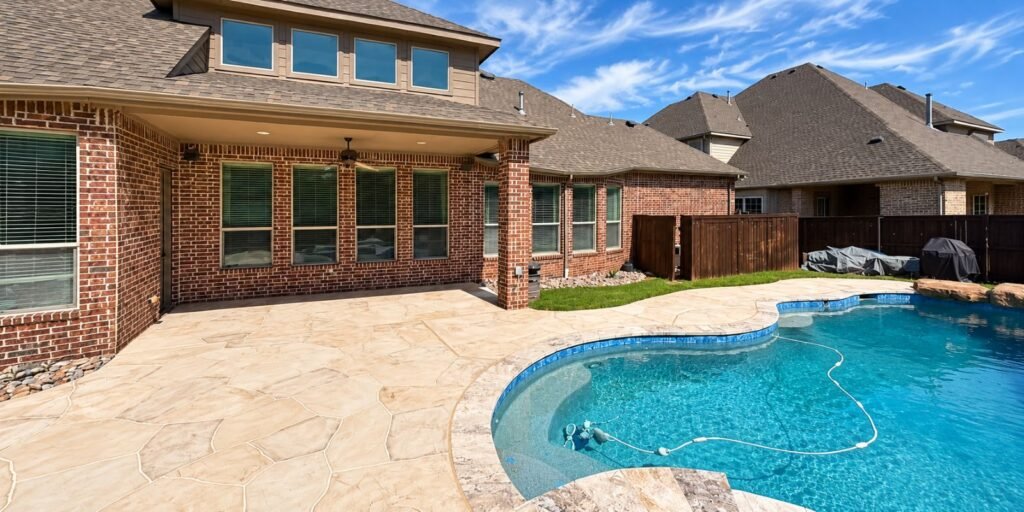
- Light Carvestone overlays and cool-deck coatings both stay comfortable; overlays add stone, slate and tile looks.
- Shade, fresh sealer and good texture make any pool deck cooler, safer and easier to enjoy from May to September.
Why pool decks get so hot in DFW
North Texas summers bring long stretches of direct sun and high temperatures. Any hard surface absorbs that solar energy and releases it as heat. How hot it gets depends on a few physical factors:
- Color: dark surfaces absorb more sunlight; light surfaces reflect more.
- Material density: dense materials store heat and stay warm into the evening.
- Texture: a lightly textured surface has less full-contact area with your feet than a smooth, polished one.
- Shade and moisture: shade blocks the sun entirely, and evaporating water cools the surface.
You cannot change the weather, but you can control the first three with the right finish.
Pool deck surfaces ranked for comfort
From most comfortable to least, in typical full-sun conditions:
- Light-colored decorative overlays and cool-deck coatings. Pale sand, cream and light gray finishes reflect a lot of sunlight, and the textured surface keeps contact light.
- Light travertine. Pale natural stone stays relatively comfortable, though it costs considerably more.
- Light pavers. Comfortable if the color is pale; joints add some texture.
- Plain gray broom-finish concrete. Middle of the pack, and often stained or worn.
- Dark pavers, dark stamped concrete and dark stone. These absorb the most heat and are the least comfortable barefoot.
The takeaway: color matters more than material. A light overlay can be more comfortable than an expensive dark stone.
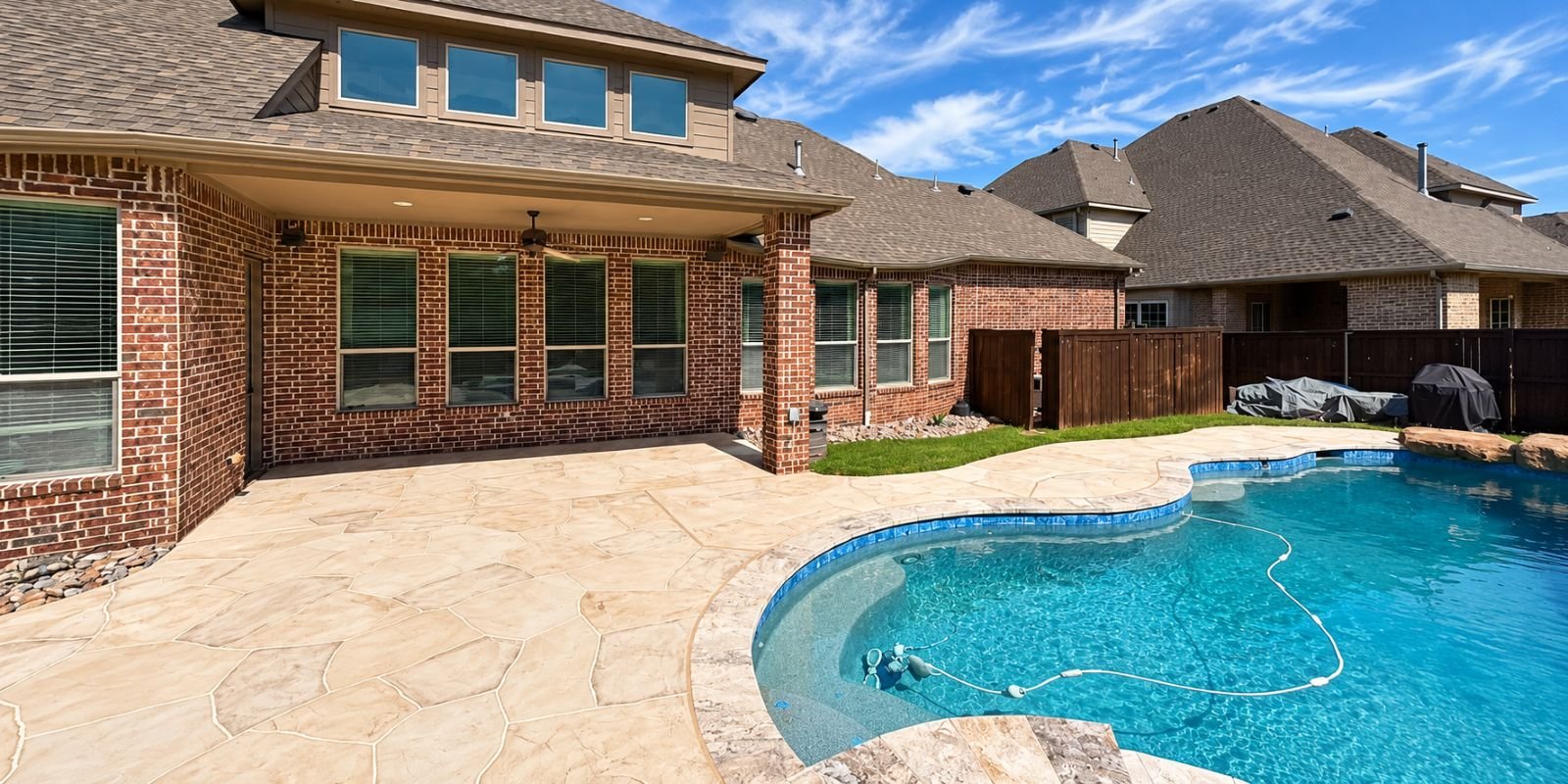
Cool-deck coatings vs decorative overlays
Traditional “cool deck” coatings, often called Kool Deck after the best-known brand, were designed specifically to reduce surface heat. They work, but they offer limited looks and wear out over time. Decorative overlays such as Carvestone give you the same comfort advantage when you choose a light color, plus a stone, flagstone or slate appearance with carved joints. We compare them directly in Carvestone vs Kool Deck, and if your old cool deck is failing, read resurfacing over Kool Deck or pebble decks.
Best colors for a cool pool deck
- Sand and buff: warm, natural and very comfortable; hides dust well.
- Light limestone or cream: bright and clean-looking; pairs well with blue water.
- Light gray: modern look; slightly warmer than sand tones but still comfortable.
- Multi-tone blends: a light base with subtle darker variation looks natural without trapping much heat.
Avoid very dark charcoal, deep brown or black finishes around the water. If you love darker tones, use them in borders or accent bands instead of the main walking area. Our Carvestone patterns and colors guide shows combinations that balance looks and heat.
Texture: comfort and slip resistance together
A lightly textured surface helps in two ways. It reduces how much skin touches the hot surface, and it gives grip on wet feet. That is why resurfaced pool decks are never polished smooth. Sealers can also include an anti-slip additive near steps and the coping. Learn more in our article on the benefits of slip-resistant pool deck coatings.
Design tricks that keep the deck cooler
- Add shade with a pergola, shade sail or trees along the most-used walkway.
- Keep the sealer fresh. A clean, sealed surface stays lighter and more reflective than a dirty, faded one.
- Rinse on very hot afternoons. A quick spray of water cools the surface through evaporation.
- Plan wider shaded paths from the back door to the pool.
- Match the patio to the deck in a light tone so the whole outdoor area stays comfortable. See patio resurfacing.
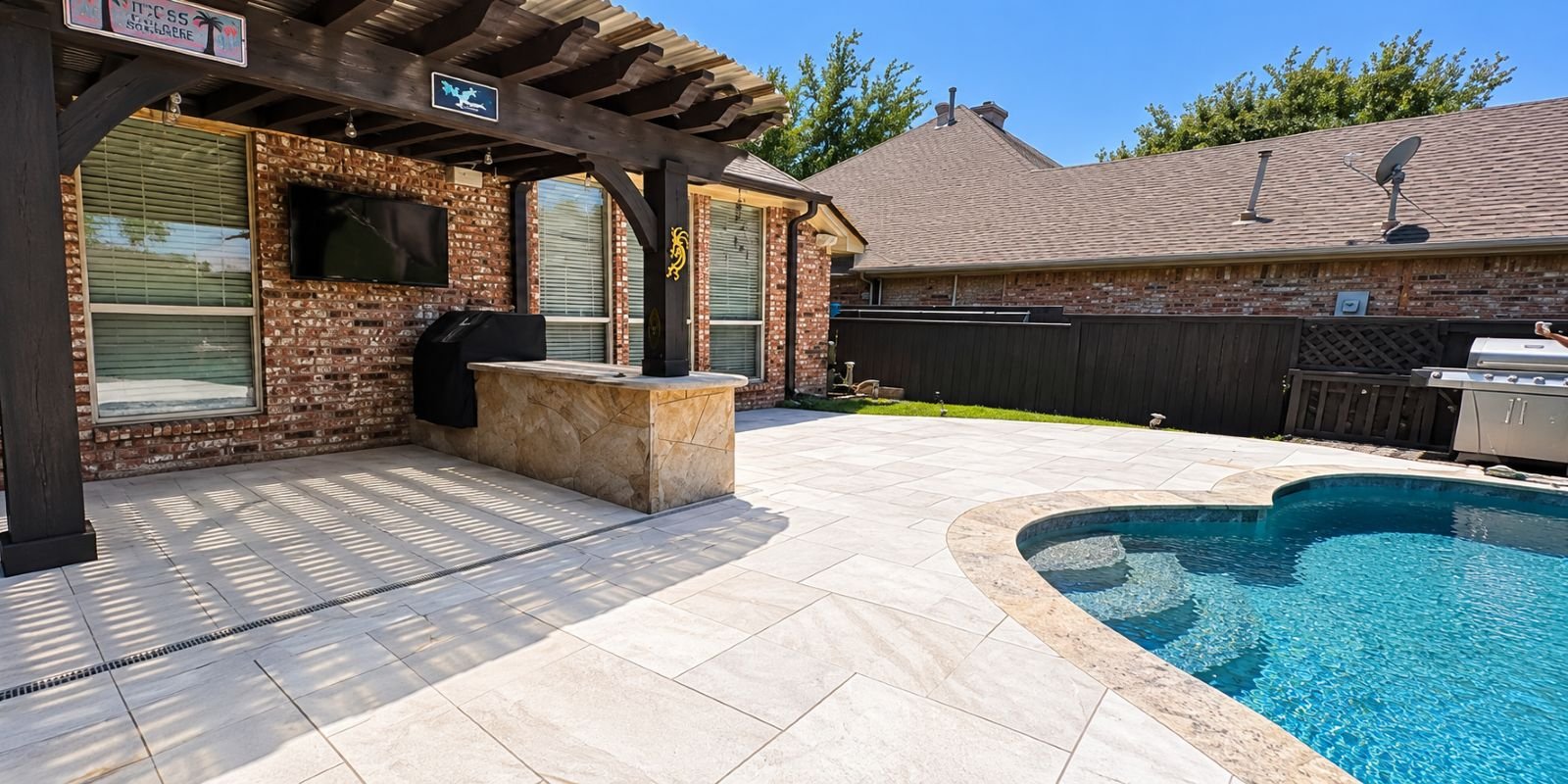
Does a cooler deck cost more?
Not necessarily. Choosing a lighter overlay color does not add cost. What changes the price is the size of the deck, prep work and the complexity of the pattern. For typical ranges, see pool deck resurfacing cost in Dallas, and compare surface options in pool deck resurfacing vs pavers vs travertine.
Maintaining a cool, comfortable deck
Keep debris off the surface, clean spills and pool chemical splash, and reseal every few years. A well-maintained overlay keeps its light color and its texture. Our guides on how long pool deck resurfacing lasts and maintaining decorative concrete cover the routine.
Comparing cool-deck options side by side
| Surface | Comfort in sun | Look | Upkeep |
|---|---|---|---|
| Light decorative overlay | Very good | Stone, slate or tile look | Reseal every few years |
| Traditional cool-deck coating | Very good | Simple knockdown texture | Recoat as it wears |
| Light travertine | Good | Natural stone | Sealing, gentle cleaners |
| Light pavers | Good | Modular units | Joint sand, weeds, leveling |
| Dark stone, pavers or stamped concrete | Poor | Bold, high contrast | Varies |
For a full cost and durability breakdown, read pool deck resurfacing vs pavers vs travertine.
Myths about hot pool decks
“Stone is always cooler than concrete.”
Not necessarily. A dark natural stone can feel hotter than a light concrete overlay. Color and finish matter more than the label on the material.
“Smooth surfaces are cooler because they reflect light.”
Polished surfaces can actually feel hotter on bare feet because more skin touches them, and they get slippery when wet. A light, lightly textured finish is the better balance.
“You need a special coating to have a cool deck.”
Dedicated cool-deck coatings work, but a well-chosen light overlay color gives a similar comfort benefit with many more design options.
Comfort and safety for kids and pets
Children often run barefoot between the pool and the house, and pets lie on the deck in the afternoon. A light, textured, slip-resistant finish protects both: it stays more comfortable to touch and gives better footing when wet. Shaded rest areas and a hose bib near the pool also help on the hottest days. If an old deck has sharp pebbles or flaking coating, resurfacing removes those hazards at the same time; see resurfacing over Kool Deck or pebble decks.
Planning the project around summer
If comfort is your goal, try to finish the work before peak heat. Spring and fall are popular windows in DFW, and summer projects are possible with early-morning starts. Read the best time of year to resurface concrete in DFW to plan your dates, and how to choose a resurfacing contractor before you sign.
Choose a finish your family can actually walk on
Resistant Coating Solutions designs pool decks for real Texas summers: light, textured, slip-resistant and built to last. We serve homeowners across the Metroplex, including Dallas, Fort Worth, Frisco, Prosper and Grapevine. Learn more about pool deck resurfacing, then request a free estimate or call or text 214-789-9102.
Frequently Asked Questions
What is the coolest pool deck surface for Texas?
Light-colored, textured surfaces stay the most comfortable. Light decorative overlays, cool-deck coatings and pale natural stone all perform better than dark concrete or dark pavers.
Does color really change pool deck temperature?
Yes. Lighter colors reflect more sunlight and absorb less heat, so they stay noticeably more comfortable than dark finishes in the same sun.
Is Carvestone hot to walk on?
Like any surface, it warms in full sun, but light Carvestone colors stay comfortable compared with bare or dark concrete. Color choice matters most.
How else can I keep my pool deck cool?
Choose a light color, add shade from a pergola or trees, rinse the deck on very hot afternoons and keep it sealed so the surface stays clean and reflective.