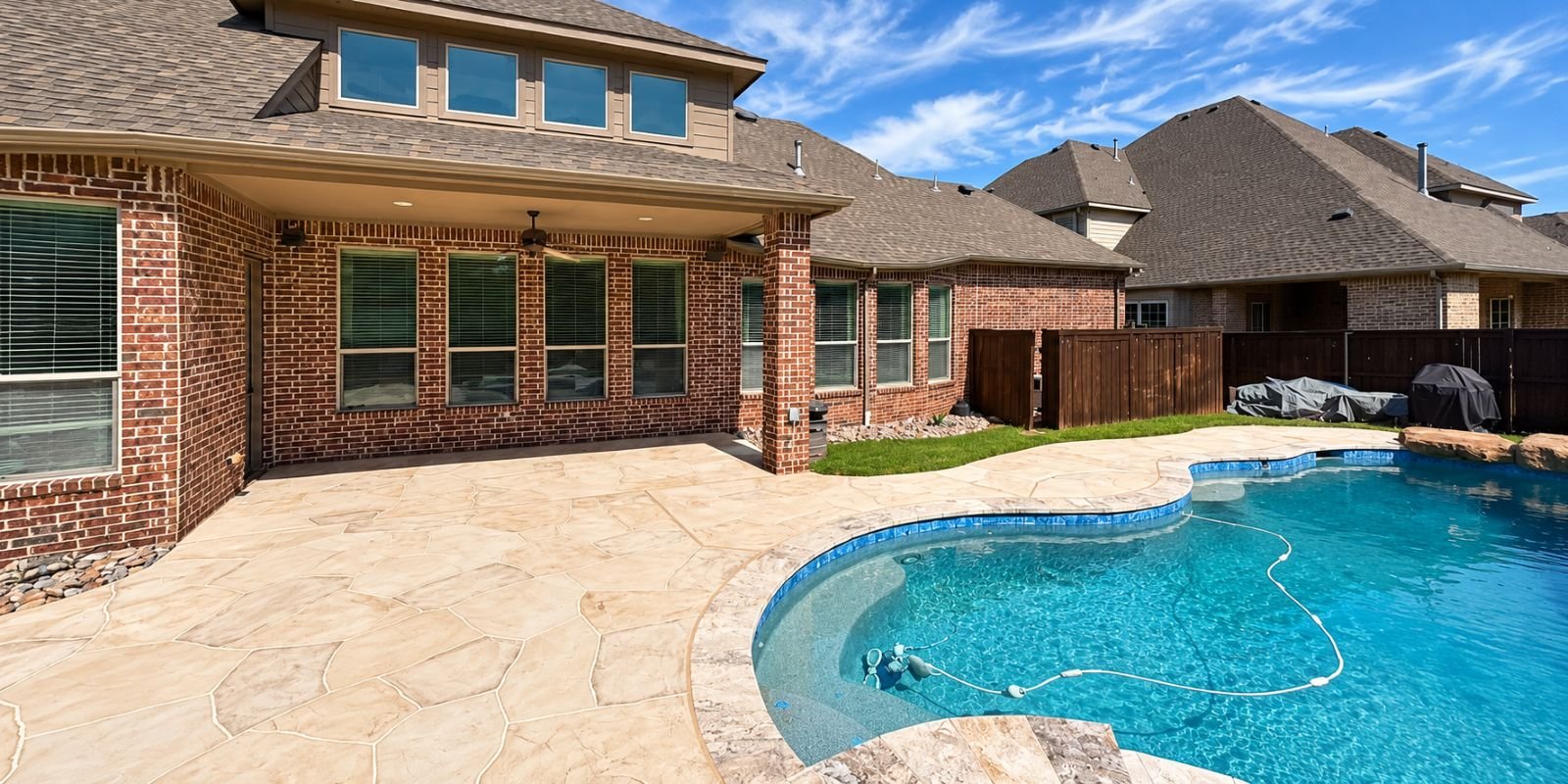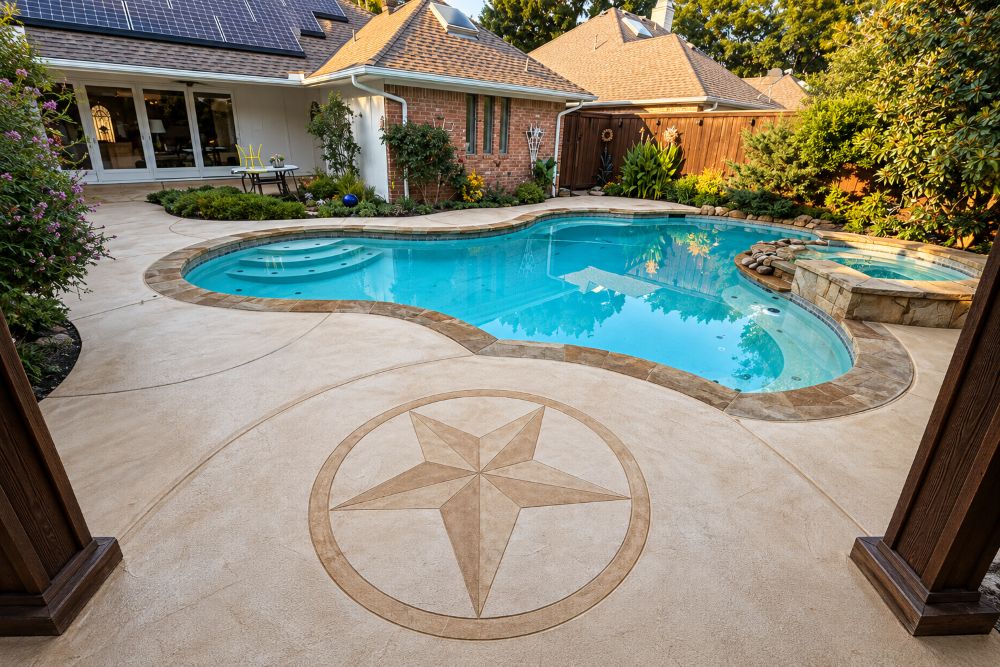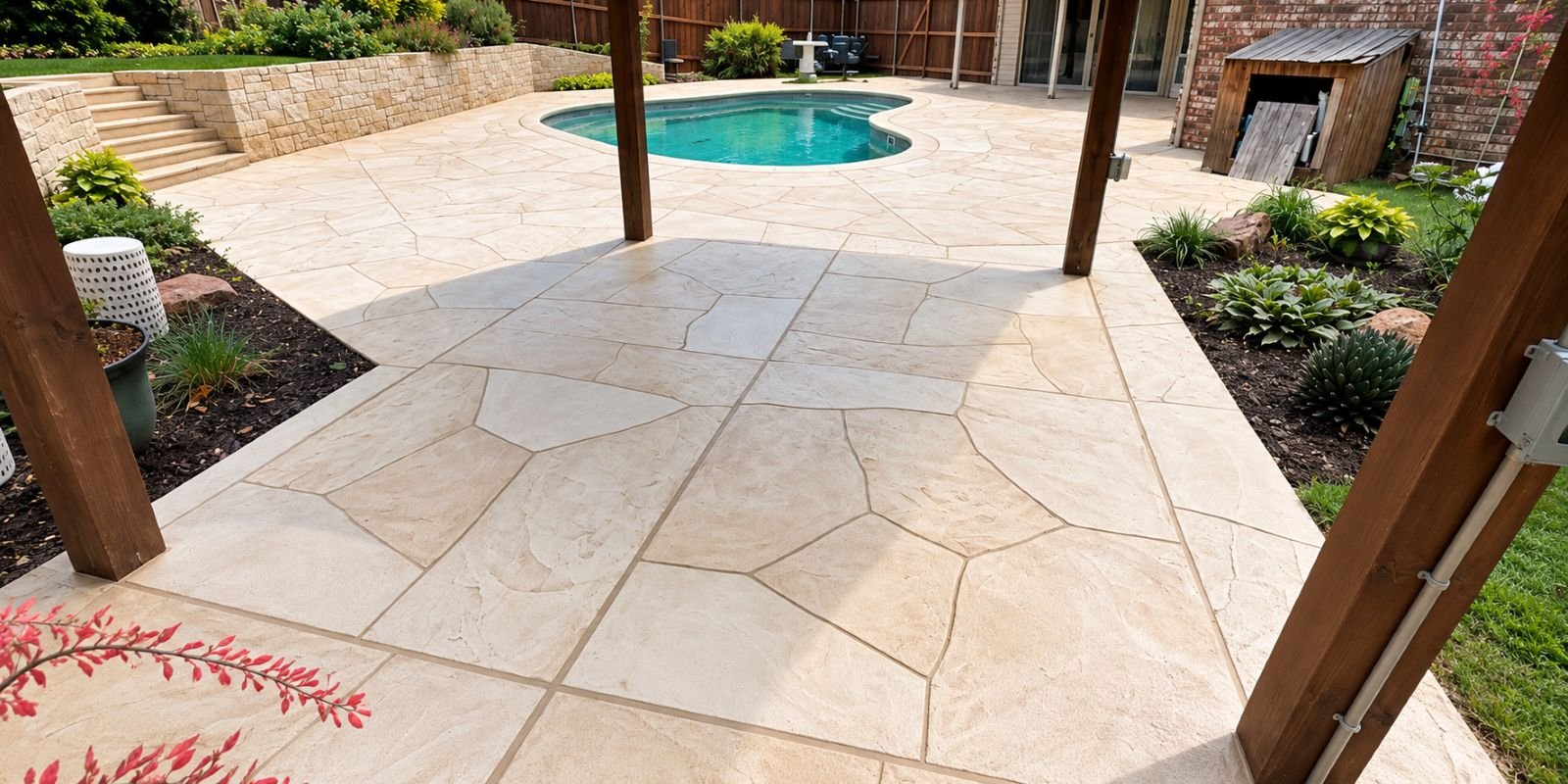
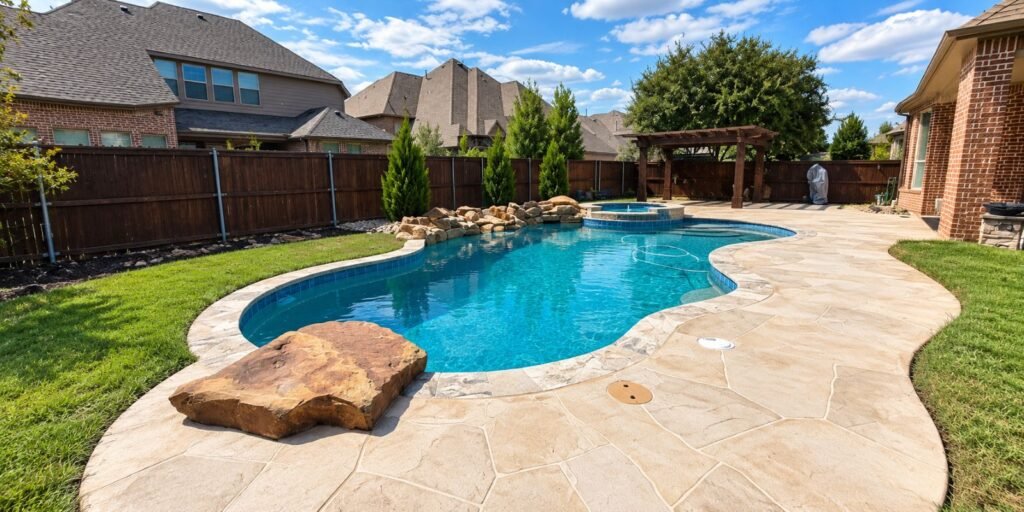
If you own a pool in Dallas–Fort Worth, there is a good chance your deck has one of two finishes: a sprayed “cool deck” coating such as Kool Deck, or an exposed-aggregate pebble surface. Both were popular for decades, and both eventually wear out. The coating fades, cracks and flakes, and pebble decks get rough, stained and hard on bare feet. The big question homeowners ask us is simple: can you resurface over Kool Deck or pebble, or does it all have to come out?
The honest answer is that most decks can be resurfaced over, as long as the concrete underneath is sound. This guide explains how to tell the difference, what the prep work looks like, and when removal really is the better choice.
What Kool Deck and pebble pool decks actually are
Kool Deck is a brand name that became shorthand for any light-colored, sprayed and troweled coating used around pools. It is a thin acrylic-cement layer applied over a concrete slab to reduce surface heat and add a little texture. Over time, sun, pool chemicals and foot traffic break it down. You will see hairline cracks, chalky spots, peeling at the edges and stains that never wash out.
Pebble or exposed-aggregate decks are different. Small stones are pressed into the concrete surface, and the top layer of cement is washed away to expose them. They hide dirt well and offer grip, but after years of Texas sun the stones loosen, the surface gets sharp, and the deck looks dated next to a modern pool remodel.
In both cases the visible problem is usually the surface layer, not the slab. That is exactly what a decorative overlay is designed to fix.
When you can resurface over the old deck
A decorative concrete overlay bonds to the existing slab and gives it a brand-new wear surface. For pool deck resurfacing in Dallas–Fort Worth, covering the old finish is usually the right move when:
- The slab is not sinking, heaving or rocking when you walk on it.
- Cracks are hairline or narrow surface cracks rather than wide, displaced breaks.
- The Kool Deck coating is still bonded in most areas, even if it looks worn.
- Pebble decks are rough or stained but the stones and concrete are not crumbling in large patches.
- Drainage works and water does not pond against the house or coping.
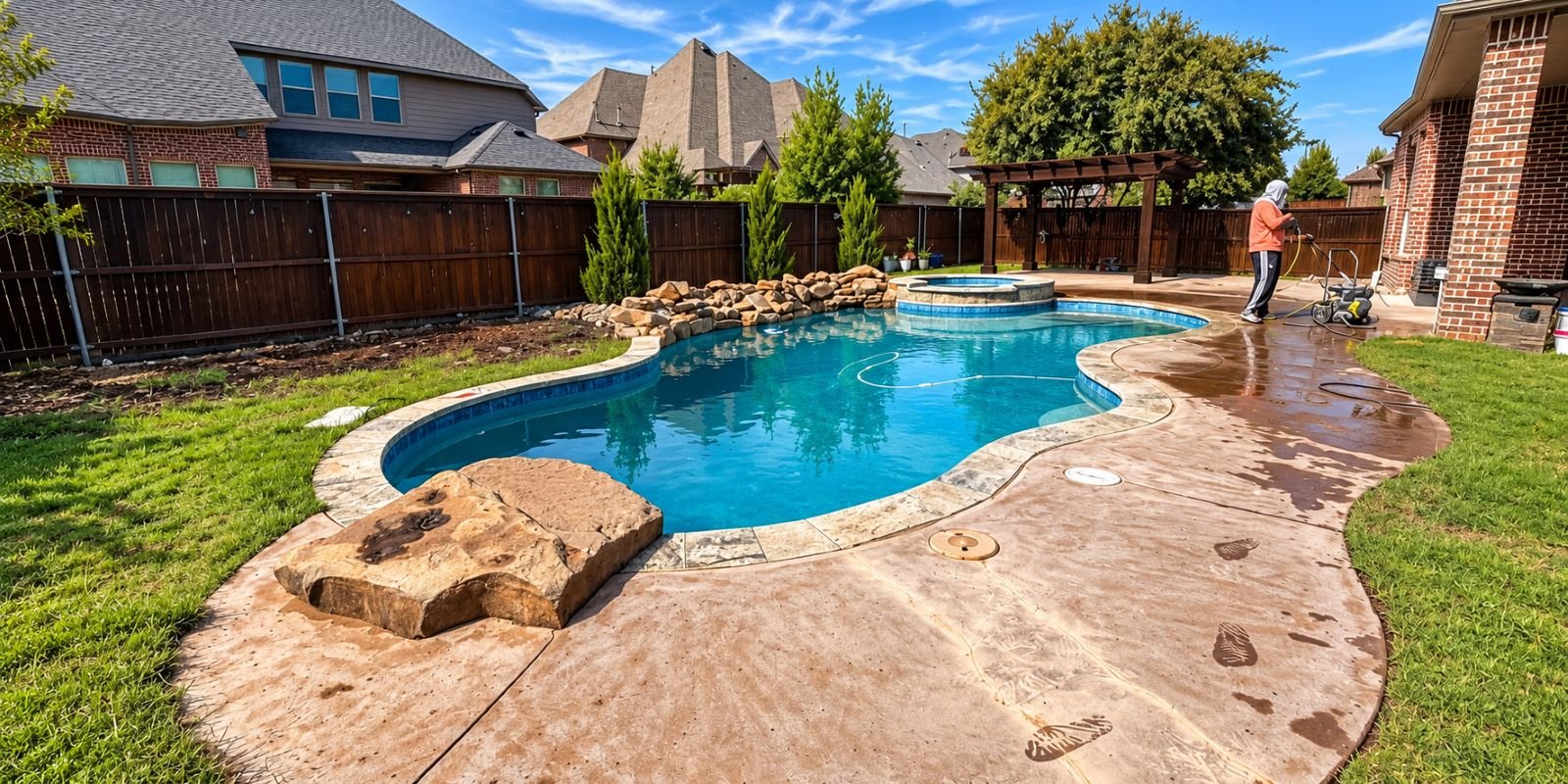
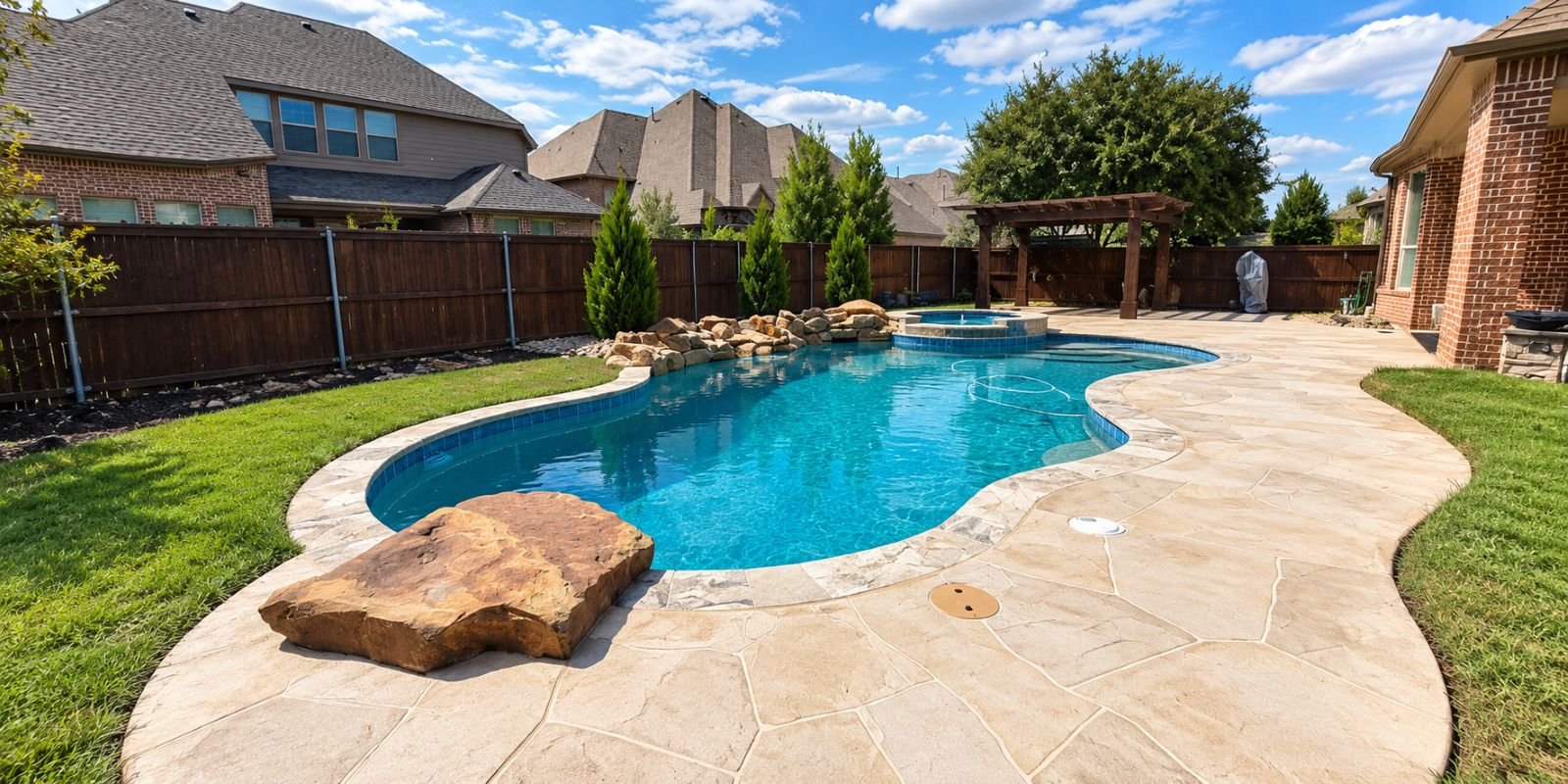
When those boxes are checked, there is no reason to pay for demolition. A Carvestone overlay applied about 1/4 inch thick can cover the old texture and turn it into a hand-carved stone look, without raising the surface so much that it interferes with doors or coping.
When removal is the better choice
Covering a failing surface only moves the problem up a layer. We recommend removing material, or repairing the slab first, when you see:
- Widespread delamination: the coating lifts in sheets or sounds hollow when tapped across large areas.
- Multiple old coatings stacked on top of each other that are no longer bonded together.
- Structural movement: slabs that have sunk, tilted toward the pool or lifted at joints. North Texas clay soil makes this common, and it needs to be addressed before any overlay. Our guide to resurfacing concrete on DFW clay soil explains what to look for.
- Crumbling concrete where the pebble layer comes up with chunks of cement attached.
Even then, it is often only the loose coating that has to come off, not the whole slab. A good contractor will tell you which parts can stay.
How we prepare Kool Deck and pebble decks for an overlay
Preparation decides whether a resurfaced deck lasts. Every project follows the same basic steps from our concrete resurfacing process:
- Inspection and sounding. We walk the deck, tap suspect areas and mark anything loose or hollow.
- Cleaning. Pressure washing removes dirt, algae, sealer residue and chemical buildup.
- Grinding. Diamond grinding opens up the surface. On Kool Deck it removes the weak top film; on pebble decks it knocks down the high points so the overlay goes on evenly.
- Crack repair. Cracks are cut and filled so they do not telegraph through the new surface.
- Bond coat and base. A bonding layer and base coat fill the texture and create a flat, solid foundation.
- Finish layer. The decorative overlay is troweled on, textured and, for Carvestone, hand-carved into stone shapes.
- Color and sealer. Stains create natural variation, and a UV-stable sealer protects against pool chemicals and fading.
Kool Deck vs Carvestone: what you gain by resurfacing
Many homeowners compare simply re-coating with another cool-deck product against a full decorative overlay. We cover this in depth in Carvestone vs Kool Deck, but the short version is:
| Feature | New spray coating | Carvestone overlay |
|---|---|---|
| Look | Uniform light texture | Natural stone, flagstone or slate look with carved joints |
| Thickness | Thin coating | About 1/4 inch decorative layer |
| Hides old texture | Partly | Yes, fully covers pebble or old coating |
| Slip resistance | Textured | Textured, can be sealed with anti-slip additive |
| Design options | Few colors | Custom colors, borders, accents |
If all you need is a quick refresh, a coating can work. If you want the deck to look like a new outdoor living space, an overlay is the bigger upgrade. You can see finish options in our guide to pool deck resurfacing options in Texas.
Safety and comfort around the pool
Pool decks are wet, barefoot surfaces, so traction and heat matter as much as looks. A resurfaced deck is textured for grip, and sealers can include an anti-slip additive near steps and the coping. Color choice also affects comfort: lighter tones reflect more sunlight. Read more in which pool deck surfaces stay coolest in Texas summers and our article on the benefits of slip-resistant pool deck coatings.
What affects the cost of resurfacing over Kool Deck or pebble
Every deck is different, so we price after an on-site visit. The main factors are:
- Square footage of the deck and any connected patio.
- How much coating must come off before the overlay goes on.
- Crack and spall repairs found during inspection.
- The finish: hand-carved stone patterns, borders and color blends take more labor than a simple texture.
- Access for equipment and the layout around the pool, steps and spa.
For typical ranges, see our cost of pool deck resurfacing in Dallas and how much a Carvestone overlay costs. In almost every case, resurfacing is less expensive than tearing out and re-pouring a deck.
How long a resurfaced deck lasts
A properly prepared overlay is a long-term surface, not a temporary paint job. Lifespan depends on the condition of the slab, sun exposure, pool chemistry and how often you reseal. Our article on how long pool deck resurfacing lasts covers maintenance in detail, and how to maintain decorative concrete surfaces gives you a simple care routine.
Remove or cover? A quick decision checklist
- Cover it if the slab is solid, cracks are minor and the old finish is mostly bonded.
- Remove the loose layer, then cover if the coating is peeling in patches but the concrete is sound.
- Repair or replace sections first if slabs have sunk, lifted or broken apart.
Not sure which applies to your deck? That is exactly what the free estimate is for. We serve homeowners across the Metroplex, including pool deck resurfacing in Dallas, Frisco, Plano, Keller and Southlake. See finished projects in our work gallery or read what homeowners say on our reviews page.
Get an honest assessment of your pool deck
Whether your deck is old Kool Deck, faded pebble or a patchwork of past repairs, Resistant Coating Solutions will inspect it, explain what can stay and what should go, and give you a clear written price. Request your free estimate or call or text 214-789-9102.
Frequently Asked Questions
Can you put a Carvestone overlay over Kool Deck?
Often, yes. If the Kool Deck coating is still well bonded and the slab underneath is sound, the surface is ground and prepared so the overlay can bond to it. Loose, flaking or chalky coating has to be removed first.
Do I have to remove my pebble pool deck before resurfacing?
Usually not. Exposed-aggregate and pebble decks can be ground down and filled so the new overlay goes on a flat, sound base. Removal is only needed when the concrete itself is broken, heaving or badly delaminated.
Is resurfacing over Kool Deck cheaper than tearing it out?
In most cases it is, because there is no demolition, no haul-off and no new pour. The exact price depends on deck size, prep work and the finish you choose.
Will a resurfaced pool deck stay cool?
Lighter overlay colors stay noticeably more comfortable underfoot than dark or bare concrete. We help you choose a color that balances looks and heat.