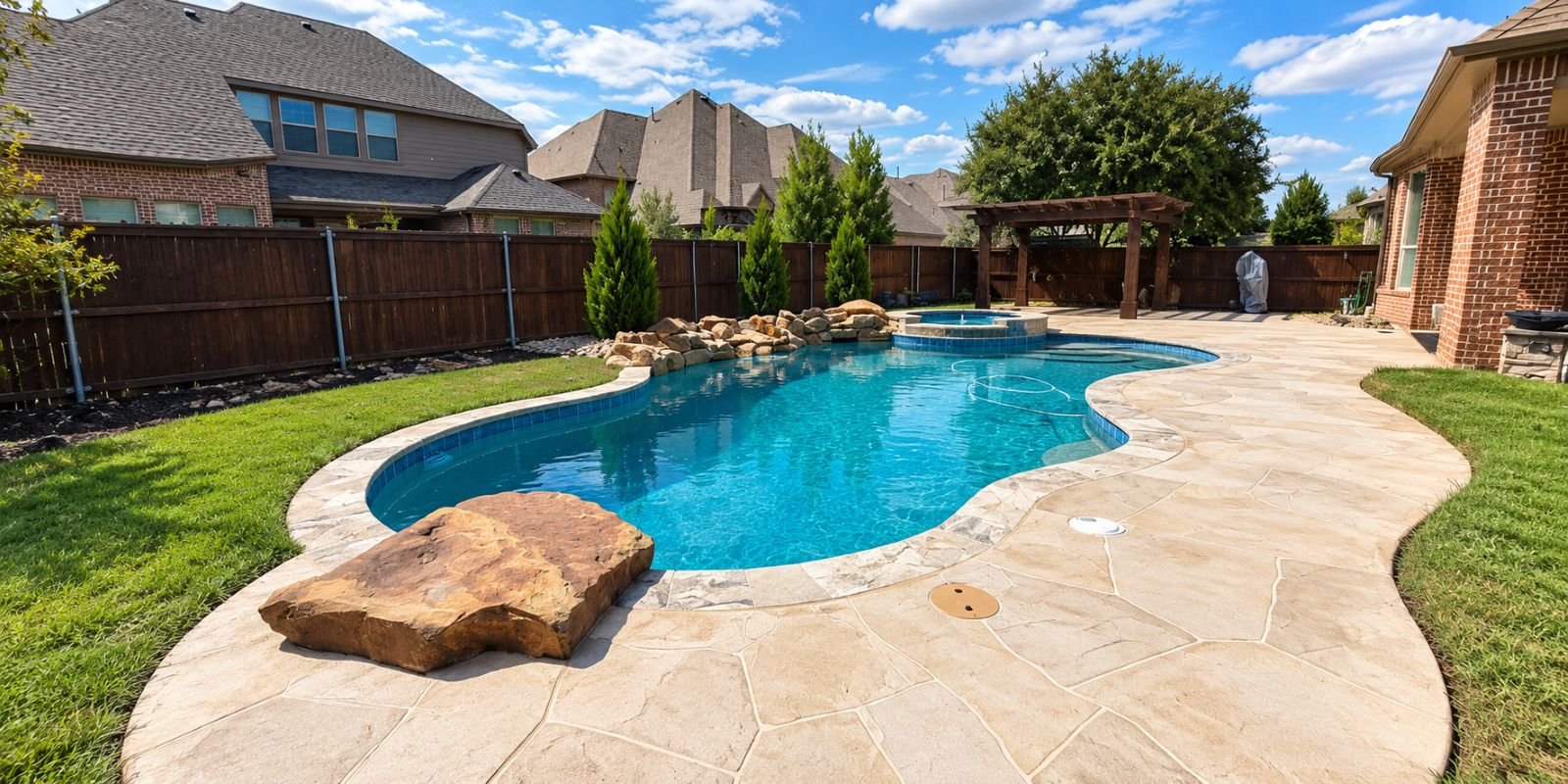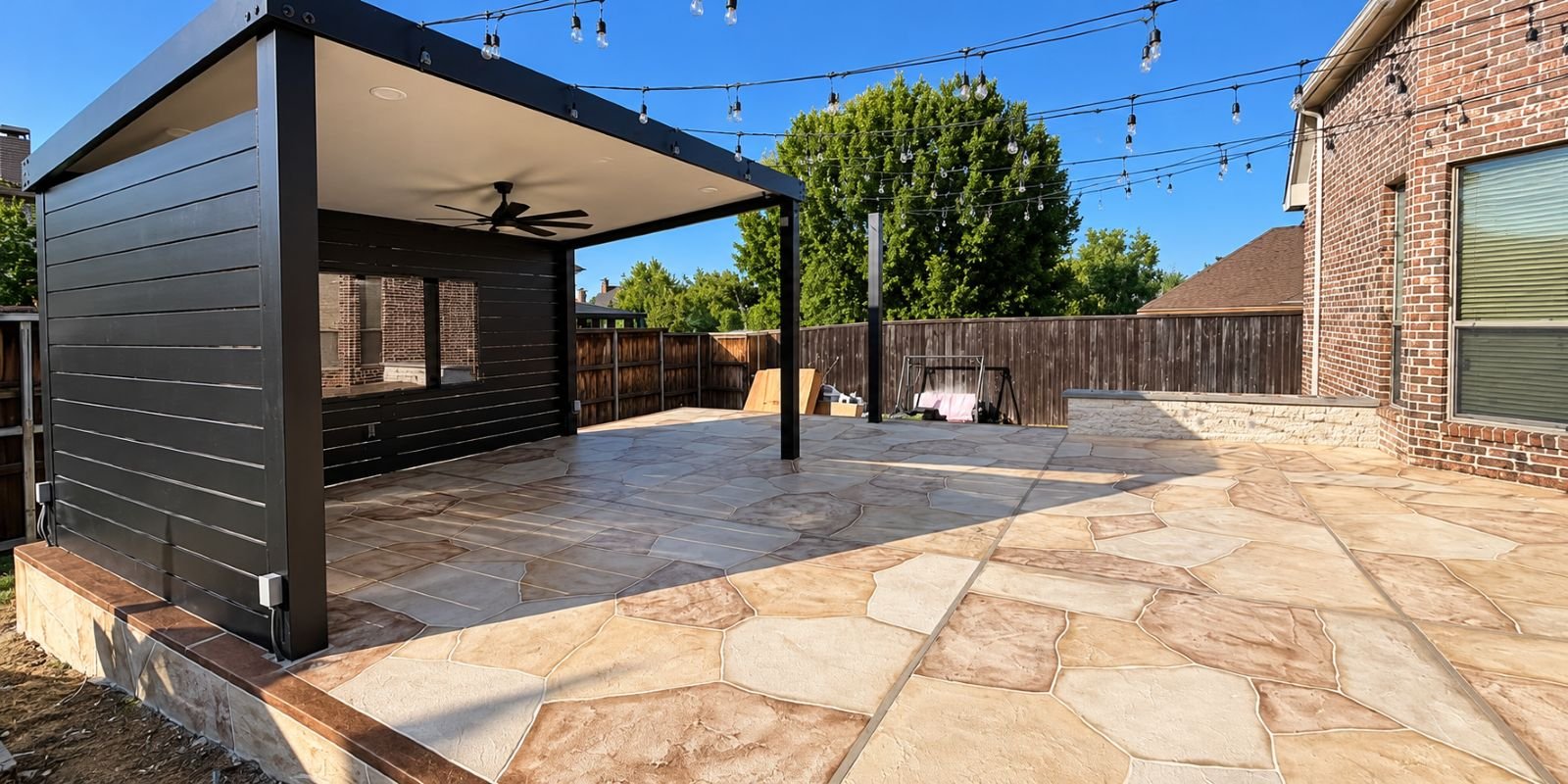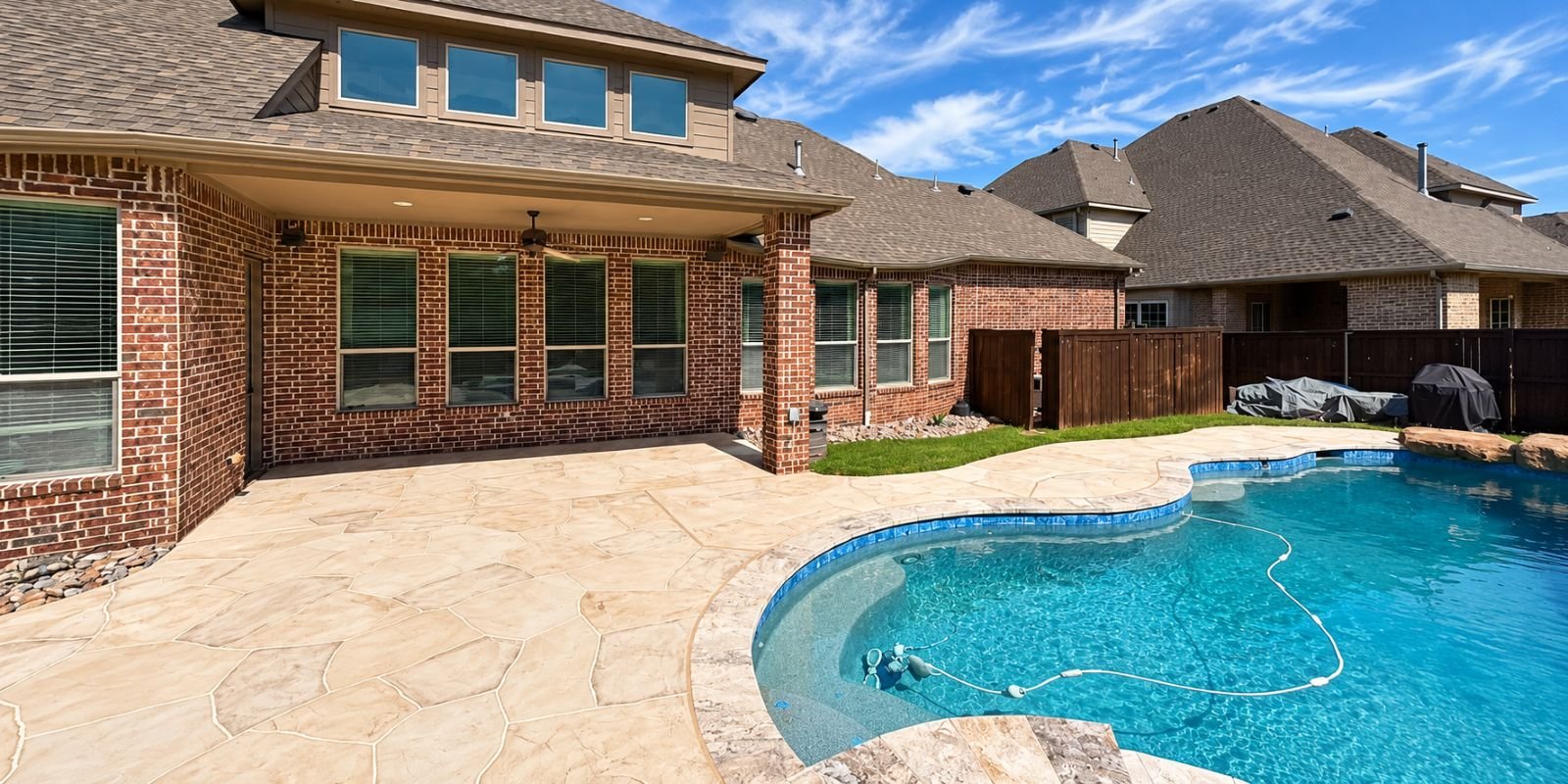
One of the best parts of resurfacing with Carvestone is the design freedom. Because the overlay is hand-carved, the same base material can look like flagstone, cut limestone, slate or tile, in almost any color. If you are planning a new look for a pool deck or patio in Dallas–Fort Worth, this guide to Carvestone patterns and colors will help you narrow down ideas and choose a design that suits your home.
Key takeaways
- Carvestone patterns include random flagstone, cut stone, slate, tile and plank looks, all hand-carved.
- Light sand, buff and limestone colors stay cooler on pool decks and pair well with blue water.
- Multi-tone blends look most like natural stone and hide everyday dirt.
- Borders, bands and medallions add a custom finish without changing the deck’s footprint.
A quick refresher: what makes Carvestone different
Carvestone is a decorative overlay applied at roughly 1/4 inch over existing, sound concrete. Installers carve grout lines and stone texture by hand, then add color and seal it. Unlike stamped concrete, which uses repeating mats, each joint is cut individually, so the pattern looks more natural. Learn the basics in what is a Carvestone overlay? and compare it with other options in stamped concrete vs overlay.
Popular Carvestone patterns
Random flagstone
Irregular stones with organic shapes. This is the most popular choice for pool decks because it looks relaxed and natural, like a quarried stone deck. It works with almost any landscaping and hides minor dirt well.
Cut stone or ashlar
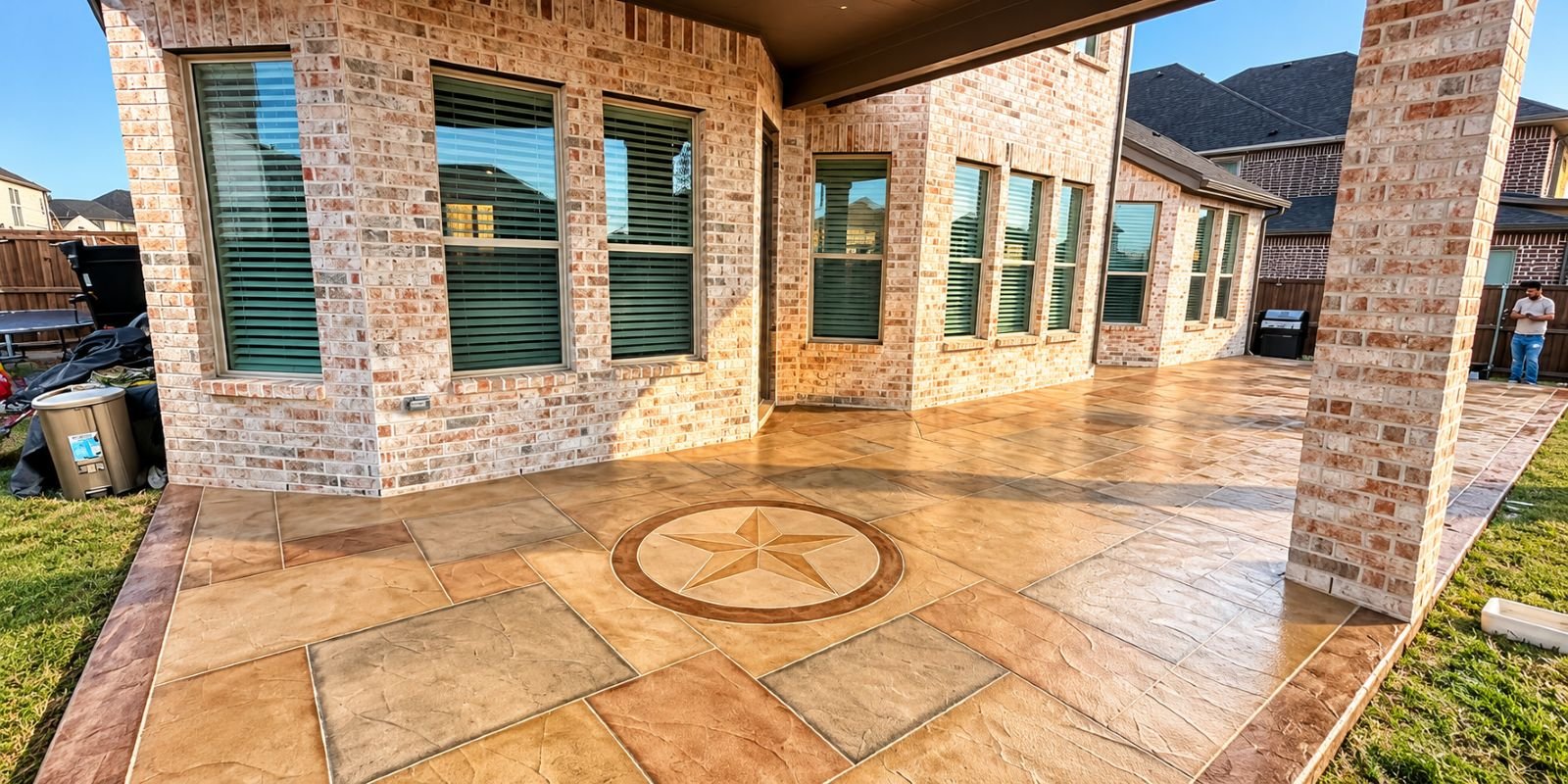
Rectangular and square stones in mixed sizes. It feels more structured and suits traditional brick homes and formal patios.
Slate
Smaller, layered stones with a fine texture. Slate patterns look great in courtyards, entry walks and covered patios.
Tile and large-format
Clean square or rectangular “tiles” with straight joints. A modern choice for contemporary homes and outdoor kitchens.
Plank or wood-look
Long, narrow sections with grain texture. Gives a deck feel without wood maintenance.
Choosing colors that work in Texas
Color affects style, comfort and maintenance. Here is how common palettes perform:
| Palette | Look | Best for |
|---|---|---|
| Sand and buff | Warm, natural, beach-like | Pool decks, brick homes, comfort underfoot |
| Light limestone and cream | Bright and clean | Modern pools, white or light stucco |
| Light to medium gray | Cool, contemporary | Modern homes, outdoor kitchens |
| Earth blends (tan, brown accents) | Rustic, stone-like | Hill Country and ranch styles |
| Darker accents | Bold, high contrast | Borders and bands, not full decks |
For pool decks, lighter tones are the comfortable choice in a DFW summer. Read the coolest pool deck surfaces for Texas summers for more on heat.
Multi-tone vs single color
Real stone is never one flat color. Multi-tone finishes, where individual stones get slightly different shades, look much more natural and help hide everyday dirt and leaves. Single-color finishes look cleaner and more modern. Many homeowners choose a light base with subtle variation for the best of both.
Borders, bands and medallions
Design details turn a nice deck into a showpiece:
- Borders: a band of cut stone around the pool coping or patio edge frames the space.
- Contrasting bands: a slightly darker band can separate a dining area from a lounge area.
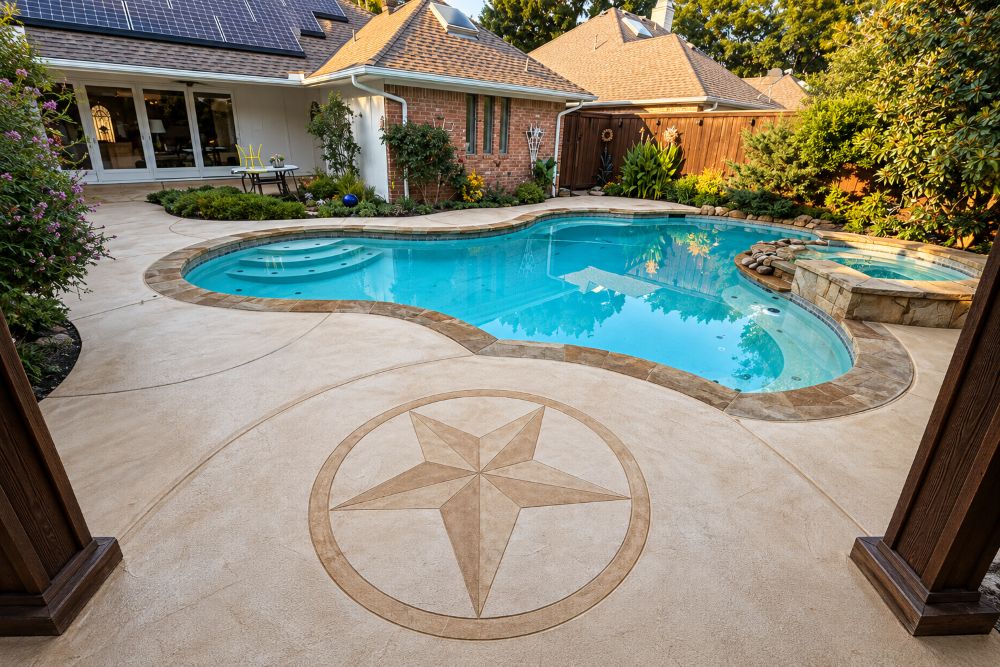
- Medallions: a compass or circular design adds a focal point at a patio center or walkway junction.
- Step accents: a different tone on step edges improves visibility and safety.
Design ideas by space
Pool decks
Random flagstone in sand or buff with a cut-stone border at the coping is a timeless combination. Add a slip-resistant sealer for wet areas. See pool deck resurfacing, the best pool deck options in Texas and Carvestone vs Kool Deck.
Patios
Ashlar or slate in warm tones works for covered patios; tile looks suit modern spaces with pergolas or outdoor kitchens. Browse more in patio resurfacing ideas for modern homes and our patio resurfacing service.
Front entries and walkways
Slate or small cut stone in a neutral tone matches the front elevation and boosts curb appeal. See porch resurfacing ideas.
Driveways
Choose neutral tones and simpler patterns that look good from the street and are likely to pass HOA review. Read HOA rules for driveway and patio resurfacing.
Matching Carvestone to your home
- Red or orange brick: buff, tan and warm earth blends.
- Light stone or limestone: cream and light limestone tones.
- White or gray stucco: light gray or cool limestone.
- Dark roof and trim: a slightly darker border echoes the trim without overheating the main deck.
Bring a photo of your house exterior to the estimate. Seeing colors next to your brick or stone is the easiest way to decide.
Upgrading an existing Kool Deck or pebble surface
Many pool owners pick Carvestone to replace a tired cool-deck coating or rough exposed aggregate. Whether to remove the old surface or cover it depends on its condition; our guide on resurfacing over Kool Deck or pebble decks explains both paths.
Cost and longevity
Pattern complexity, borders, medallions and the size of the area affect price. Read how much Carvestone costs and pool deck resurfacing cost in Dallas. With regular resealing, a Carvestone surface can stay attractive for many years. See how long pool deck resurfacing lasts and how to maintain decorative concrete.
Texture options and how they feel underfoot
Pattern and color get most of the attention, but texture shapes how the surface feels every day:
- Natural stone texture: a gently uneven, stone-like face that gives good grip and hides wear. Ideal for pool decks.
- Fine knockdown texture: a softer, flatter feel that is comfortable on bare feet and easy to sweep.
- Light slate texture: layered detail that looks rich in covered areas and entryways.
Around pools and steps, choose a texture with enough grip for wet feet. Read the benefits of slip-resistant pool deck coatings for more.
Lighting and landscaping that make Carvestone shine
A new surface looks even better with the right setting. Low-voltage path lights along carved joints highlight the stone texture at night. String lights over a patio create warm shadows across a flagstone pattern. Planters with green foliage contrast nicely with sand and buff tones, while gray finishes pair well with ornamental grasses and white flowers. Keep sprinklers aimed away from the surface to avoid mineral spots.
Common design mistakes to avoid
- Going too dark around the pool: dark decks absorb heat and become uncomfortable in summer.
- Too many competing elements: one border or one medallion usually looks better than several.
- Ignoring the house: a deck color that fights the brick or stucco looks out of place.
- Choosing from a tiny chip: colors look different over a large area and in Texas sun. Look at full project photos.
- Skipping resealing: sealer protects color and texture; without it, the finish fades faster.
Before you choose a design
The slab must be sound before any pattern goes on top. If you have cracks or movement, read can you resurface concrete on DFW clay soil? And if you are selling soon, a neutral flagstone or ashlar design appeals to the most buyers; see resurfacing before selling.
See Carvestone designs in person
The best way to choose is to see real projects. Browse our project gallery, read customer reviews and visit our pages for Dallas, Frisco, Plano, Keller and Southlake. Then request a free estimate or call or text 214-789-9102, and we will bring color samples to your home.
Frequently Asked Questions
What is Carvestone?
Carvestone is a decorative overlay applied about 1/4 inch thick over existing concrete. Installers hand-carve joints and texture into it to create the look of natural stone, then color and seal it.
What patterns are available with Carvestone?
Common looks include random flagstone, cut stone or ashlar, slate, tile and plank-style layouts, plus borders, bands and medallions.
What Carvestone colors work best for a pool deck?
Light, warm tones such as sand, buff and light limestone stay cooler underfoot and pair well with blue water. Multi-tone blends look more like natural stone.
Can I match Carvestone to my house?
Yes. Colors can be chosen to complement brick, stone and stucco, and borders can echo trim or roof tones.
Is Carvestone slip resistant?
Its carved, textured surface gives good grip, and a sealer with an anti-slip additive can be used in wet areas.