If you live in Dallas, Fort Worth or almost anywhere in the Metroplex, your concrete sits on some of the most active soil in the country. North Texas clay swells when it gets wet and shrinks when it dries out, and every patio, driveway and pool deck rides along with it. That raises an important question before any remodel: can you resurface concrete on DFW clay soil, or will the cracks just come back? The answer depends on what kind of cracks you have and whether the slab is still moving.
Key takeaways
- You can resurface concrete on clay soil when the slab is stable and the cracks are cosmetic or have level edges.
- Offset cracks, rocking sections and hollow areas point to slab movement that should be fixed before an overlay.
- Proper crack repair and respected control joints help a new overlay stay crack-free longer.
- Steady soil moisture and good drainage are the best long-term protection for concrete in North Texas.
How expansive clay affects concrete in North Texas
Expansive clay contains minerals that absorb water and grow in volume. After a wet spring, the ground can lift slabs slightly; after a long, dry Texas summer, it shrinks and leaves voids underneath. This seasonal cycle causes:
- Cracks that open wider in summer and close in wet months.
- Slabs that tilt toward the house or away from it.
- Edges that lift at joints, creating trip hazards.
- Hollow areas under sections that sound different when tapped.
Not every crack is a soil problem, though. Concrete naturally shrinks as it cures, and many hairline cracks are cosmetic.
Types of cracks and what they mean
| What you see | Likely cause | Resurface? |
|---|---|---|
| Hairline cracks, web or map pattern | Surface shrinkage or wear | Yes, after repair |
| Single straight cracks, both sides level | Normal shrinkage | Yes, after routing and filling |
| Cracks wider than a credit card, edges level | Past movement, may be stable | Usually, after evaluation |
| One side higher than the other (offset) | Settlement or heave | Fix the slab first |
| Sections that rock or sound hollow | Voids under slab | Fix the slab first |
| Cracks that keep growing season after season | Active movement | Address cause first |
Our article on resurfacing old or cracked concrete goes deeper into crack repair, and how to fix cracked concrete driveways covers driveways specifically.

When resurfacing is the right call
Resurfacing works when the slab is structurally sound, even if the surface looks rough. Good candidates have:
- Cosmetic or stable cracks with level edges.
- Faded color, stains, spalling or worn texture.
- Old coatings or exposed aggregate that need covering.
- Solid, non-rocking sections throughout.
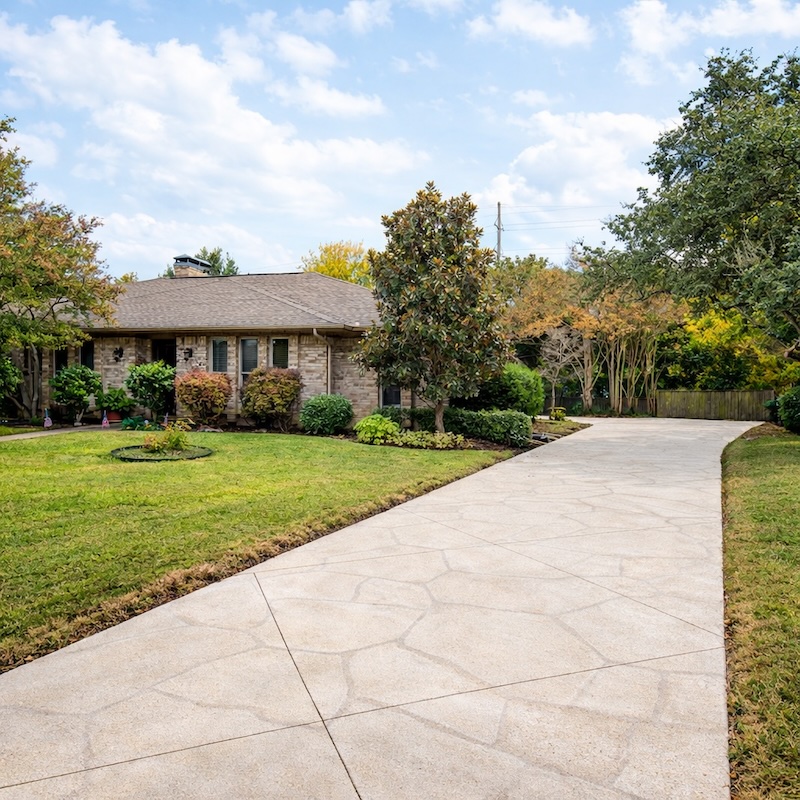
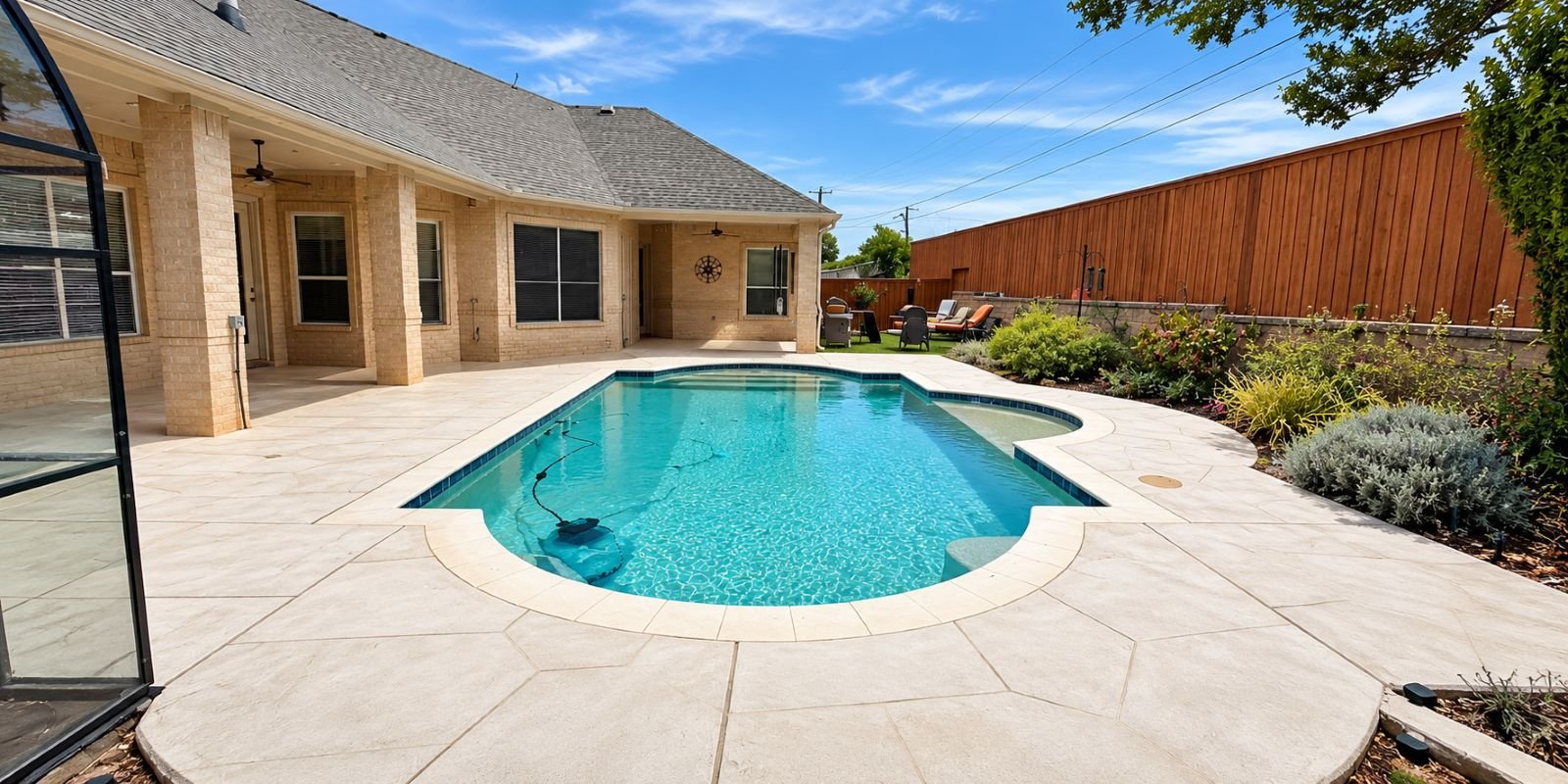
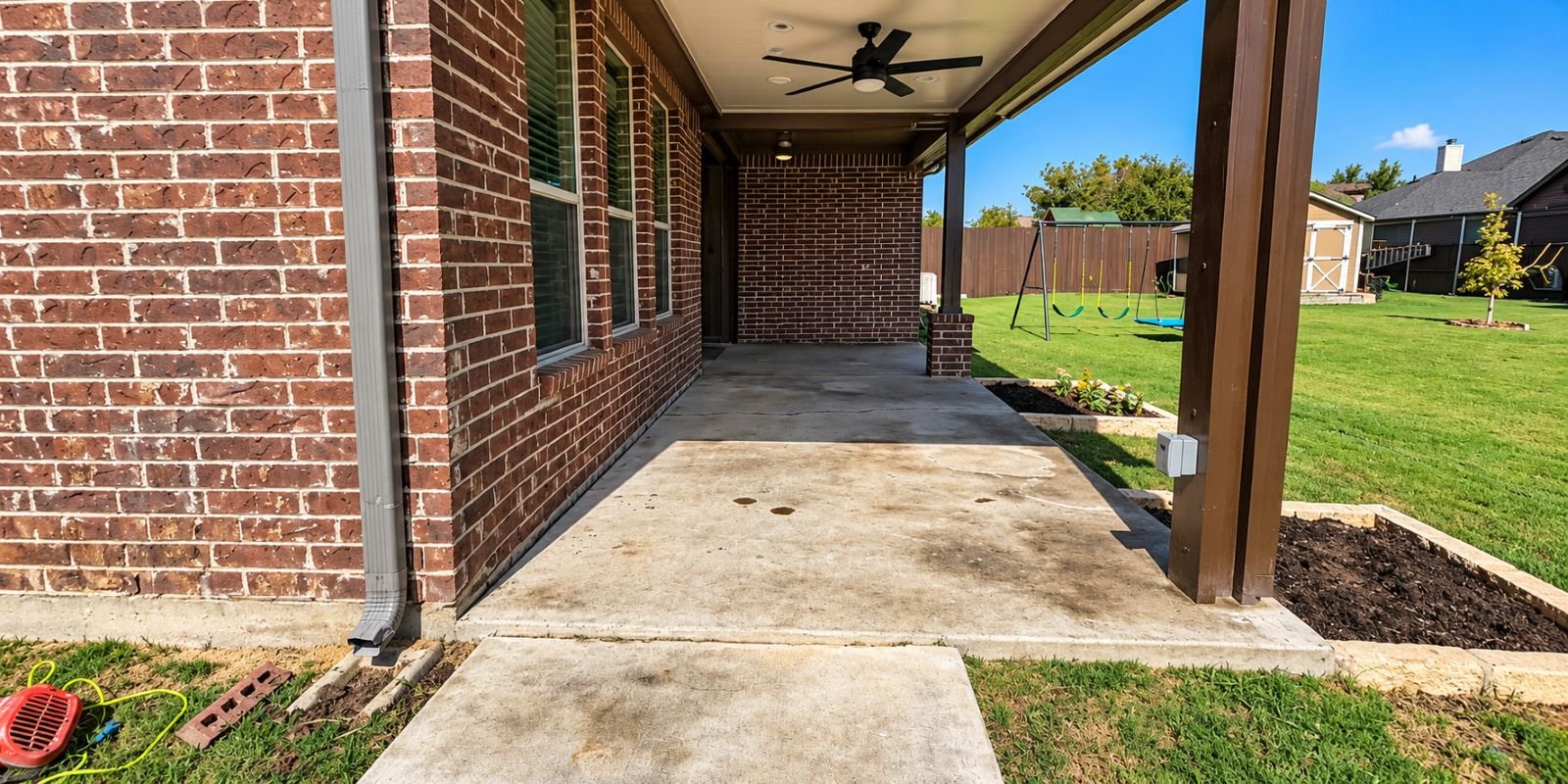
In these cases, a decorative overlay gives you a new surface without demolition. Explore driveway resurfacing, patio resurfacing and pool deck resurfacing to see what is possible.
When not to resurface (yet)
An overlay bonds to the slab and moves with it. If the slab is actively shifting, the new surface can crack along the same lines. Hold off on resurfacing when you see:
- Offset cracks where one side has dropped or lifted.
- Sections that rock, tilt toward the house or hold standing water against the foundation.
- Large voids or washouts at slab edges.
- Cracks that have clearly widened over the last year.
These issues usually call for slab leveling, partial replacement or drainage correction first. Once the slab is stable, it can be resurfaced like any other.
How we repair cracks before an overlay
- Evaluate: we inspect every crack, check for offset and tap for hollow areas.
- Clean and grind: the surface is opened so repair material and overlay can bond.
- Route and fill: cracks are cut to a consistent profile and filled with a repair compound.
- Respect control joints: existing joints are honored or recut so the overlay has room to move with the slab.
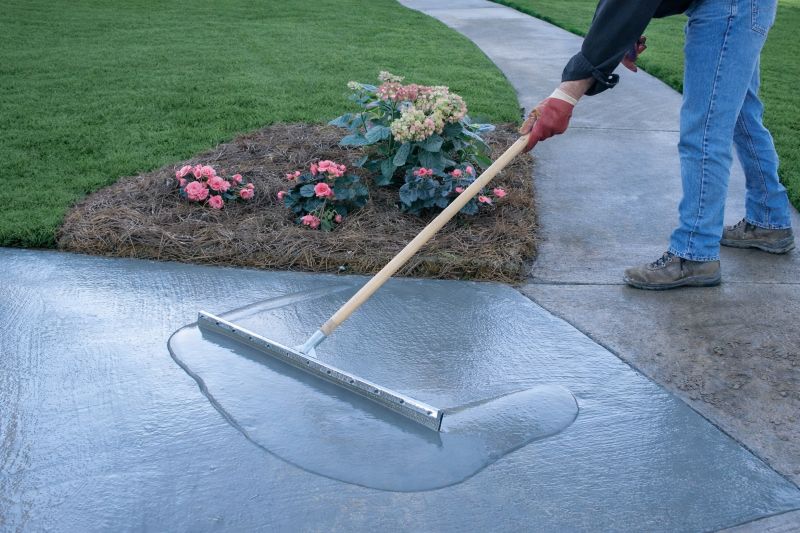
- Base coat and finish: the overlay is applied, textured, colored and sealed.
You can read the full sequence in our concrete resurfacing process and avoid the pitfalls listed in common mistakes to avoid in concrete resurfacing.
Protecting your concrete from future soil movement
- Keep moisture consistent. In long dry spells, regular watering near slabs helps limit shrinkage.
- Manage drainage. Gutters and downspouts should send water away from patios and driveways, not under them.
- Watch tree roots. Large trees close to slabs pull moisture from the soil and can lift edges.
- Seal joints and cracks so water does not get under the slab.
- Reseal the overlay every few years. See how long a concrete overlay lasts.
Freeze–thaw adds another layer
DFW does not freeze often, but when it does, water trapped in cracks expands and can break the surface. If you saw damage after a hard freeze, read spalling concrete after a Texas freeze for repair options.
Resurfacing vs replacement on clay soil
Replacing a slab does not stop the soil from moving. New concrete on the same clay will face the same seasonal cycle. That is why stabilizing the slab and controlling water is more important than starting over. For a side-by-side look, see driveway resurfacing vs replacement and patio overlay vs replacement.
A simple at-home check before your estimate
You can learn a lot about your slab in a few minutes. Walk your patio, driveway or pool deck and note:
- Edge height: run your hand or a straight board across each crack. Is one side higher?
- Movement: step on each section near the cracks. Does anything rock or shift?
- Sound: tap with a hammer handle. A hollow sound can mean a void or a loose surface.
- Water: after rain or watering, look for puddles against the house or under slab edges.
- History: take dated photos of the largest cracks and compare them in a few months.
Share your notes and photos with your contractor. They help separate cosmetic cracks from active movement and make the estimate more accurate.
How clay soil affects different surfaces
Driveways
Driveways carry vehicle loads on top of soil movement, so they often show long cracks and settled sections near the street or garage. Stable cracks can be repaired and resurfaced; sunken panels need leveling first. See driveway resurfacing.
Patios
Patios next to the foundation are exposed to roof runoff and sprinkler water. Good drainage is the most important prevention. See patio resurfacing.
Pool decks
Pool decks deal with splash water, plumbing lines and the pool shell itself. Cracks near the coping and expansion joints are common and should be addressed carefully before an overlay. See pool deck resurfacing and how long pool deck resurfacing lasts.
What to expect after resurfacing
No contractor can stop clay soil from moving entirely. What proper prep does is give the overlay the best possible start: repaired cracks, respected joints and a strong bond. If a new hairline crack appears years later, it can usually be repaired and blended without redoing the whole surface. Regular resealing and good drainage keep the overlay looking right for longer. To choose a contractor who explains these trade-offs honestly, use our 12 questions to ask a resurfacing contractor, and check resurfacing cost per square foot to budget for repairs plus finish.
Get an honest slab assessment
We will tell you straight whether your concrete is ready for resurfacing or needs repair first. Resistant Coating Solutions works across Dallas, Fort Worth, Plano, Frisco, McKinney and the rest of the DFW service area. Request a free estimate or call or text 214-789-9102.
Frequently Asked Questions
Why does concrete crack so much in Dallas–Fort Worth?
Much of North Texas sits on expansive clay that swells when wet and shrinks when dry. That movement, plus normal concrete shrinkage, causes cracks in patios, driveways and pool decks.
Can I resurface over cracked concrete?
Hairline and small surface cracks can be repaired and resurfaced. Wide cracks, offset edges or sections that rock, sink or heave point to slab movement that should be fixed first.
Will cracks come back through a concrete overlay?
Cracks that are repaired before resurfacing usually stay hidden. Active structural cracks can move again, which is why we identify them during the estimate.
How can I reduce soil movement around my concrete?
Keep soil moisture steady with consistent watering in dry spells, make sure gutters and drainage carry water away from slabs, and avoid large trees right next to concrete.