North Texas does not freeze often, but when it does, concrete pays the price. After an ice storm or a hard winter cold snap, many Dallas–Fort Worth homeowners notice their driveway or patio looks different: small craters, flaking patches and rough spots where the smooth surface used to be. This is called spalling. Here is what causes spalling concrete after a Texas freeze, how it is repaired and when resurfacing is the best long-term fix.
Key takeaways
- Spalling is surface flaking caused mainly by water freezing inside porous concrete, often worsened by de-icing salt.
- Spalling concrete repair starts with removing loose material and confirming the slab is structurally sound.
- Resurfacing repairs the damage and creates a uniform, sealed finish instead of mismatched patches.
- Sealing, skipping rock salt and good drainage help prevent spalling after the next Texas freeze.
What spalling looks like
- Thin flakes or chips peeling off the surface.
- Shallow round pits or “popouts” scattered across the slab.
- Exposed sand and small stones where the cream layer has worn away.
- Rough patches that collect dirt and look darker than the rest.
Spalling is usually a surface problem. It is different from structural cracking, where the slab breaks or shifts. That difference decides whether resurfacing is an option.
Why concrete spalls in a freeze
Concrete is porous. When it rains or snow melts, water soaks into tiny pores near the surface. When temperatures drop below freezing, that water turns to ice and expands. The pressure pushes against the weakest layer, the top surface, and pieces break off. Repeat the cycle a few times and the damage spreads.
Several factors make spalling more likely:
- De-icing salts: rock salt and some ice melts increase freeze-thaw stress and attack the surface.
- Unsealed concrete: without a sealer, water soaks in much more easily.
- Weak finishing: concrete that was overworked or watered down during original pouring has a weaker top layer.
- Poor drainage: water that pools on a slab soaks in and freezes.
- Age and wear: older surfaces have more openings for water.
Is spalling dangerous?
Minor spalling is mostly cosmetic, but it should not be ignored. Rough edges can be trip hazards on walkways and pool decks, and an open surface lets more water in, which speeds up future damage. Left alone, light spalling often becomes deeper and wider over a few seasons.
Repair options, from small to large
| Damage level | Typical approach |
|---|---|
| A few small popouts | Clean, patch with a repair compound, then seal |
| Scattered flaking over part of the slab | Grind or clean, patch, then resurface for a uniform look |
| Widespread spalling, sound slab | Full surface prep and decorative overlay |
| Deep damage, broken or sinking slab | Repair or replace the affected section first |
Simple patches fix the problem but often leave a visible difference in color and texture. That is why many homeowners choose resurfacing: it repairs the damage and gives the whole surface a new, consistent finish.
How resurfacing fixes spalled concrete
- Inspection: confirm the slab is structurally sound and identify any cracks or movement.
- Removal of loose material: everything that is flaking or weak is taken off.
- Surface preparation: grinding or cleaning opens the surface so the overlay can bond.
- Patching: deeper pits and cracks are filled to level the surface.
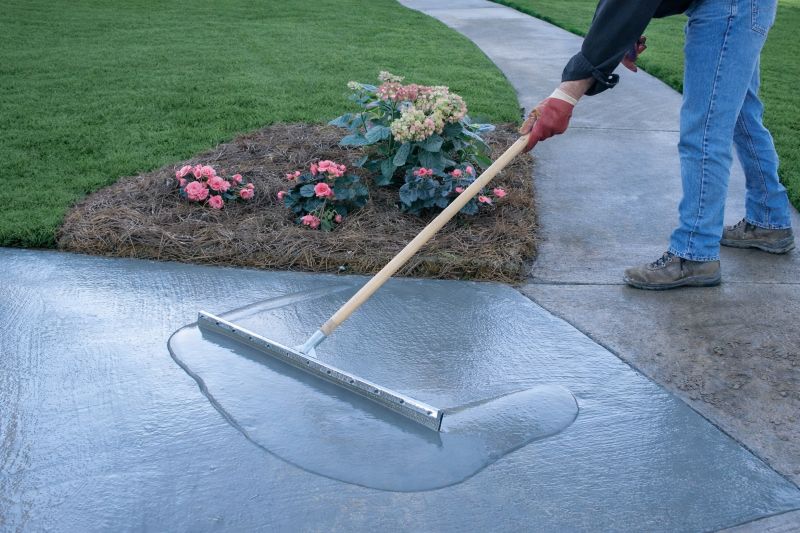
- Overlay application: a polymer-modified overlay is applied, then textured and colored.
- Sealing: a quality sealer protects the new surface from water and stains.
You can see the full workflow in our concrete resurfacing process guide, and read about crack repair in can you resurface old or cracked concrete?
When resurfacing is not enough
If the slab is cracked through, rocking, sinking or heaving, the problem is structural, not just surface damage. North Texas clay soil can cause this movement. Read can you resurface concrete on DFW clay soil? to understand which conditions need repair first.
Choosing a finish after spalling
Resurfacing lets you upgrade the look at the same time as the repair:
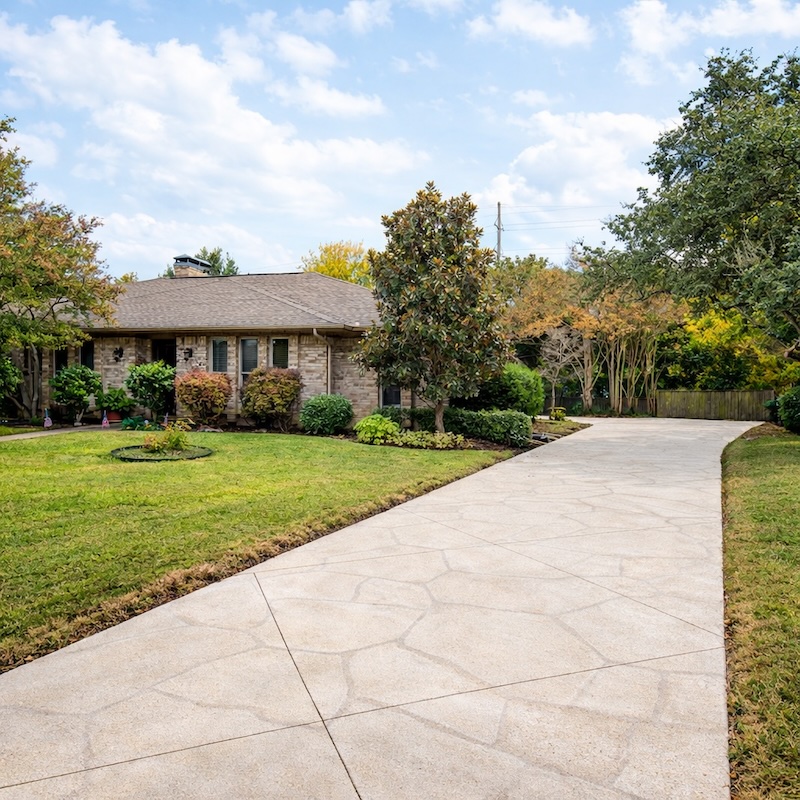
- Driveways: a clean, durable overlay in a neutral tone. See driveway resurfacing.
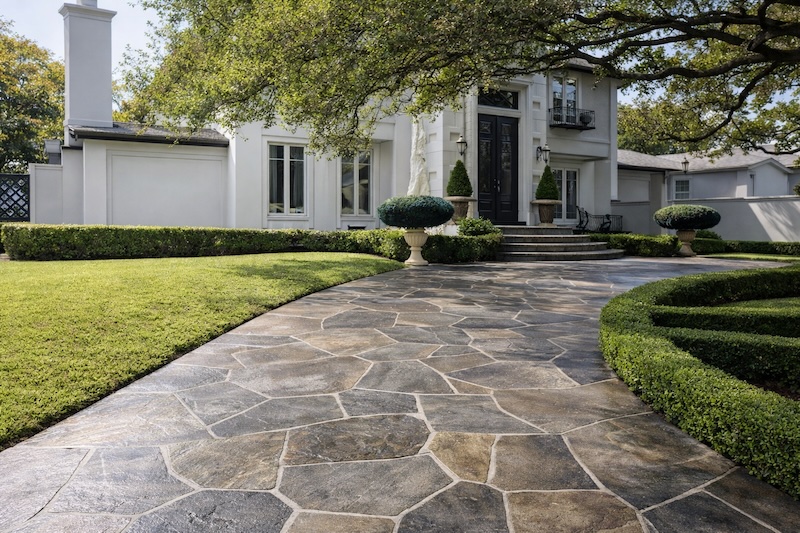
- Patios: stone or tile patterns for a more finished outdoor space. See patio resurfacing and types of concrete overlays.
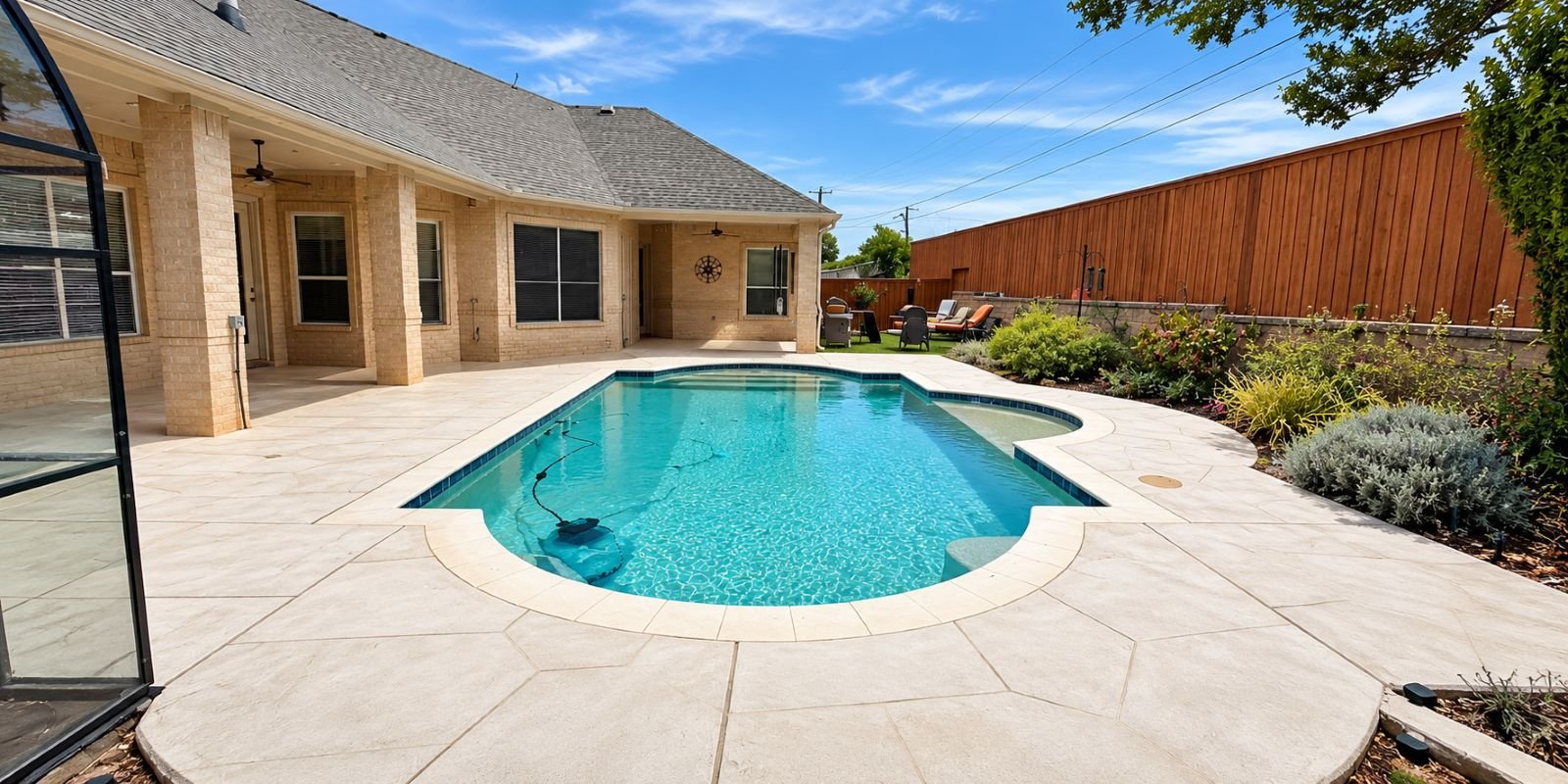
- Pool decks: textured, slip-resistant finishes. See pool deck resurfacing and slip-resistant coatings.
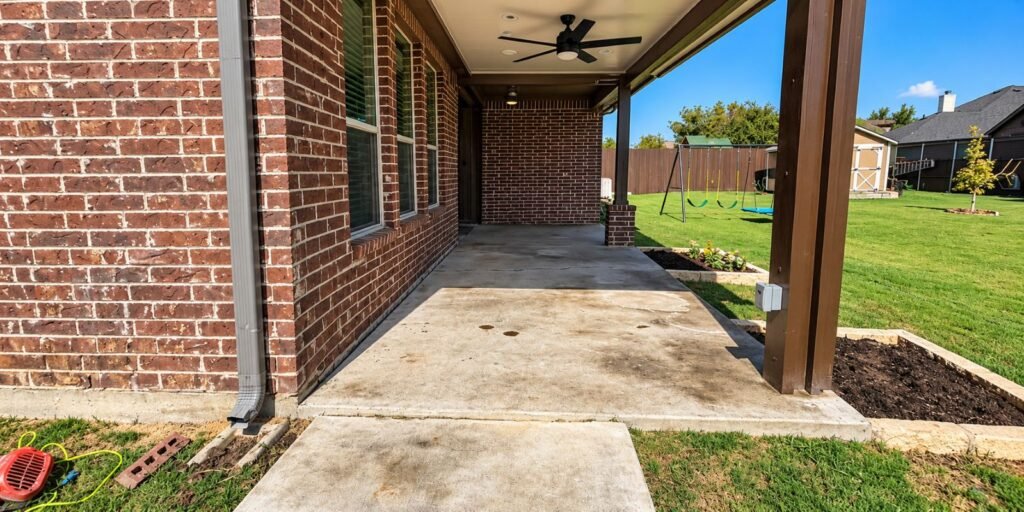
- Walkways and porches: a fresh entry that is safer underfoot. See porch resurfacing ideas.
Preventing spalling next winter
- Seal the surface and reseal every few years so water cannot soak in easily.
- Skip rock salt. Use sand for traction or an ice melt labeled safe for concrete, used sparingly.
- Clear ice and slush before it can refreeze on the slab.
- Fix drainage so water does not pool on driveways and patios.
- Repair small damage early before it spreads.
For a full routine, read how to maintain decorative concrete surfaces.
Timing your repair
Overlays should not be installed when a freeze is forecast. In DFW, mild winter days, spring and fall are good windows. Learn more in the best time of year to resurface concrete in DFW. For budgeting, see concrete resurfacing cost per square foot.
Spalling vs scaling vs popouts
These terms are often used interchangeably, but they describe slightly different damage:
- Scaling: a thin, shallow layer of the surface flakes off over a wide area.
- Spalling: deeper chunks break away, sometimes leaving rough craters.
- Popouts: small cone-shaped pieces pop out, often above a weak stone near the surface.
All three can usually be repaired and resurfaced when the slab underneath is sound. The difference mainly affects how much material needs to be removed and patched before the overlay.
DIY patching vs professional resurfacing
Store-bought patch kits can fill a few small popouts, but they have limits. DIY patches often look different from the surrounding concrete, may not bond well without proper prep and tend to fail again in the next freeze. Professional resurfacing removes all weak material, profiles the slab for a strong bond and covers the whole area with a uniform finish and a protective sealer. For larger areas or high-visibility surfaces like driveways and front walks, resurfacing is usually the better value over time. Read the top benefits of concrete resurfacing and whether resurfacing is worth it.
Freeze damage on pool decks
Pool decks are especially vulnerable because they are wet so often. Water around the coping and in expansion joints can freeze and damage edges. If your pool deck flaked or pitted after a cold snap, a slip-resistant overlay can repair the surface and improve safety. See how long pool deck resurfacing lasts and the coolest pool deck surfaces for Texas summers to choose a finish that works year-round.
Insurance and documentation
After a major winter storm, take dated photos of the damage and keep records of repairs. Whether a policy covers concrete damage depends on your insurer and the cause, so check with your agent. Good documentation also helps when you sell the home later; see resurfacing before selling in DFW. When comparing repair bids, use our 12 questions to ask a resurfacing contractor.
Fix spalled concrete for good
Resistant Coating Solutions repairs and resurfaces freeze-damaged driveways, patios, walkways and pool decks across Dallas, Fort Worth, Arlington, Plano, Frisco and the rest of the Metroplex. See our projects, then request a free estimate or call or text 214-789-9102.
Frequently Asked Questions
What is spalling concrete?
Spalling is when the top layer of concrete flakes, pops off or pits, exposing the rougher material underneath. It is common on driveways, walkways and patios.
Why does concrete spall after a freeze?
Water soaks into the surface; when it freezes it expands and pushes the top layer apart. De-icing salts and a weak surface layer make it worse.
Can spalled concrete be resurfaced?
Yes, if the slab underneath is sound. Loose material is removed, the surface is repaired and a bonded overlay creates a new, uniform finish.
Will spalling keep spreading?
Often, yes. Once the surface is open, water gets in more easily, so damage tends to grow with each wet freeze cycle until it is repaired and sealed.
How do I prevent spalling in the future?
Keep the surface sealed, avoid rock salt, shovel or sweep snow and ice promptly and make sure water drains away from the slab.