When a pool deck in Dallas–Fort Worth starts to crack, fade or feel rough underfoot, homeowners usually look at three options: resurface the existing concrete, replace it with pavers, or switch to travertine. Each can look great. Each also comes with very different costs, timelines and maintenance. This guide compares pool deck resurfacing vs pavers vs travertine so you can choose the right surface for your backyard, your budget and North Texas weather.
The three options at a glance
| Concrete resurfacing / overlay | Concrete pavers | Travertine | |
|---|---|---|---|
| Existing deck | Stays; new surface bonds to it | Usually removed or built over with a new base | Usually removed or built over with a new base |
| Typical install time | A few days | Longer: demo, base, set, sand | Longer: demo, base, set, seal |
| Look | Stone, flagstone, slate or custom finish | Modular brick or block patterns | Natural stone with veining and pits |
| Heat underfoot | Depends on color; light tones stay comfortable | Depends on color; dark pavers get hot | Light colors stay relatively cool |
| Upkeep | Reseal every few years | Joint sand, weeds, leveling | Sealing, filling pits, possible cracking |
| Relative cost | Usually the lowest of the three | Mid to high | Highest in most cases |
Option 1: Pool deck resurfacing
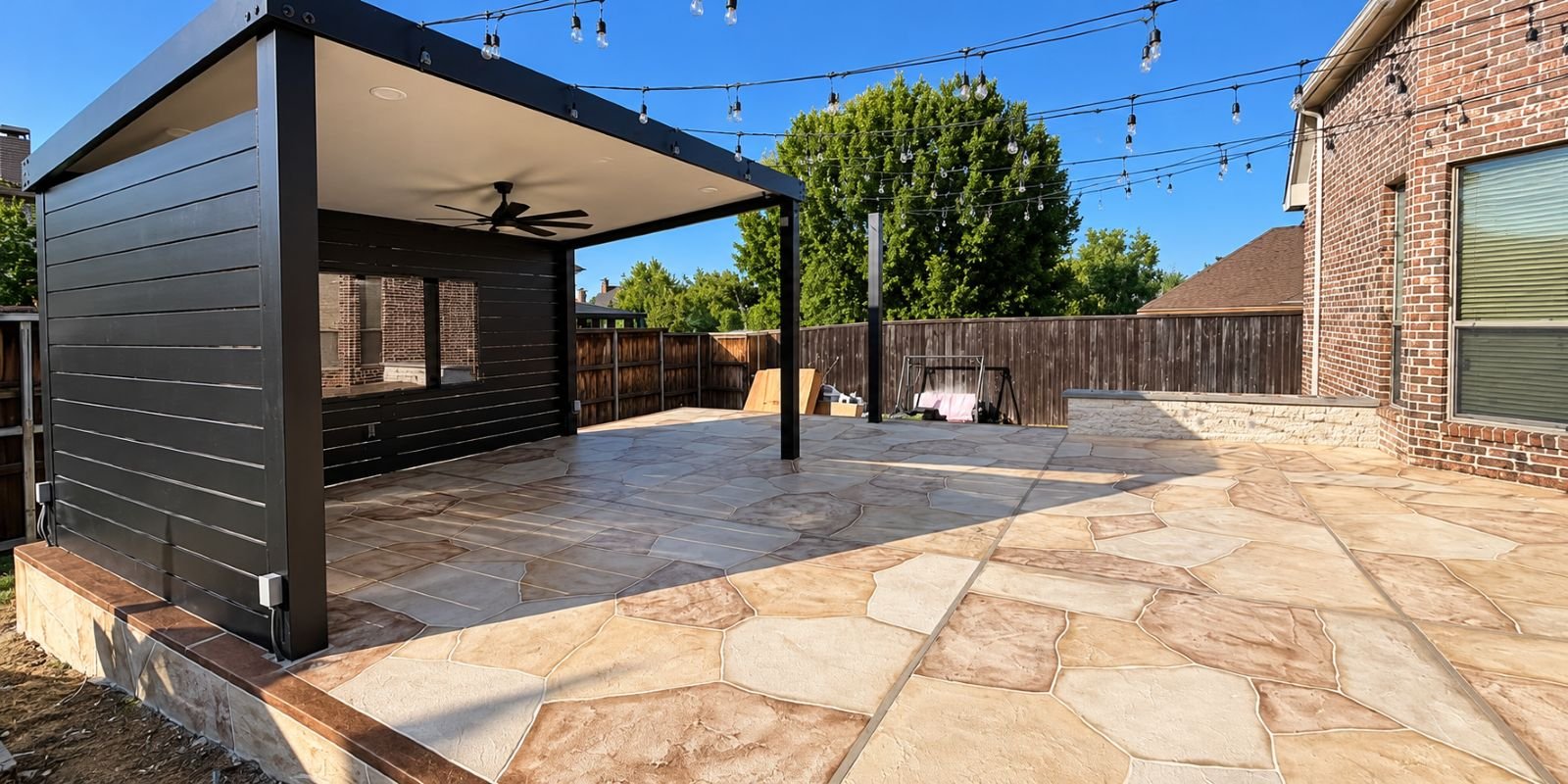
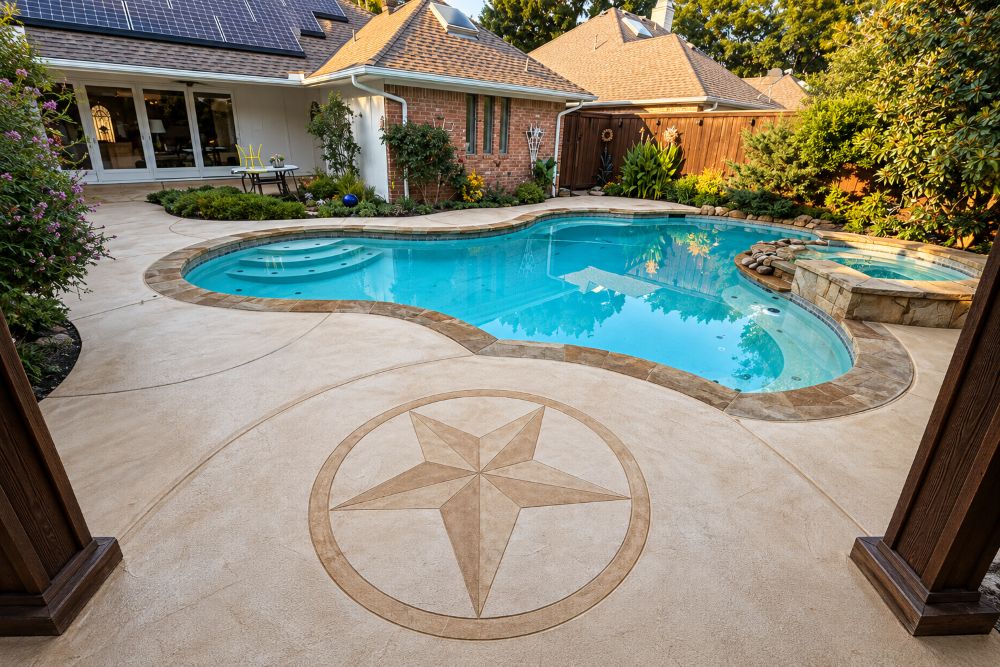
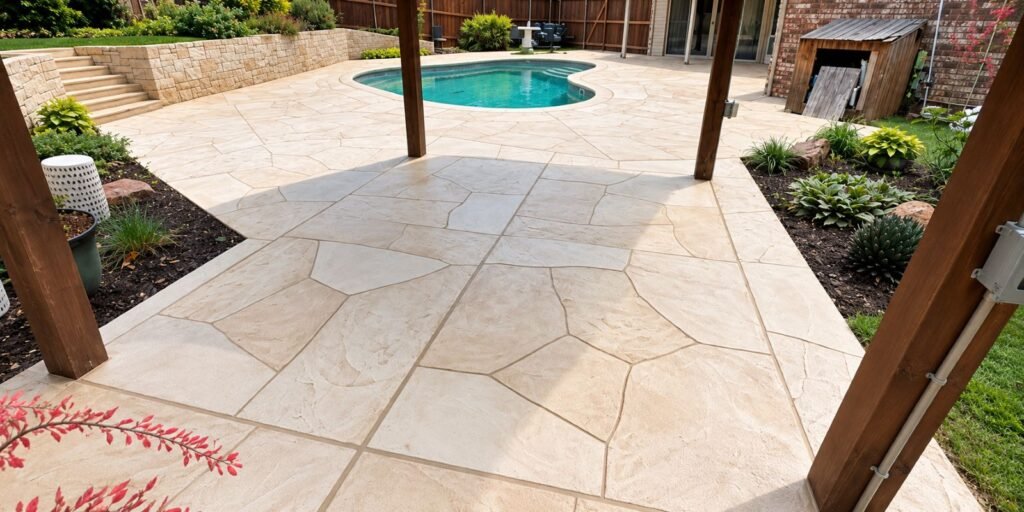
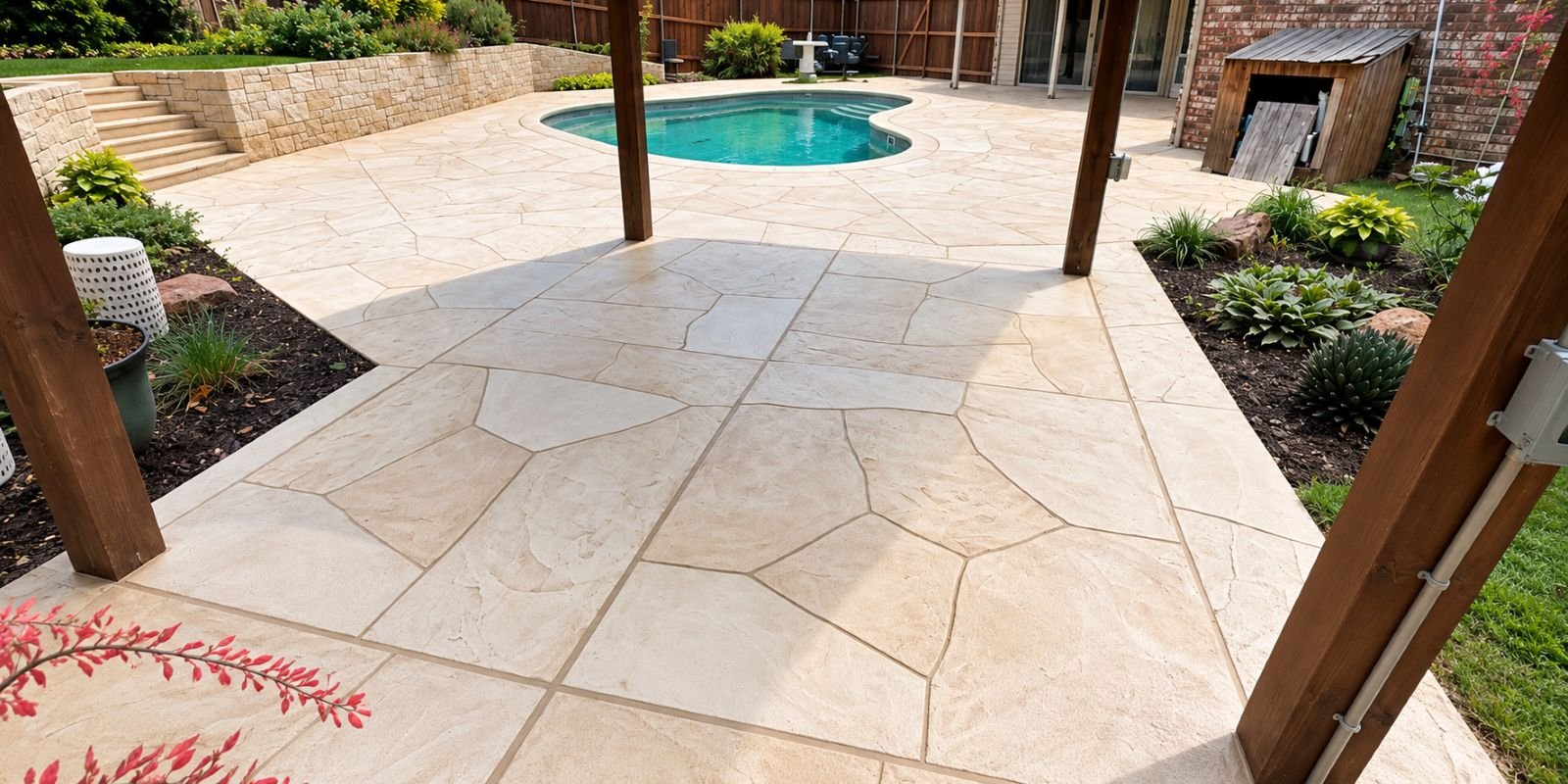
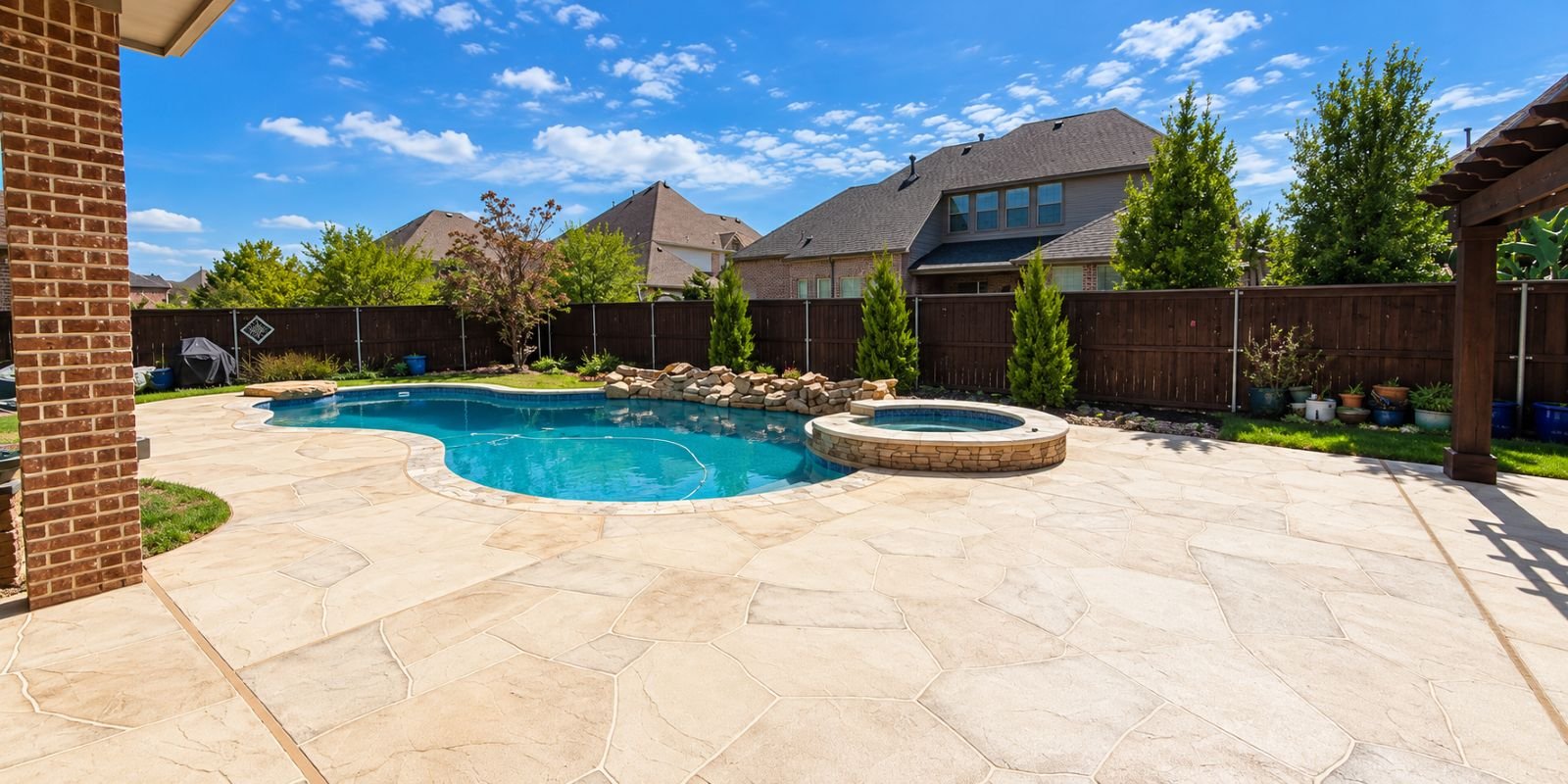
Pool deck resurfacing bonds a decorative overlay to the concrete you already have. After cleaning, grinding and crack repair, a textured layer is applied, colored and sealed. Systems like a Carvestone overlay are hand-carved to look like natural stone, so you get a high-end look without new slab work.
Pros
- No demolition, no haul-off and less disruption to landscaping.
- Usually the most affordable way to transform the whole deck.
- Seamless surface with no joints for weeds or ants.
- Textured, slip-resistant finish that can be matched to patios and walkways.
- Thin enough to keep thresholds and coping heights the same.
Cons
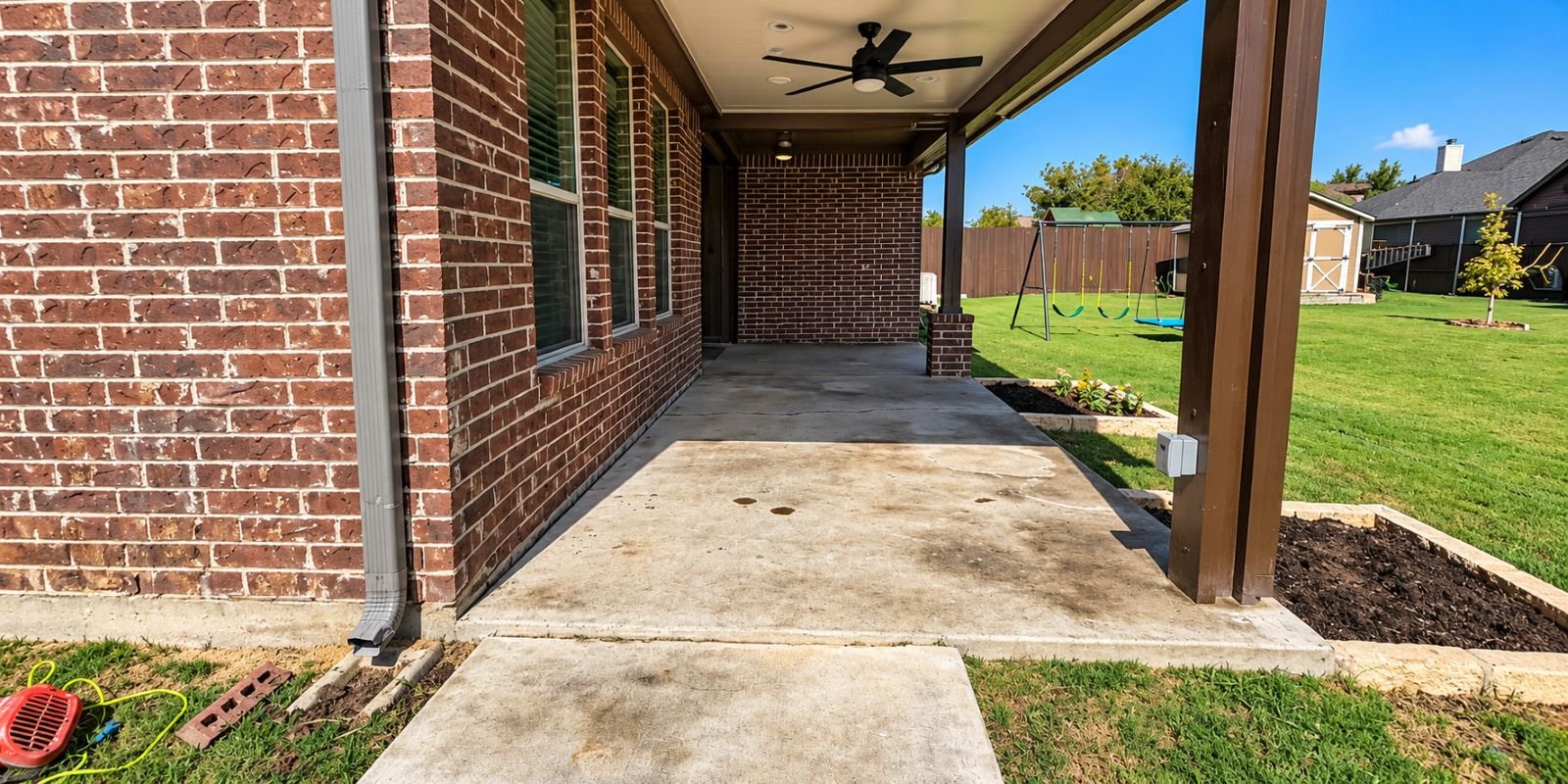
- Needs a structurally sound slab. Sinking or heaving sections must be repaired first.
- Requires resealing every few years to keep color and protection.
If your concrete is in decent shape, resurfacing is the logical first option. Our guide on whether old or cracked concrete can be resurfaced explains how to check.
Option 2: Concrete pavers
Pavers are individual concrete units laid over a compacted base with sand-filled joints. They are popular for new builds and for decks that need to be completely replaced.
Pros: wide range of shapes and colors; individual units can be lifted and replaced; good traction.
Cons: the old deck usually has to come out or a new base has to be built, which means more labor and more time. Joints need regular attention: sand washes out, weeds and ants move in, and units can shift on North Texas clay soil. Raising the deck height can also create issues at doors and coping.
Option 3: Travertine
Travertine is a natural limestone with a soft, sun-washed look. It is a premium choice for luxury pools.
Pros: beautiful natural variation; light colors stay relatively comfortable; high-end appeal.
Cons: usually the most expensive of the three. Natural pits need filling, the stone needs sealing, and pool chemicals and freeze–thaw cycles can be hard on it over time. Like pavers, it often means removing the old deck or adding a new base.
Cost: what really drives the price
We do not quote prices without seeing a deck, because square footage, condition and design change everything. What we can say is where the money goes:
- Demolition and haul-off — required for most paver and travertine jobs, not for resurfacing.
- Base preparation — compacted base for pavers and travertine; surface prep and crack repair for overlays.
- Material — natural stone costs more per square foot than overlay material.
- Labor and detailing — hand-carving, borders, steps and coping details add time on any system.
Because resurfacing skips the first two items, it is usually the most budget-friendly way to get a new-looking deck. See our pool deck resurfacing cost guide for Dallas and concrete resurfacing cost per square foot for typical ranges.
Durability in North Texas conditions
DFW pool decks face three big stresses: intense summer UV, pool chemicals and soil movement from expansive clay. Here is how each option handles them:
- UV and heat: sealed overlays and pavers hold color well when resealed; travertine is naturally UV-stable but needs sealing against stains.
- Pool chemicals: a quality sealer protects overlays; travertine and pavers also benefit from sealing.
- Soil movement: pavers flex but can settle unevenly; overlays follow the slab, so slab movement must be fixed first. Learn more in resurfacing on DFW clay soil.
For how long a resurfaced deck typically lasts, read how long pool deck resurfacing lasts.
Comfort and safety for barefoot use
All three surfaces can be safe if they are textured and light in color. Dark pavers get the hottest. Overlays can be textured for grip and sealed with an anti-slip additive near steps. We compare heat in the coolest pool deck surfaces for Texas summers.
Which should you choose?
- Choose resurfacing if your slab is sound and you want the best value, a fast install and a custom stone look.
- Choose pavers if the slab is failing and needs full replacement anyway, or you want a modular look.
- Choose travertine if budget allows natural stone and you are prepared for its upkeep.
Many homeowners who start out pricing travertine end up choosing a stone-look overlay once they see finished projects. Browse our project gallery, compare stamped concrete vs overlay, and read types of concrete overlays to see the range of finishes.
Questions to ask yourself before choosing
Comparisons on paper only go so far. The right surface depends on how your family uses the pool and how long you plan to stay in the home. Before you request bids, think through these questions:
- Is the existing slab sound? If it is, resurfacing reuses it and avoids the cost and mess of demolition. If it is sinking or broken, any option will need repair work first.
- How much maintenance will you really do? Pavers need joint sand and weed control; travertine needs sealing and gentle cleaners; an overlay needs periodic resealing.
- Who uses the deck most? Young children and older family members benefit from a continuous, even surface with good grip and no loose units.
- How hot does the deck get? Color is the biggest factor in comfort, whichever material you pick.
- Are you selling within a few years? A fresh, neutral surface that photographs well can be more valuable than a premium material buyers will not pay extra for.
How long each option takes to install
Downtime matters when pool season is close. Resurfacing an existing deck usually moves fastest because there is no tear-out or new base to build. Pavers and travertine typically require removing the old concrete or building up a new base, setting each unit and filling joints, which takes longer and brings heavier equipment into the yard. If you want the pool ready by early summer, start planning in late winter; our guide to the best time of year to resurface concrete in DFW explains how weather affects scheduling.
Mixing materials for the best of both
You do not have to pick only one. Some homeowners resurface the main deck with a light Carvestone finish and use a contrasting border at the coping, or keep natural stone on a small feature area while the larger walking surface is an overlay. This keeps the budget focused where it is most visible. For more design ideas, see Carvestone patterns and colors for pool decks and patios.
Get a straight comparison for your deck
Resistant Coating Solutions resurfaces pool decks across Dallas, Fort Worth, Frisco, Plano, McKinney, Southlake and the rest of the Metroplex. We will look at your slab and tell you honestly whether resurfacing makes sense or whether replacement is the smarter move. Book a free estimate or call or text 214-789-9102.
Frequently Asked Questions
Is resurfacing cheaper than installing pavers around a pool?
In most cases, yes. Resurfacing keeps the existing slab, so there is no demolition, haul-off or new base. Pavers and travertine usually require removing the old deck or building up a new base, which adds labor and material.
Which pool deck surface lasts longest in Texas?
All three can last many years when installed correctly. Pavers and travertine depend on a stable base and joint maintenance; resurfaced concrete depends on a sound slab and periodic resealing.
Is travertine cooler than concrete around a pool?
Light travertine stays relatively comfortable, and so do light-colored decorative overlays. Dark pavers and dark concrete get the hottest in DFW summers.
Can you make concrete look like travertine or flagstone?
Yes. Decorative overlays such as Carvestone are hand-carved and stained to look like natural stone, flagstone or slate over your existing concrete.